

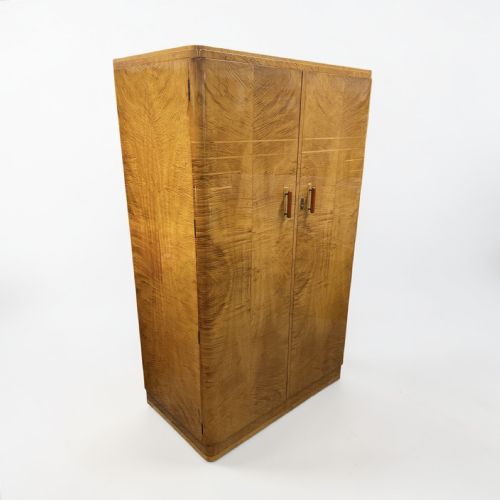


Vintage Bedroom Closet
These vintage bedroom closet pieces are substantial storage furniture, bringing character and practical hanging space to traditional and modern interiors alike.
Vintage Bedroom Closet
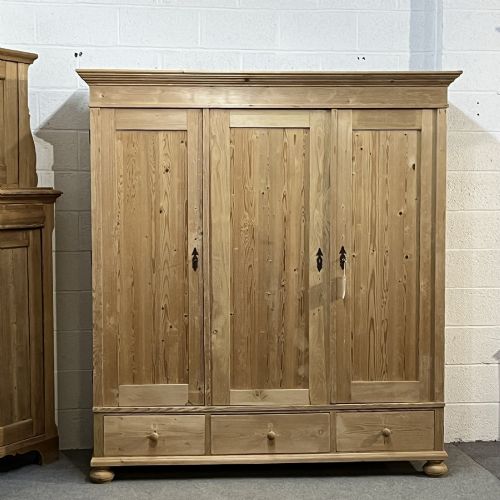
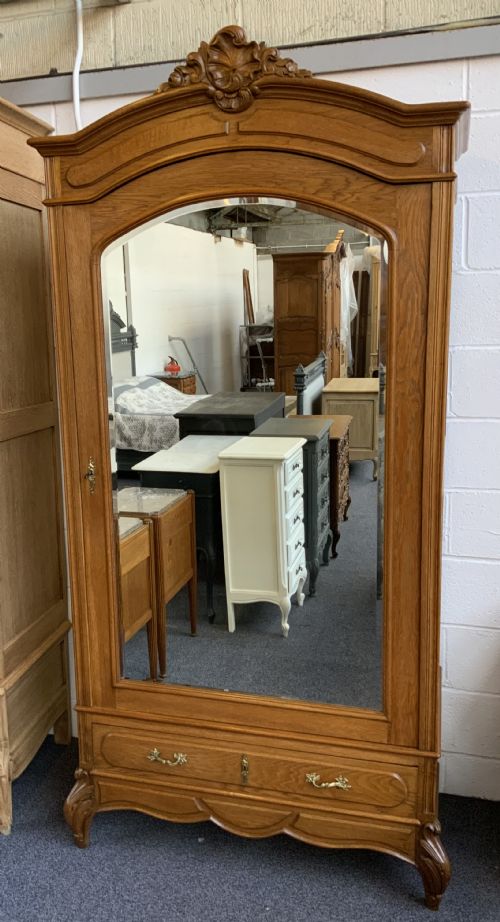
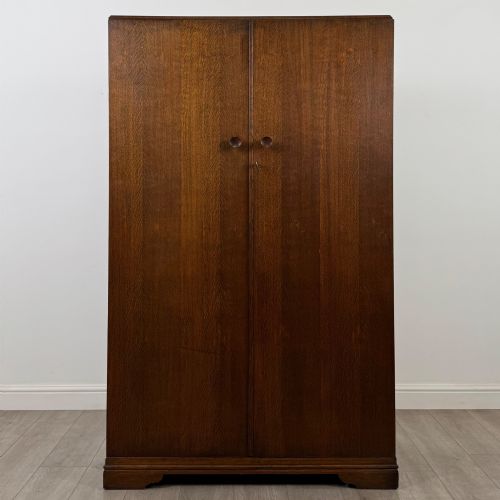
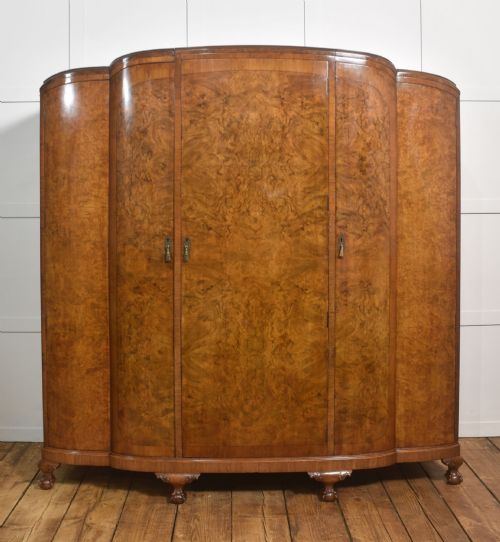
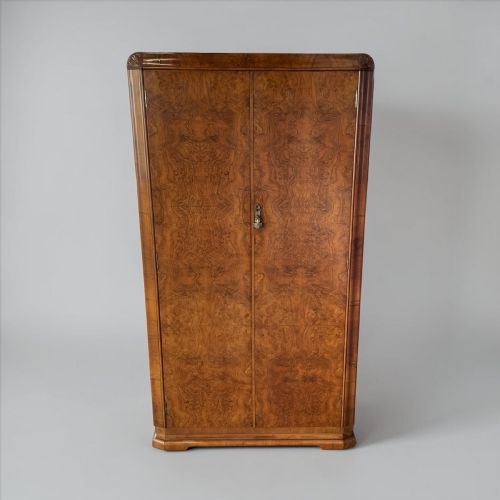
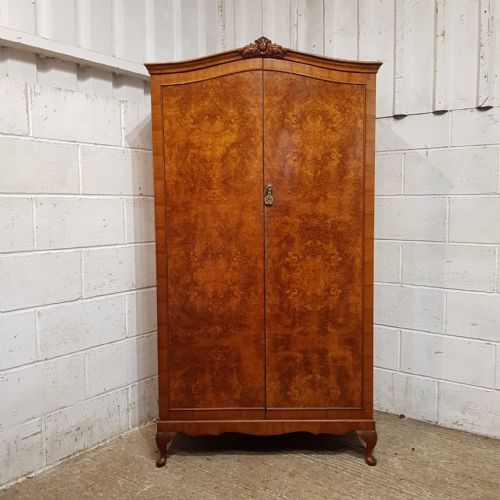
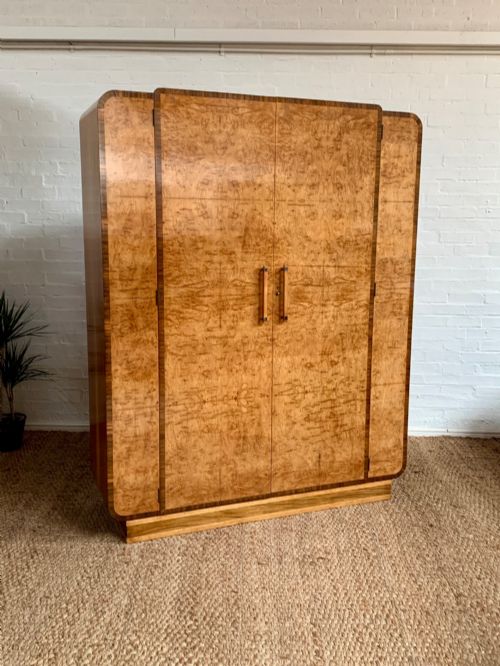
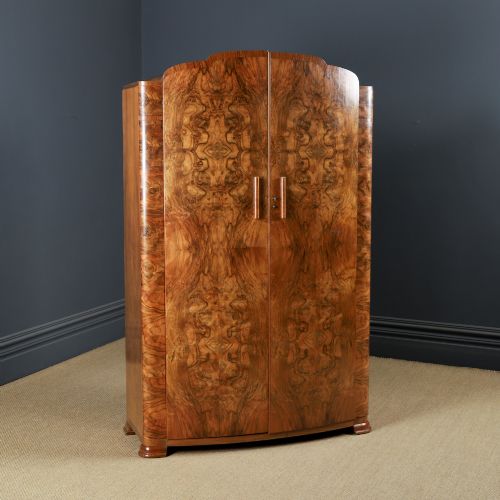
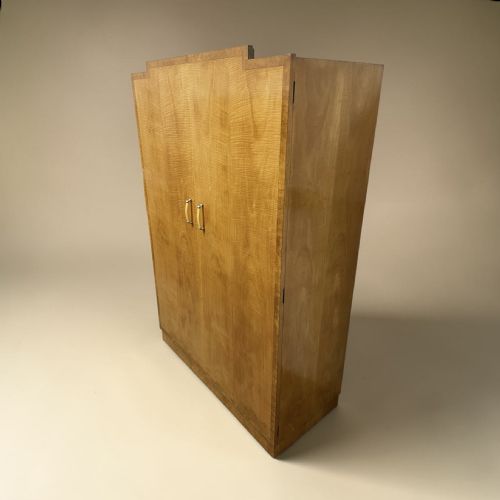
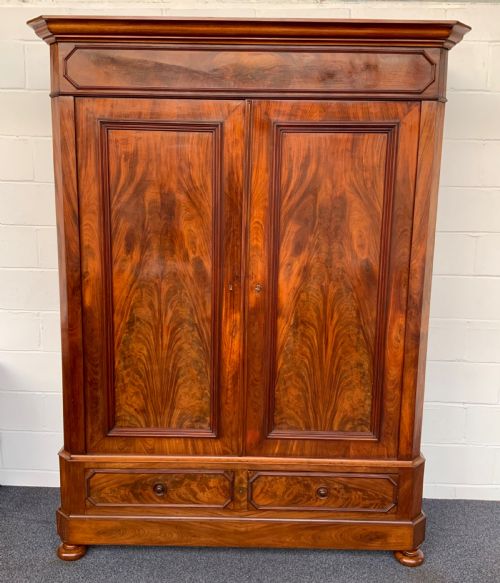
A vintage bedroom closet encompasses large storage items recorded across several periods, including Edwardian and Art Deco pieces alongside Georgian and nineteenth-century examples. Wardrobes and armoires form the primary object types on this page, offering substantial internal volume for hanging garments and storing folded clothing.
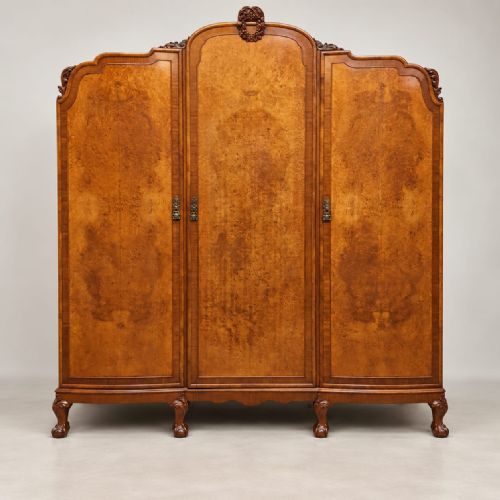
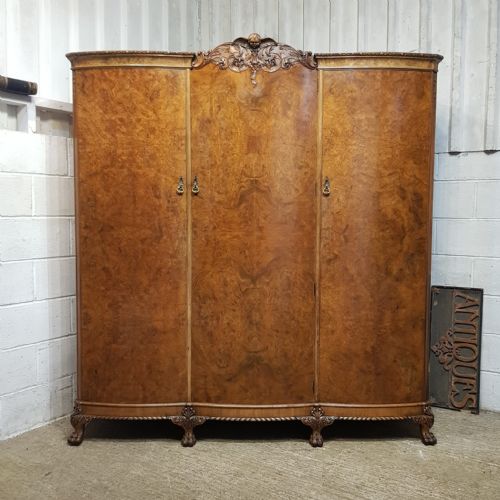
The selection ranges from carved oak provincial pieces to high-style burr walnut creations from the nineteen-thirties. Each object brings distinct proportions and timber figuring suited to period and eclectic bedroom schemes.
Materials and construction methods
Makers utilised solid timbers such as oak, mahogany, and ash alongside decorative veneers like burr walnut and flame mahogany. These woods were shaped and joined to create sturdy carcasses capable of supporting heavy panel doors and internal fittings.
Surface decoration relies on natural grain patterns, crisp carving, and marquetry inlay rather than applied ornamentation. Brass hardware provides functional closure while glass panels occasionally feature on doors.
Construction techniques include traditional frame-and-panel assembly for armoires and fitted interiors incorporating shelves and hanging rails for twentieth-century wardrobes.
Vintage Bedroom Closet Retail Price Guide 2026
Typical asking prices for vintage bedroom closet among the pieces listed under this phrase on Sellingantiques today, from the lower quarter to the upper quarter. They describe what is for sale here now, not the wider market.
Dutch marquetry robes bring cheerful floral inlay into morning routines.
What separates the tiers
Quality rests in the selection of timber figures, where matched burr walnut or flame mahogany veneers elevate a piece above standard plain woods. Superior examples demonstrate careful grain alignment across multiple doors and drawer fronts.
Design ambition dictates distinction, separating simple utilitarian pieces from breakfront or serpentine fronted models with sophisticated architectural profiles. Maker attribution further elevates standing, particularly when signed by notable workshops.
Proportion and execution of carved details or marquetry work show the hand of skilled cabinetmakers. Interior configuration and original brass fittings also contribute to the overall standing of an item.
Crown Furniture·Waring and Gillow·Jean Faure·Harry and Lou Epstein
The Vintage Bedroom Closet Glossary
- Armoire
- A tall cupboard or wardrobe, traditionally French in origin, featuring single or double doors enclosing hanging space or shelves.
- Burr walnut
- A prized timber cut from walnut tree growths, displaying intricate, swirling grain patterns used extensively for decorative veneer.
- Breakfront
- A piece of furniture where the central section projects forward from the flanking outer sections, adding architectural depth.
- Serpentine front
- A curved cabinet front that bends outward in the centre and inward toward the edges, creating a gentle undulating line.
- Marquetry
- The art of applying decorative pieces of veneer to a structure to form intricate geometrical patterns or pictorial designs.
Vintage Bedroom Closet: Frequently Asked Questions
How do I choose the right size wardrobe?
Measure your ceiling height and wall space carefully, remembering that triple wardrobes and breakfront designs require substantial clearance. Consider whether you need internal shelving or hanging space for long garments.
Account for door swing radius in tighter bedroom layouts. Single armoires suit compact spaces while double and triple configurations demand larger rooms.
Can these wardrobes be dismantled for moving?
Many period wardrobes and armoires were built as rigid, fixed carcasses that do not easily take apart. Edwardian and later pieces occasionally feature knock-down construction designed for easier transport.
Check the construction details of each specific item before purchase to understand delivery and room-access requirements.
How do I care for walnut and mahogany finishes?
Maintain timber surfaces by dusting with a soft, dry cloth and avoiding direct sunlight that can fade veneers. Apply appropriate furniture wax sparingly to nourish the wood.
Keep pieces away from direct heat sources and sudden temperature fluctuations to prevent timber movement or veneer cracking.
What is the difference between an armoire and a wardrobe?
Armoires generally originate from continental Europe and often feature deep proportions, carved details, and single or double hinged doors. Wardrobes frequently refer to British hanging closets developed during the nineteenth and twentieth centuries.
Both serve the primary function of garment storage but reflect distinct regional cabinetmaking traditions.