



Vintage Beach Seascape
A vintage beach seascape captures the light and salt air of the shore on canvas or paper.
Vintage Beach Seascape
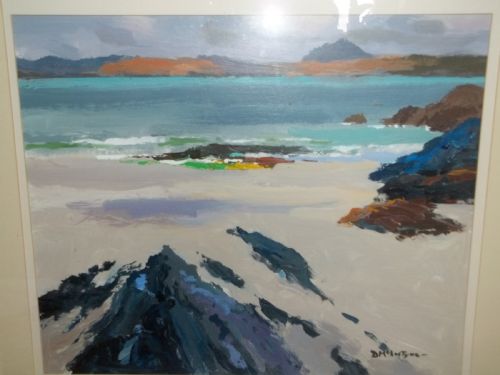
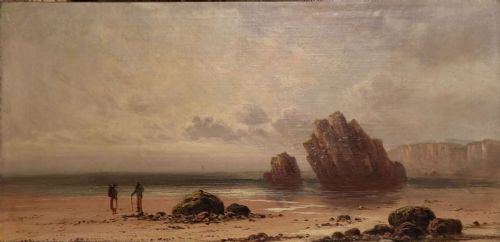
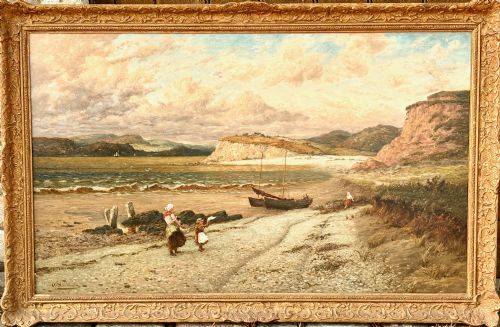
When you search for a vintage beach seascape, you encounter painted views of shores, harbours, and coastal cliffs spanning from the Victorian era through the mid-twentieth century. The selection ranges from nineteenth-century realism and British impressionism to mid-century modern interpretations.
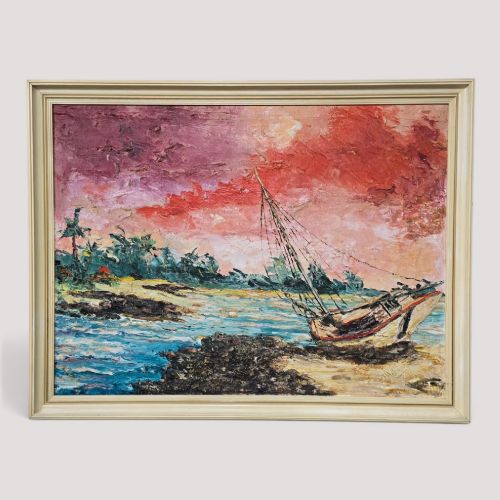
Most pieces you meet on this page take the form of framed oil paintings or watercolours, capturing specific locations such as St Ives, Morecambe Bay, and various European coastal spots. These works document maritime life, from figures on rocky shores to beached fishing boats and quiet sandy expanses.
How they were made
Artists painted these coastal scenes primarily using oil paint or watercolour applied to canvas, paper, or board. Oil paintings often utilise thicker brushwork to build texture in the sea and sky, while watercolours rely on fluid washes on paper to capture changing coastal light.
Framing forms an integral part of the piece, with works housed in wood or ebonised frames, sometimes complemented by hand-enamelled polychrome details that reflect the period of creation.
Several artists preferred painting stormy waters and shipwrecks over calm sunny shores, ensuring plenty of dramatic sea spray.
What varies in quality
The strength of the composition and the artist's ability to capture atmospheric light and movement distinguish the finest examples from simpler decorative works. Skilled brushwork in watercolours or oil on canvas brings vitality to the water, skies, and figures along the shore.
Provenance and documentation also influence the standing of a piece, with signed works by recognised painters holding a clearer record of their origin compared to unsigned studies.
William Banks Fortescue·Robert Leslie Howey·Donald McIntyre·Sir William Russell Flint·James George Bingley·Owen Bowen·Robert Macaulay Stevenson·Samuel Edward Kelly·GM de L Aubiniere·Daniel Sherrin·Edmund Gouldsmith·Yves Brayer·Thomas Bush Hardy·Henri Cadiou·George Marks·Alfred Egerton Cooper·Harry John Pearson·Harold Hope Read
The Vintage Beach Seascape Glossary
- Watercolour
- A painting method where fine pigment is suspended in water-based solution on paper. This medium allows for transparent washes that suit luminous coastal skies.
- Oil on Canvas
- Pigment mixed with drying oil applied to stretched fabric. It provides a durable surface that supports rich texture and layered colour.
- Sea Stack
- A geological landform consisting of a steep and often vertical column or columns of rock in the sea. Artists frequently use these striking formations to anchor a coastal composition.
- Groyne
- A rigid hydraulic structure built from an ocean shore that interrupts water flow and limits sediment movement. They appear in mid-century depictions of beaches like Amroth.
- Impressionism
- A nineteenth-century movement characterised by relatively small, thin, yet visible brush strokes and an emphasis on accurate depiction of light. This style captures the fleeting effects of sunlight on water.
Vintage Beach Seascape: Frequently Asked Questions
What periods do these paintings cover?
The works span from the Victorian era and the late nineteenth century through the early twentieth century up to the nineteen-sixties.
This broad timeline shows changing artistic interpretations of the coastline across different decades.
Where were these coastal scenes painted?
Artists painted locations across Britain, including Cornwall, Devon, Wales, and Yorkshire, alongside continental European shores in France and Spain.
Many pieces record specific named bays, harbours, and lighthouses.
How should I frame and display a watercolour?
Watercolours require framing behind glass with acid-free mounts to protect the paper and pigments from moisture and direct sunlight.
Displaying them away from intense direct light preserves the delicate washes.
How do I distinguish oil paintings from watercolours?
Oil paintings feature heavier pigment texture on canvas or board and usually do not require glass for protection.
Watercolours appear on paper behind glass, showing transparent colour layers and the texture of the paper beneath.