
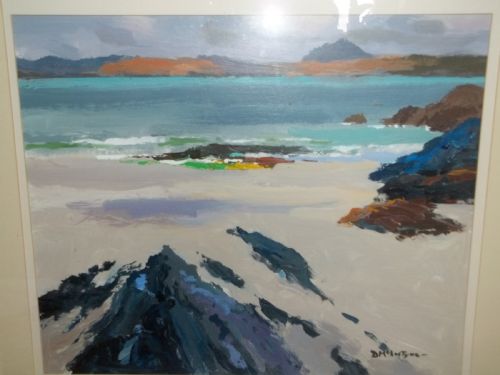
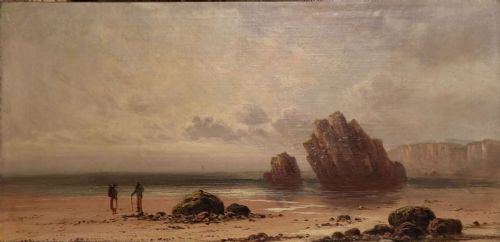


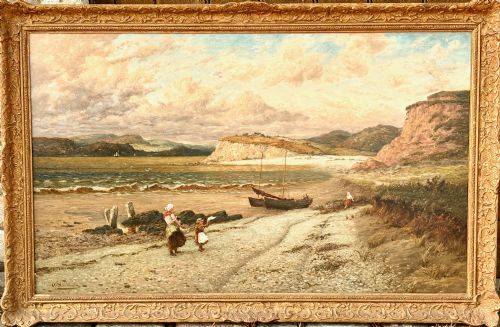


Vintage Beach Seascape Painting
A vintage beach seascape painting captures the salt air and shifting light of the coast through the brush of an earlier era.
Vintage Beach Seascape Painting
A vintage beach seascape painting records the shoreline, tides and coastal life across periods from the Victorian era to the mid-twentieth century. These works range from tightly detailed nineteenth-century watercolours of West Country harbours to looser mid-century oil paintings of Welsh and Pembrokeshire bays.
Most pieces on this page are framed works on canvas or paper depicting fishing boats, figures on sandy shores, and rocky cliffs. They draw their subjects from British, French and Spanish coastal locations.
Buyers look for these paintings to bring the atmosphere of the open sea and shore into an interior. The selection spans quiet tidal reaches, busy fishing beaches and dramatic headlands.
How They Were Made
Artists painted these coastal scenes primarily in oil paint or watercolour, applying pigment to stretched canvas, wooden board or heavy paper. Oil paint allowed for rich impasto and deep colour on canvas, while watercolour created translucent washes on paper.
Many works retain their original frames, which range from simple wooden mouldings to hand-enamelled polychrome or ebonised surrounds. The physical support often determines whether the painting sits behind glass or remains open to the air.
The listings here span works created across the nineteenth and twentieth centuries, utilising canvas, paper, wood, oil, and watercolour.
What Varies in Quality
Quality rests on the sureness of the brushwork and the artist's command of marine light and atmosphere. Stronger paintings convey the weight of water, the movement of clouds, and the specific texture of sand and rock with economy and precision.
The sensitivity of the composition and the preservation of the surface matter greatly. Works that retain their original character without heavy restoration offer a more direct connection to the artist's hand.
William Banks Fortescue·Robert Leslie Howey·Donald McIntyre·Sir William Russell Flint·James George Bingley·Owen Bowen·Samuel Edward Kelly·Daniel Sherrin·Edmund Gouldsmith·Yves Brayer·Thomas Bush Hardy·Henri Cadiou·George Marks·Alfred Egerton Cooper·Harry John Pearson
The Vintage Beach Seascape Painting Glossary
- Seascape
- A work of art depicting the sea, coastlines, beaches, and marine activity. These paintings focus on the interaction between land, water, and sky.
- Impasto
- Paint applied thickly to a canvas or board, leaving visible brush or palette knife marks. This technique adds tactile relief and catches the light.
- Groyne
- A low wall or timber barrier built out into the sea to prevent beach erosion. They frequently appear as structural elements in twentieth-century coastal paintings.
- Sea Stack
- A geological landform consisting of a steep and often vertical column or columns of rock in the sea. Artists use them to introduce dramatic verticality to coastal compositions.
- Provenance
- The documented history of ownership of a painting. It helps confirm attribution and authenticity.
Vintage Beach Seascape Painting: Frequently Asked Questions
How do I date a vintage beach seascape painting?
Examine the materials of the canvas, board, or paper, along with the style of the frame and the artist's signature where present. Costume details on figures walking the shore also offer clues to the decade of creation.
Comparison with documented works by the same hand or from the same regional school helps narrow the period further.
Should oil or watercolour be framed behind glass?
Watercolours on paper require glass protection to shield the delicate pigments from moisture and atmospheric dust. Oil paintings on canvas or board are traditionally left unglazed so the textured surface of the paint remains visible.
Where should I hang a coastal painting?
Choose a wall with stable ambient temperature away from direct, harsh sunlight to protect both the paper or canvas and the pigments. Rooms with natural light often complement the subject matter of marine and beach scenes.
Allow enough surrounding wall space for the scale of the frame and the mood of the landscape to breathe.
What subjects are most common in these paintings?
Common subjects include beached fishing boats, rugged cliffs, tidal estuaries, and figures walking or children playing on the sand. Many capture specific named locations around the British coast and continental Europe.
Lighthouses, harbour walls, and groynes frequently anchor the composition of these shoreline views.