

Vintage Banquet Table
A vintage banquet table provides the scale and substance needed for hosting large gatherings.
Vintage Banquet Table
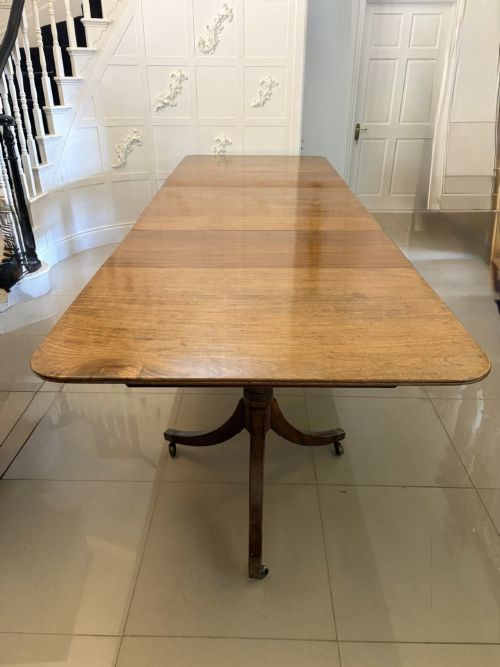
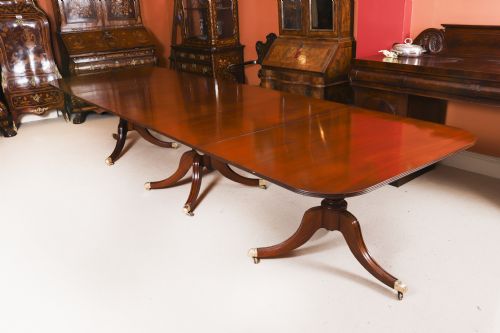
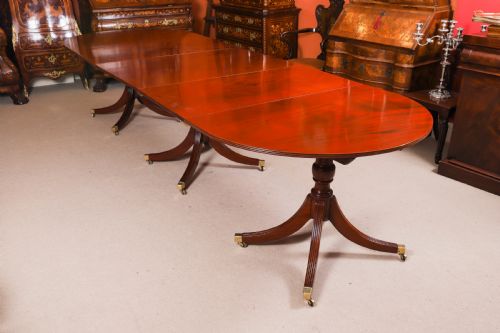
A vintage banquet table serves as a substantial centrepiece for large dining rooms and gathering spaces. When searching for a vintage banquet table, buyers encounter formats designed to accommodate many diners, often featuring multiple leaves or pillar supports.
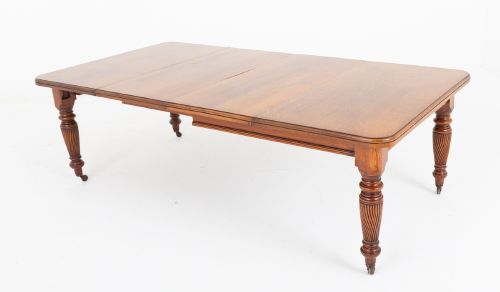
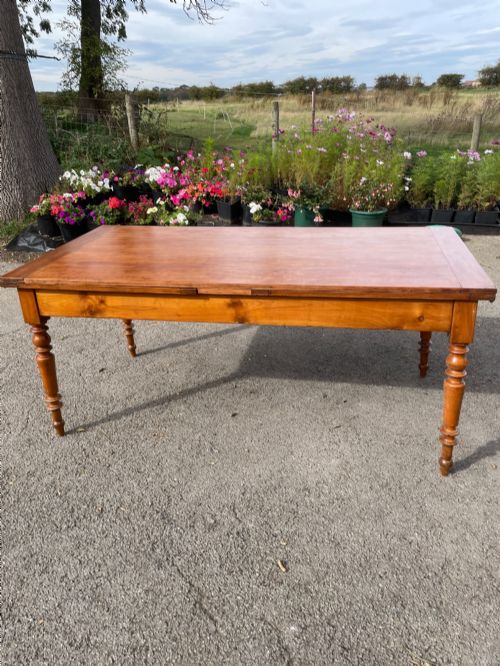
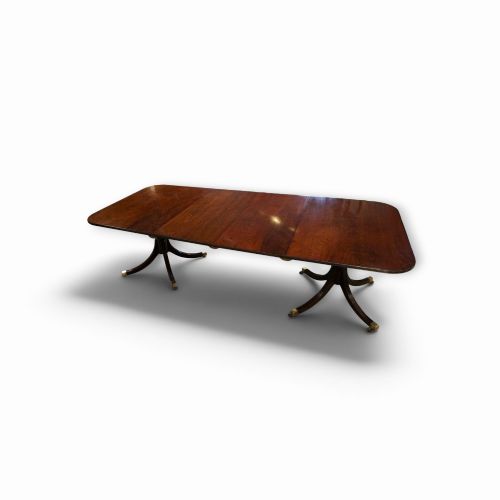
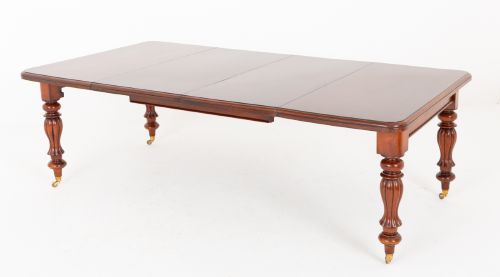
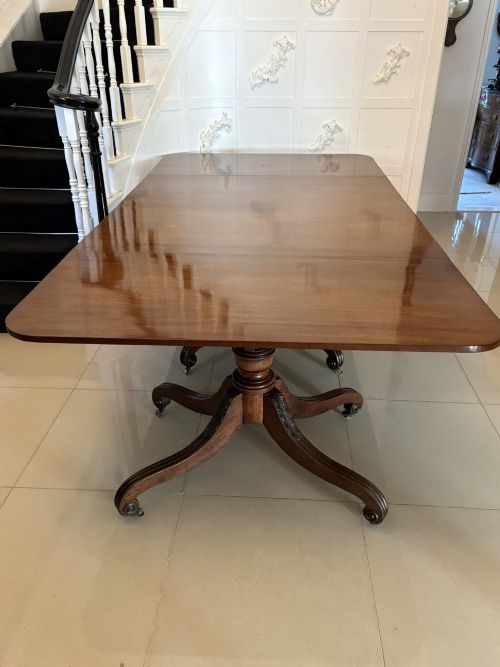
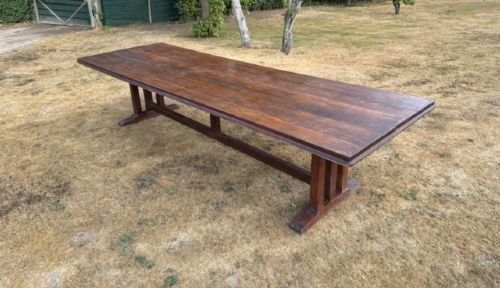
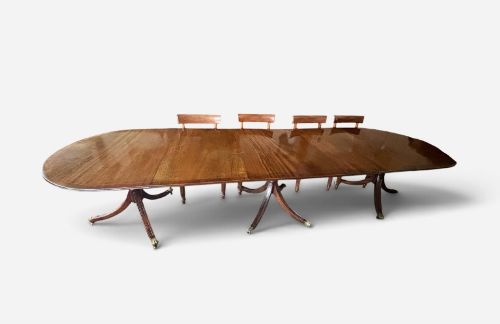
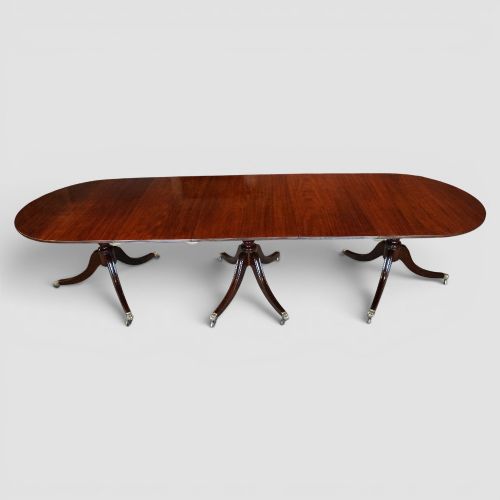
The pieces seen here span from the nineteenth century through the Edwardian period and into the 1930s. The most common iteration on this page is the extending mahogany dining table resting on pillar bases, alongside refectory and draw-leaf variants in oak.
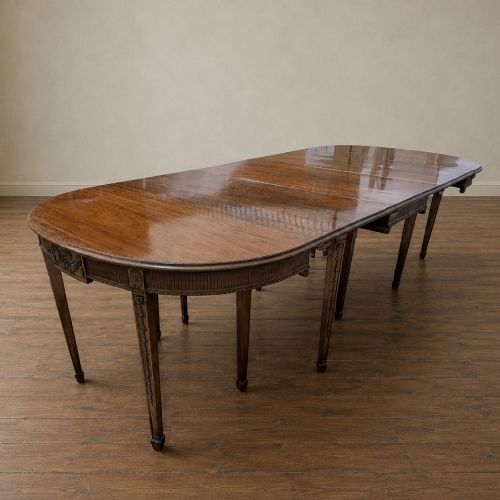
Makers and designers from various periods utilised rich timbers to construct these large dining surfaces. Formats range from George III D-end arrangements to extensive William IV and Victorian multi-pillar designs.
Materials and construction methods
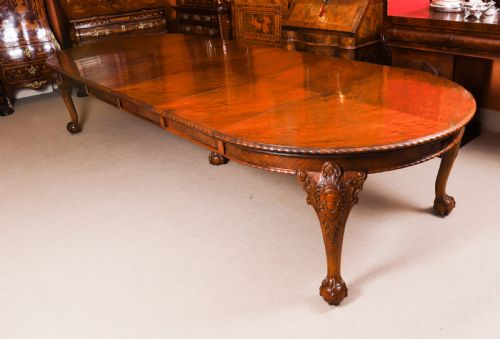
Cabinet makers relied heavily on dense hardwoods, predominantly mahogany, walnut, and oak. Flame mahogany, figured mahogany, and burr walnut veneer appear frequently on table tops, providing distinctive grain patterns.
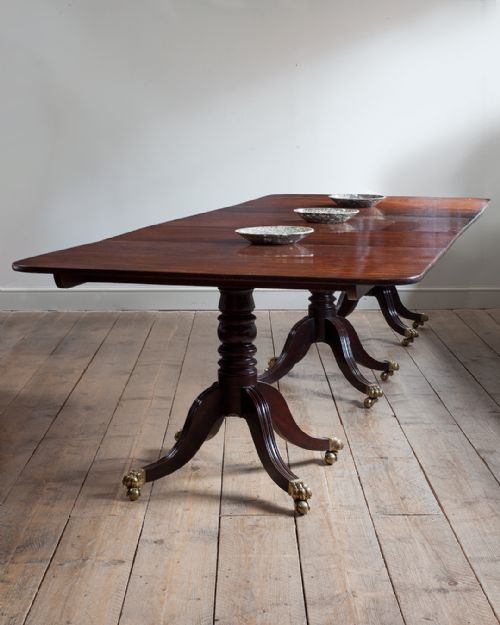
Extending mechanisms often utilise central pillars, draw leaves, or removable leaves supported by additional legs. Carved details, reeded legs, and claw and ball feet demonstrate the manual woodworking techniques applied during production.
Some dining tables hide their extending mechanisms so cleverly that guests remain entirely unaware the surface can double in length.
Factors of construction and finish
Quality rests on the selection of timber figures, such as plum pudding mahogany or burr walnut, and the precision of the extension mechanism. Superior examples maintain structural integrity across extended lengths without sagging.
Carving depth and the crispness of details like reeding on the legs distinguish finer workshops from standard production. The integration of matching leaves that preserve the grain continuity across the entire surface separates top examples from simpler tables.
Maple and Co·Whytock and Reid·Gillows
The Vintage Banquet Table Glossary
- Extending dining table
- A table designed with removable leaves or internal mechanisms to lengthen the top surface. This allows the furniture to adapt easily for varying numbers of guests.
- Refectory table
- A long, narrow dining table traditionally supported by substantial legs connected with a stretcher. These pieces originate from earlier dining traditions and appear in later revival styles.
- Draw-leaf table
- A table with pull-out leaves stored beneath the main top that extend outward to increase surface area. This mechanism provides quick expansion without storing separate loose leaves.
- Pillar and scroll
- A support structure utilising a central column rising from a platform base with shaped feet. It provides stability for large tops while allowing legroom for diners.
- Reeded leg
- A column decorated with parallel convex mouldings carved vertically into the wood. This decorative technique appears frequently on Regency and nineteenth-century furniture legs.
Vintage Banquet Table: Frequently Asked Questions
How do I seat twelve people?
Tables described as multi-pillar or accommodating ten to fourteen diners typically use removable leaves. Inserting these sections expands the central surface to reach the required length.
Ensure your room dimensions allow sufficient clearance around the extended table for chairs and guests to move comfortably.
How do I care for mahogany surfaces?
Maintain mahogany timber by dusting regularly with a soft cloth and applying appropriate wax polish periodically. Avoid placing tables near direct heat sources or strong sunlight to prevent warping and fading.
Use protective mats beneath hot dishes and liquids to safeguard the polished finish from marks.
How do I identify a Regency style table?
Regency style tables frequently display reeded legs, brass paw castors, and dark mahogany timbers. They often incorporate D-end sections or pillar supports.
Original pieces from the period share design characteristics with later revival versions produced around the early twentieth century.