




Vintage Bakelite Lighting
Vintage bakelite lighting brings solid Art Deco character to a room through rich early plastics paired with chrome and glass.
Vintage Bakelite Lighting
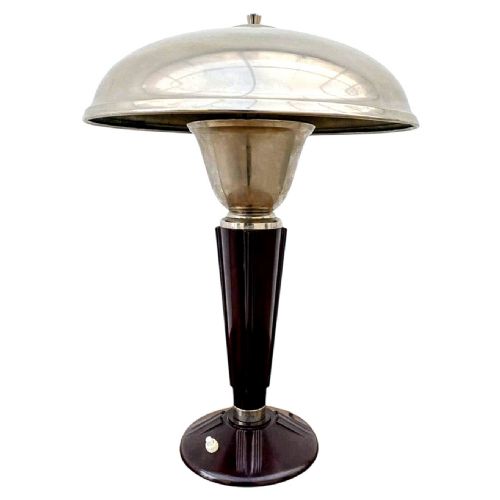
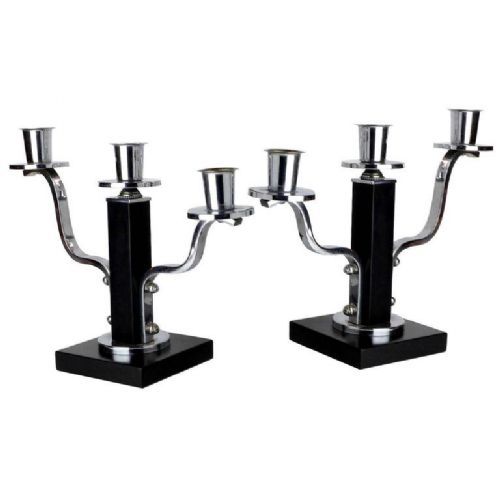
Vintage bakelite lighting encompasses desk lamps, table lamps, wall lights, and candlesticks produced primarily in the 1920 and 1930 periods. These pieces showcase the geometric forms and streamline aesthetic of the Art Deco style, originating from makers in France and beyond.
The version most commonly met on this page is the desk or table lamp, often built with substantial bases and contrasting metallic components. Wall light sconces also appear, bringing matching pairs into domestic spaces with distinct period presence.
How they were made
These fixtures rely heavily on early synthetic polymers like bakelite, catalin, and phenolic plastics, which are moulded into smooth, durable bodies. Manufacturers paired these dense plastics with chrome, nickel, and plain or frosted glass elements to construct functional electrical lighting.
The combination of metallic stems and collars with dark or colourful resin components defined the construction methods of the era. Makers utilised these contrasting materials to achieve the streamlined, two-tone visual effect typical of the design.
One notable table lamp listing playfully embraces the moniker 'liquorice allsorts' due to its distinct two-tone phenolic appearance.
What varies in quality
The distinction between standard production items and exceptional pieces rests upon the boldness of the form and the pedigree of the designer. Recognised names and distinctive streamline configurations elevate certain desk lamps above routine utility lighting.
Material choice and surface finish also dictate the tier of a piece, particularly where catalin or phenolic plastics retain deep colour saturation and crisp moulding lines. Matching sets, such as pairs of wall lights, display a higher degree of initial planning than single, standalone fixtures.
Eileen Grey·E. Cole·Jumo
The Vintage Bakelite Lighting Glossary
- Bakelite
- An early thermosetting phenol formaldehyde resin known for its durability and rich, dark tones. It revolutionised manufacturing by allowing complex shapes to be moulded accurately.
- Catalin
- A cast phenolic resin that permits brighter translucent colours than standard bakelite. It is frequently seen in high-end decorative objects from the same period.
- Streamline
- An aerodynamic design style of the 1930s that emphasised curved forms and horizontal lines. It heavily influenced the geometry of desk lamps and wall sconces.
- Phenolic
- A broad class of synthetic resins encompassing bakelite and related heat-resistant polymers. These materials formed the structural core of many period electrical fittings.
- Sconce
- A wall-mounted lighting fixture designed to project illumination outward into a room. Pairs of these fixtures are typical of 1930s interior schemes.
Vintage Bakelite Lighting: Frequently Asked Questions
What is vintage bakelite lighting?
Vintage bakelite lighting comprises lamps and wall fixtures made from early synthetic resins during the 1920 and 1930 periods.
These items heavily feature Art Deco styling, combining moulded plastic components with chrome, nickel, and glass.
How do I identify Art Deco lighting?
Art Deco lighting is characterised by geometric shapes, streamline curves, and a deliberate contrast between dark plastics and polished metal.
Items from this era frequently utilise bakelite, catalin, and frosted glass to achieve a distinct industrial elegance.
Where were these lamps used?
These lamps were designed for functional desk work, general table illumination, and decorative wall mounting in homes and offices.
Pairs of wall sconces were commonly placed to frame mirrors or doorways during the 1930s.
How should I care for bakelite?
Bakelite requires gentle cleaning with a soft, dry or slightly damp cloth to preserve the surface sheen without scratching the resin.
Harsh chemical solvents must be avoided, as they can permanently damage or dull the early plastic material.