



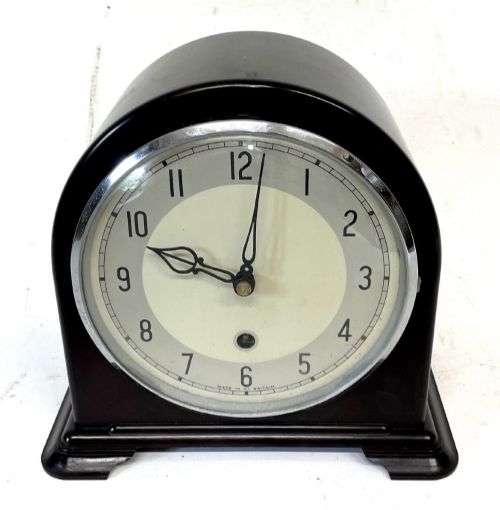


Vintage Bakelite Clock
These vintage bakelite clock examples bring tactile warmth and geometric sharpness to a desk or mantelpiece, shaped by Art Deco and mid-century design.
Vintage Bakelite Clock
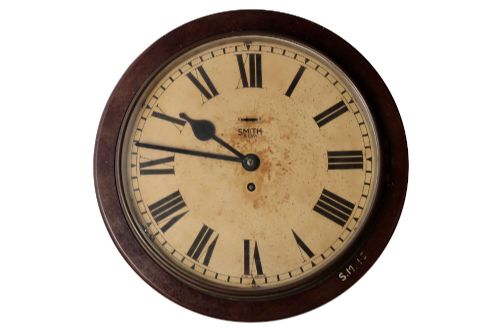
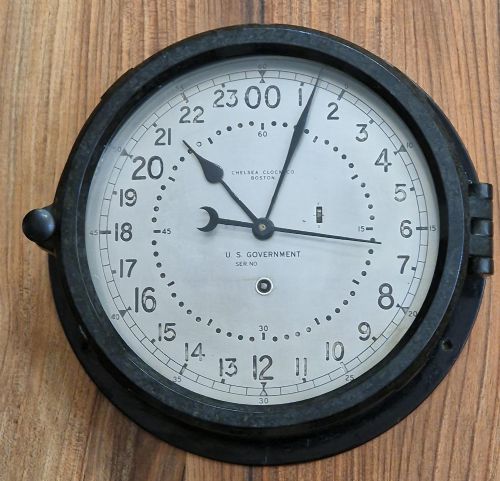
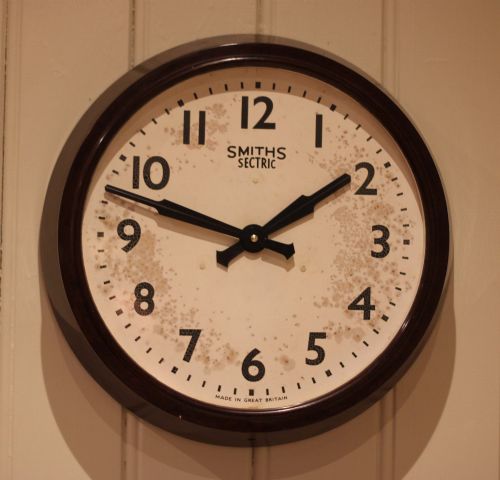
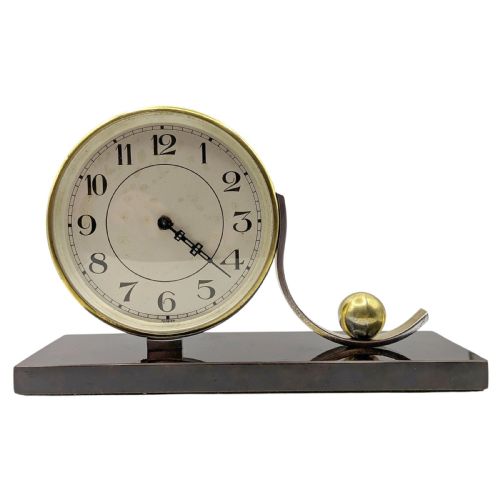
Makers utilised moulded synthetic resin alongside chrome, brass, and glass to create functional objects for domestic and institutional interiors. Pieces range from French streamline designs to English office and factory timepieces.
Continental examples often bear maker signatures from firms like Jaz or Blangy, while British pieces frequently originate from Smiths. Forms vary from simple desk stands to double-sided factory clocks and wall-mounted variants.
Materials and construction
The primary material is synthetic phenol formaldehyde resin, commonly known as bakelite, which manufacturers moulded under heat and pressure into robust cases. This compound allowed for smooth curves and sharp angles suited to the Art Deco aesthetic.
Metal elements such as chrome, brass, steel, and glass frequently accompanied the synthetic resin cases. Dials and bezels incorporated polished metals to contrast against the dark or coloured thermosetting plastic bodies.
Vintage Bakelite Clock Retail Price Guide 2026
Typical asking prices for vintage bakelite clock among the pieces listed under this phrase on Sellingantiques today, from the lower quarter to the upper quarter. They describe what is for sale here now, not the wider market.
Quality variations
Distinction in quality rests upon the complexity of the moulded casing and the integration of secondary materials like chrome and brass. Simpler utilitarian models designed for military or office use contrast with sophisticated domestic desk pieces produced by continental makers.
The precision of the mechanical movement, whether thirty-hour, eight-day, or electric, contributes significantly to the integrity of the object. Cases that retain deep colour saturation without extensive surface abrasion demonstrate superior preservation.
Jaz·Blangy Clockmakers·Smiths
The Vintage Bakelite Clock Glossary
- Bakelite
- A thermosetting phenol formaldehyde resin invented in the early twentieth century. It allowed makers to mould durable, heat-resistant casings in various dark and vibrant colours.
- Art Deco
- A design style prevalent during the 1930s characterised by stylised geometric forms, streamlined curves, and modern industrial materials. It dominates the aesthetic of these timepieces.
- Mantel Clock
- A clock designed to sit upon the shelf or mantel above a fireplace. These domestic objects often feature decorative cases intended for prominent display in a room.
- Streamline
- An aerodynamic design subset of the Art Deco style emphasising long horizontal lines and smooth rounded edges. This look frequently appeared in French desk and mantel timepieces.
- Broad Arrow
- A government property mark utilised by British authorities to denote items issued to military forces. It appears on specific service timepieces from the era.
Vintage Bakelite Clock: Frequently Asked Questions
How do I identify a 1930s model?
Look for characteristic geometric Art Deco lines and moulded synthetic resin cases paired with chrome bezels. French and English examples from this decade often display specific streamline styling.
Examine the dial typography and the maker signatures stamped on the face or movement casing. These design markers help distinguish the 1930s production period from later mid-century issues.
Were these clocks used in offices?
Many examples served utilitarian functions in institutional settings, including military offices and factories. Robust materials like bakelite and steel suited environments requiring durable timekeeping.
Institutional pieces often feature clear Arabic numerals and plain dials for legibility at a distance. Some models display specific government issue marks on the housing.
What maintenance do these movements require?
Many mechanical examples operate on thirty-hour or eight-day spring-driven movements that benefit from periodic professional servicing. Electric variants require careful checking of internal wiring for safety.
Avoid exposing the synthetic resin cases to direct sunlight or harsh chemical cleaners to preserve the original surface sheen. Gentle dusting helps maintain the material over time.
Where were these timepieces manufactured?
Production centred largely in England and France during the interwar period and subsequent decades. Prominent factories produced both domestic models and specialised institutional timepieces.
Continental makers often experimented with colourful moulded resins and streamline geometry, while British output included both stylish domestic objects and robust factory wall units.