





Vintage Baby Silver
Vintage baby silver brings together charming rattles, mugs, and boxed sets from the Victorian, Edwardian, and mid-century eras.
Vintage Baby Silver
Vintage baby silver encompasses traditional presentation pieces and functional items made for infants, most commonly represented here by christening mugs, rattles, and boxed sets. These objects span periods from the eighteenth century through the mid-twentieth century, capturing domestic milestones and family gifting traditions.
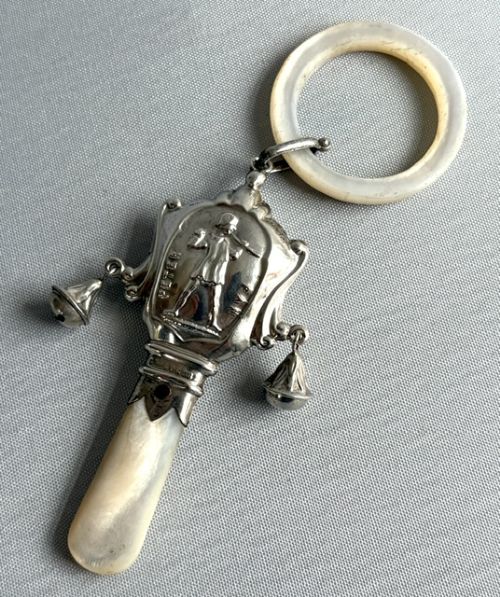
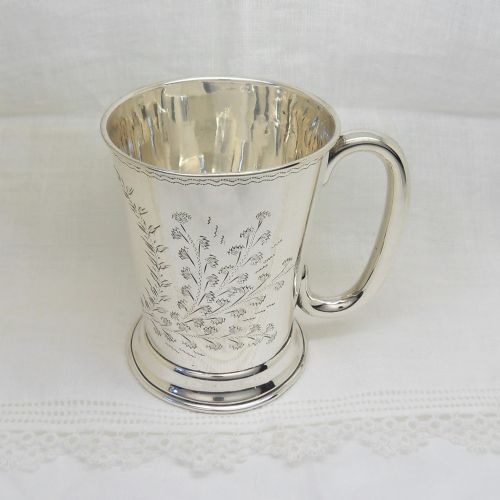
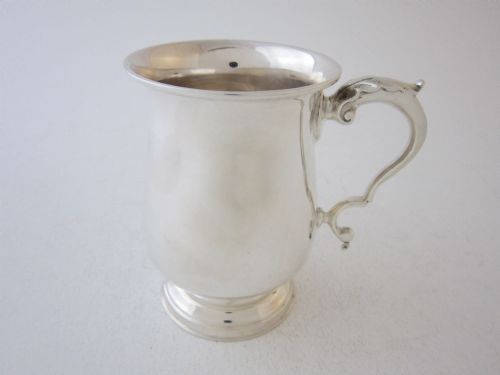
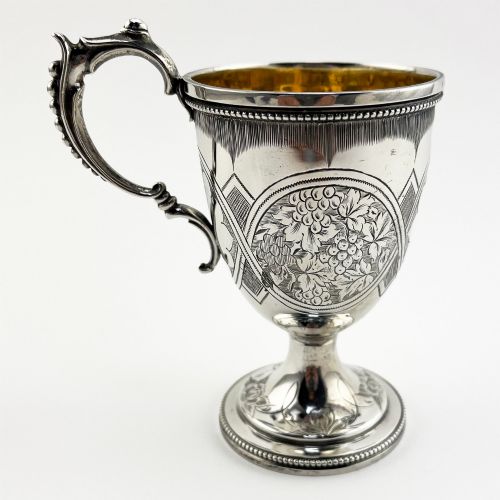
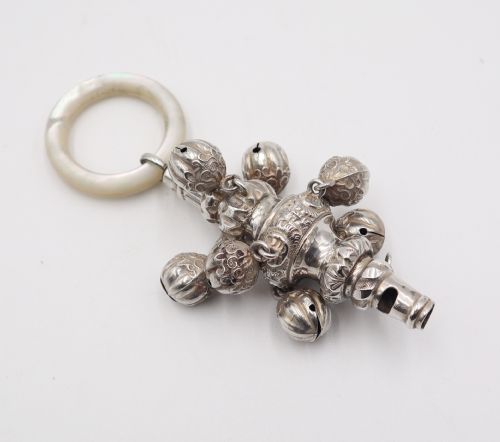
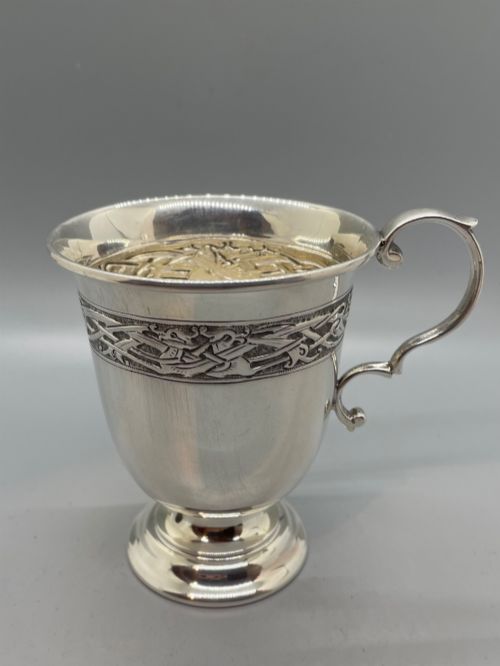
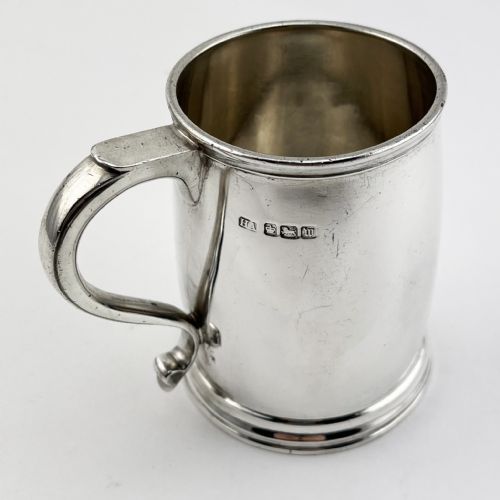
Mugs and tankards form a large part of the selection, often featuring baluster forms or rococo scroll handles alongside circular porringers and bowls. Rattles frequently combine precious metals with tactile elements like mother of pearl and coral to amuse the child.
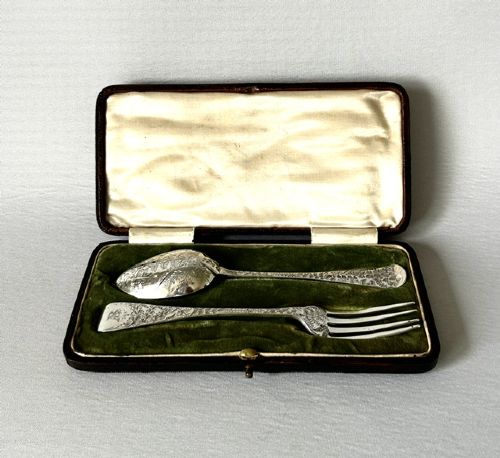
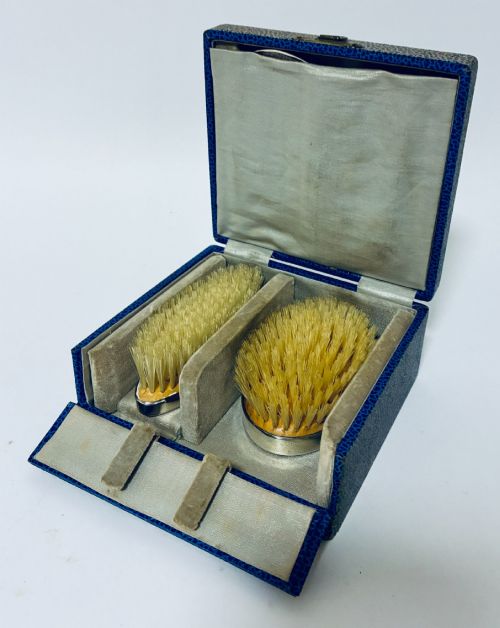
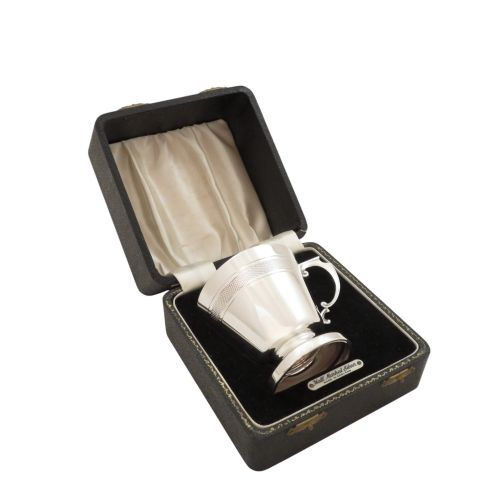
Boxed presentation sets appear regularly, sometimes housing matched cutlery or cups intended as keepsake gifts for naming ceremonies and birthdays. Makers mark pieces from regional assay offices such as Birmingham and Chester, alongside international houses.
How they were made
Silversmiths utilised sterling silver and silver gilt, forming mugs and bowls through traditional raising and spinning techniques before applying decorative chased or engraved motifs. Handles were cast separately and soldered securely to the body of tankards and mugs.
Rattles combined silver shells with internal noisemakers, frequently mounted alongside organic materials like mother of pearl teethers and coral handles. Presentation cases utilised fitted wooden structures lined with silk and velvet to protect the polished metal within.
Vintage Baby Silver Retail Price Guide 2026
Typical asking prices for vintage baby silver among the pieces listed under this phrase on Sellingantiques today, from the lower quarter to the upper quarter. They describe what is for sale here now, not the wider market.
Historic babies enjoyed rattles fitted with natural coral handles, believed by past generations to ward off bad luck.
What varies in quality
The weight and gauge of the silver distinguish sturdier utilitarian pieces from lighter items, with heavier mugs and bowls offering a more substantial handfeel. Crispness in hallmark stamps and definition in chased scrollwork or engraving indicate the skill of the original workshop.
The preservation of fitted presentation cases and the integrity of paired organic elements, such as mother of pearl or coral on rattles, influence the overall completeness of a piece. Finer examples retain their original gilding internal to mugs and clear, legible maker marks.
Joseph Gloster·R E Stone·Tiffany and Co
The Vintage Baby Silver Glossary
- Baluster form
- A vertical architectural shape swelling gently towards the base, commonly seen on christening mugs and tankards. This silhouette provides stability and a comfortable grip.
- Porringer
- A small, shallow bowl with one or two flat horizontal handles, often utilised as a feeding or cereal bowl for infants in earlier centuries. The form evolved into decorative presentation pieces.
- Silver gilt
- Sterling silver that has been coated with a thin layer of gold, frequently applied to the interior of christening mugs to protect the metal from acidic liquids. It imparts a rich, warm yellow tone.
- Assay office
- An official body responsible for testing the purity of precious metal items and stamping them with hallmark symbols. Towns like Birmingham and Chester operated prominent offices.
Vintage Baby Silver: Frequently Asked Questions
How do I clean silver baby items?
Cleaning vintage silver requires a gentle approach using a specialised silver cloth and mild soapy water to remove tarnish without scratching the soft metal. Avoid abrasive pastes or harsh chemical dips that can strip away original patination and hallmarks.
Items featuring organic additions like mother of pearl or coral require extra care to keep moisture away from delicate joints and mountings.
Are silver rattles safe for babies?
While historic silver rattles were made for children to hold and use, modern collectors generally treat vintage and antique pieces as display objects rather than toys. Older rattles may contain small parts or materials that do not meet contemporary safety standards for infant use.
Displaying them in fitted cases or on shelves protects the delicate metalwork and any attached coral or pearl components from accidental damage.
How do I date vintage silver?
Dating silver relies heavily on the hallmarks stamped directly onto the metal, which typically include a maker mark, a standard mark for silver purity, and a date letter corresponding to a specific assay year. Additional clues come from the overarching style, such as rococo revival scrolls or mid-century minimalism.
Comparing regional town marks from offices like Birmingham or Chester helps narrow down the exact decade of manufacture.