










Vintage Asian Side Table
A vintage asian side table brings grounding form and rich regional grain into a room, spanning modest elm stools to carved rosewood nests.
Vintage Asian Side Table
Buyers seeking a vintage asian side table encounter a diverse selection of forms including nests of tables, console tables, plant stands, and coffee tables. These pieces originate across the nineteenth and early twentieth centuries, drawing on varied regional traditions from Japan, China, and Burma.
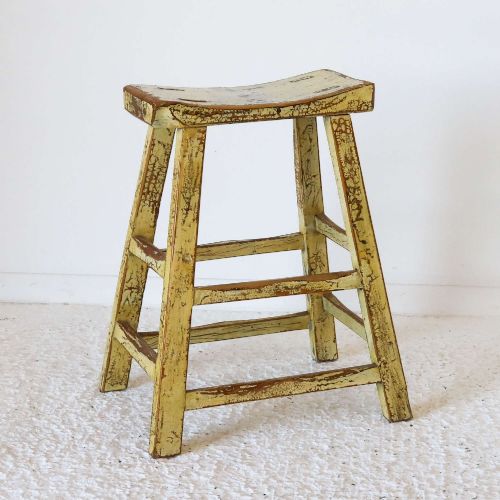
The most common examples on this page are compact elm or hardwood tables designed for occasional use, alongside painted or lacquered surfaces. Makers shaped these items for practical domestic functions such as serving tea, holding lamps, or displaying planters.
Styles range from restrained provincial forms to decorative Chinoiserie and Qing Dynasty court designs. This variety allows a buyer to integrate either a simple timber surface or a brightly coloured lacquered piece into a modern interior.
Materials and construction
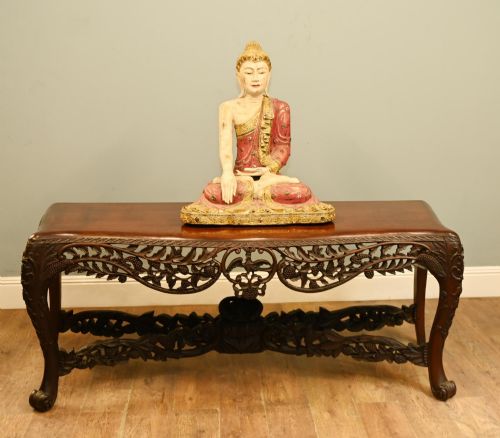
Craftsmen built these tables using dense timbers like hardwood, rosewood, teak, and elm, often pairing them with inset marble tops or intricate mother of pearl inlay. Joinery relied on traditional framing techniques that accommodated the natural movement of solid wood over decades.
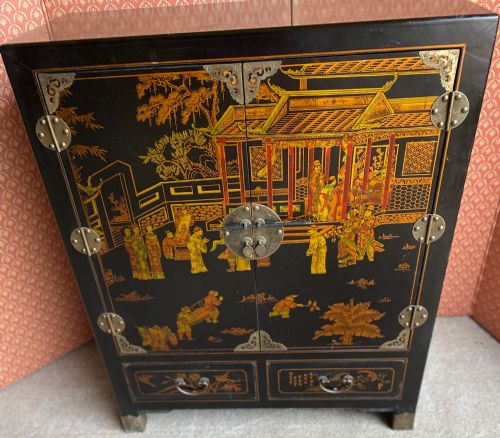
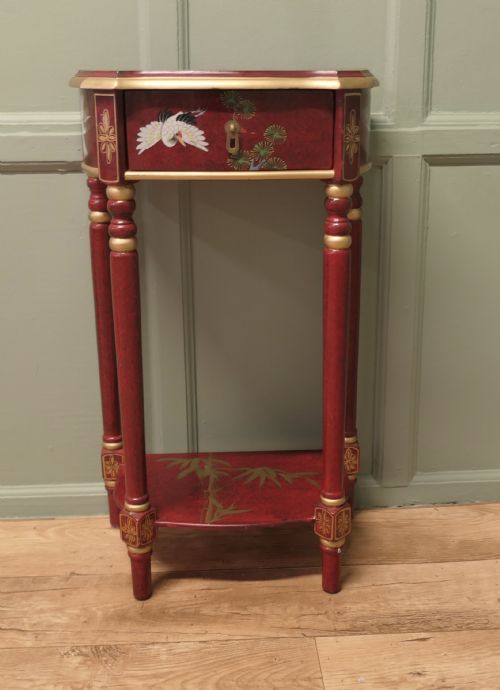
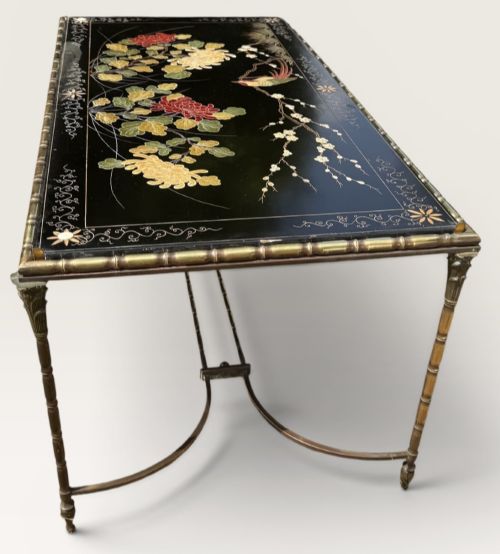
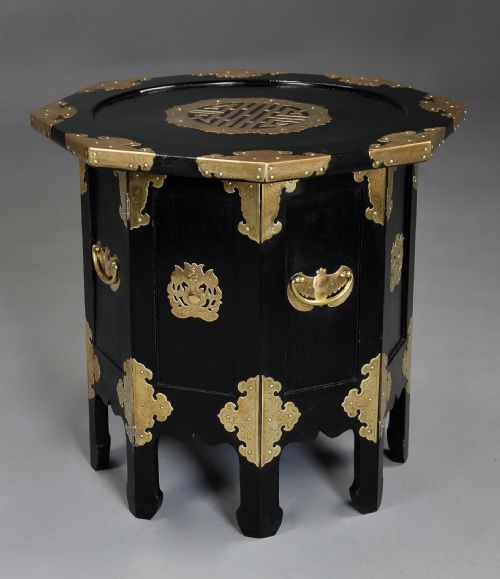
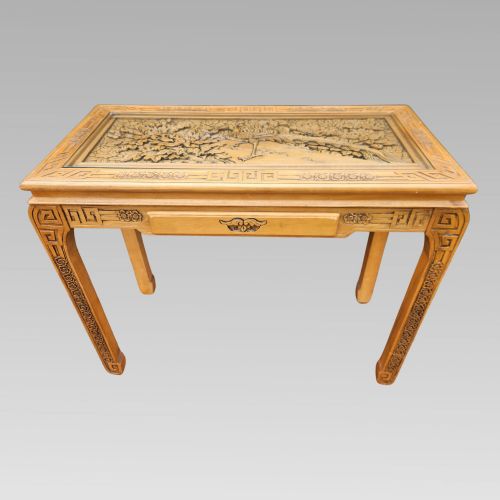
Surface decoration frequently involved layers of red or black lacquer, hand-painted Chinoiserie motifs, or carved relief work depicting floral and animal subjects. Brass mounts and corner brackets provided structural reinforcement while adding metallic contrast to the dark timber.
Vintage Asian Side Table Retail Price Guide 2026
Typical asking prices for vintage asian side table among the pieces listed under this phrase on Sellingantiques today, from the lower quarter to the upper quarter. They describe what is for sale here now, not the wider market.
Periods represented span from the 18th century through the Victorian era and into the early 20th century.
Assessing quality and execution
Quality in these tables rests on the crispness of the carving and the stability of the timber frame rather than surface polish alone. Superior pieces exhibit tight joinery, balanced proportions, and deliberate execution in inlaid mother of pearl or carved relief panels.
The preservation of original lacquer and paint finishes heavily influences the character of a piece. Examples that retain their undisturbed early surface show greater integrity than those with heavy modern interventions.
Maison Bagues
The Vintage Asian Side Table Glossary
- Elm
- A tough, durable hardwood with a prominent interlocking grain, frequently utilised in regional Chinese furniture. It takes stain and lacquer well while resisting splitting under stress.
- Jardiniere stand
- A tall, elevated table or pedestal specifically constructed to support heavy plant pots or floral arrangements. These stands often feature inset marble tops to protect the wood from moisture.
- Nest of tables
- A set of graduated tables designed to slide neatly beneath one another when not in use. They became particularly popular in hardwood and rosewood for flexible entertaining.
- Meiji Period
- The era in Japanese history spanning from 1868 to 1912, characterised by the opening of trade and distinct decorative arts. Furniture from this time often displays refined carving and metalwork.
- Qing Dynasty
- The final imperial dynasty of China, lasting from 1644 to 1912, noted for formal hardwood furniture and intricate carved decoration. Pieces from this period carry significant cultural and structural weight.
Vintage Asian Side Table: Frequently Asked Questions
What is a vintage asian side table used for?
These tables function as versatile surfaces for lamps, drinks, or decorative objects within a living space.
Smaller forms like nests or plant stands easily move around a room to provide immediate utility beside seating.
How do I care for lacquered wood?
Keep lacquered surfaces away from direct sunlight and excessive heat to prevent cracking or fading of the finish.
Dust gently with a dry, soft cloth and avoid chemical polishes or abrasive cleaners.
Are marble top stands heavy?
The inset marble slabs add substantial weight to the overall piece, helping to anchor tall plant stands and occasional tables securely.
This stone also provided a practical, water-resistant surface for holding plants and vases.
How do I identify a nest of tables?
A nest consists of multiple tables made in graduating sizes so the smaller units slide completely under the largest one.
This design maximises floor space while offering multiple surfaces when entertaining.