





Vintage Art Nouveau Tray
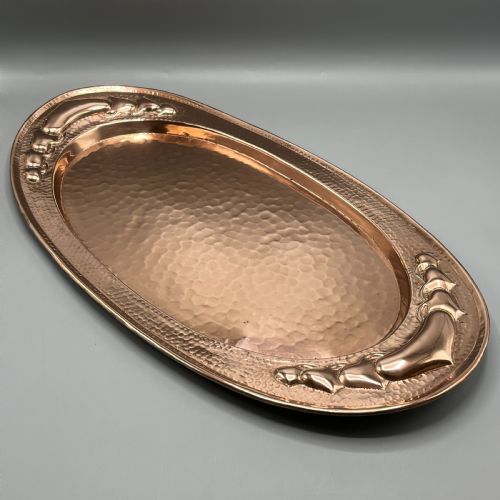
A vintage art nouveau tray brings sweeping organic lines and floral motifs to domestic metalwork, prized for its expressive craftsmanship.
Vintage Art Nouveau Tray
When searching for a vintage art nouveau tray, buyers encounter pieces spanning the late nineteenth century through to the early decades of the twentieth century, with items from around 1900 appearing frequently alongside Arts and Crafts and Edwardian examples.
These items emerge in forms such as copper and brass serving pieces, pewter crumb trays, and card dishes alongside larger desk accessories and table settings.
The aesthetic bridges several periods, incorporating Victorian production methods with the sinuous plant forms and stylized maiden figures characteristic of the style across Britain, France, and Germany.
Materials and construction methods
Metalwork dominates the surviving pieces, utilising pewter, copper, brass, and Britannia metal formed through pressing, casting, and repoussé decoration.
Makers applied hammered textures and surface silvering or plating to enhance the fluid botanical reliefs that define the period.
Vintage Art Nouveau Tray Retail Price Guide 2026
Typical asking prices for vintage art nouveau tray among the pieces listed under this phrase on Sellingantiques today, from the lower quarter to the upper quarter. They describe what is for sale here now, not the wider market.
Several pieces feature winged insects and maiden figures peering out from botanical borders.
Judging the quality of design and execution
Quality rests upon the crispness of the chased or cast botanical details and the depth of the repoussé work in copper and brass.
Makers such as WMF and Orivit achieved higher standards through refined proportions and harmonious integration of handles and borders.
WMF·Orivit·Liberty and Co·Zimmermann·Maurice Dufrene
The Vintage Art Nouveau Tray Glossary
- Repoussé
- A metalworking technique where the design is hammered into relief from the reverse side. This creates tactile, three-dimensional plant motifs across the surface.
- Pewter
- A malleable metal alloy containing tin that accepts low-relief casting easily. It forms the body of many domestic dishes and card trays from this era.
- Britannia metal
- A specific tin-based alloy suited to silver plating and shaping. Manufacturers utilised this material for decorative tableware and holloware.
- Tazza
- A shallow bowl or dish raised on a standard foot. These serve as display pieces or card trays in period interiors.
- Chamberstick
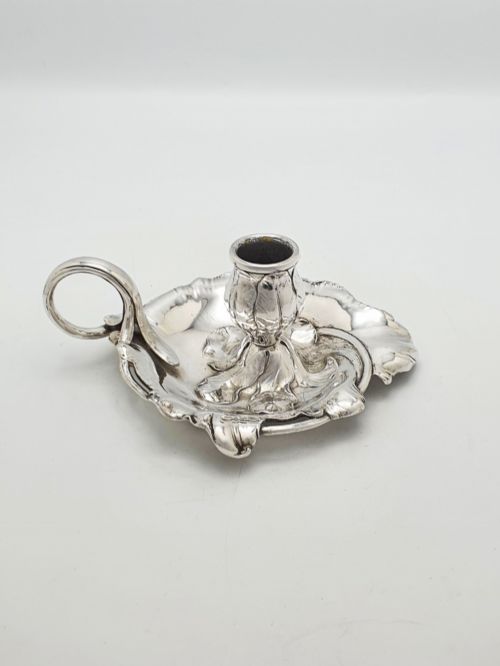
- A low candlestick fitted with a handle and a wide drip pan. They appear in metalwork configurations adapted for bedside or desk use.
Vintage Art Nouveau Tray: Frequently Asked Questions
What metal is most common?
Pewter and copper appear frequently among surviving examples, often associated with continental and British metalwork shops.
These materials accommodated the fluid casting and hand-beaten textures favored by designers of the period.
How do I clean them?
Maintenance requires gentle washing with mild soap and water to preserve the original surface patination.
Harsh metal polishes should be avoided on patinated copper, silver plate, and pewter to prevent removing the aged finish.
Are these items marked?
Maker stamps and production numbers frequently appear on the underside of metal dishes and desk trays.
Guild marks and factory ciphers help identify the manufacturing firm and approximate period of origin.
Can I use them daily?
Many metal and glass items function well for holding visiting cards, stationery, or small desk accessories.
Careful handling ensures the soft alloys and plated surfaces remain undamaged during everyday domestic use.