



Vintage Aquamarine Necklace
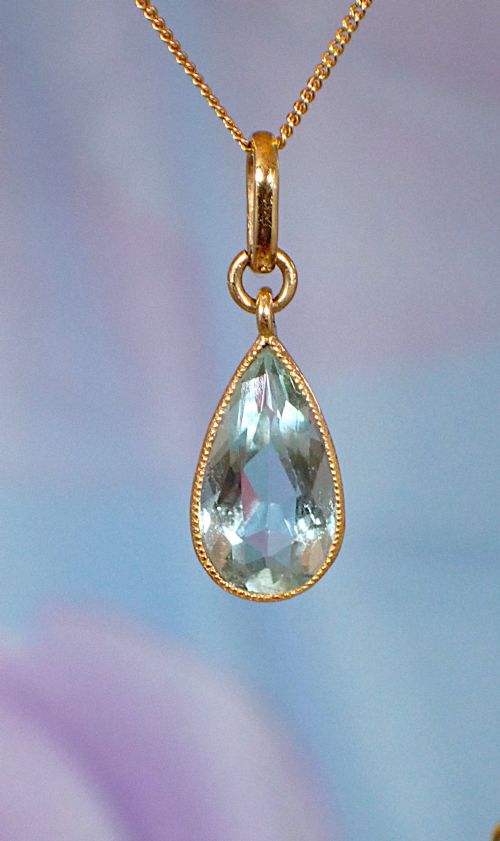
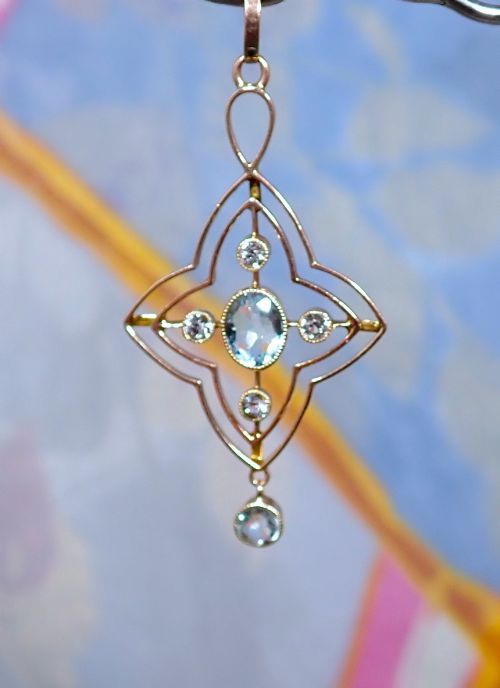
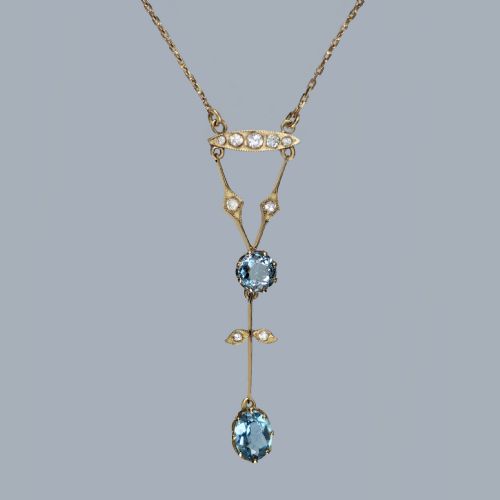
A vintage aquamarine necklace brings together pale blue stones and period metalwork, offering wearable history that catches the light with every movement.
Vintage Aquamarine Necklace
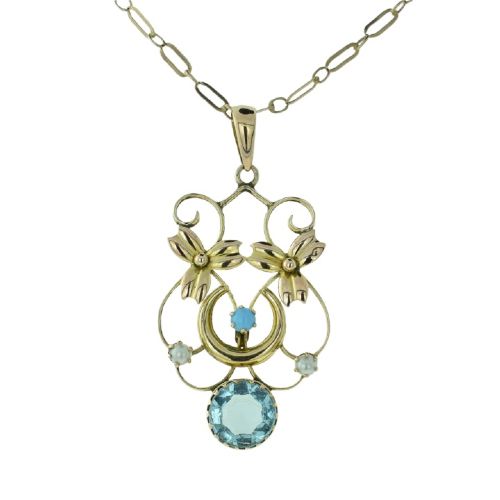
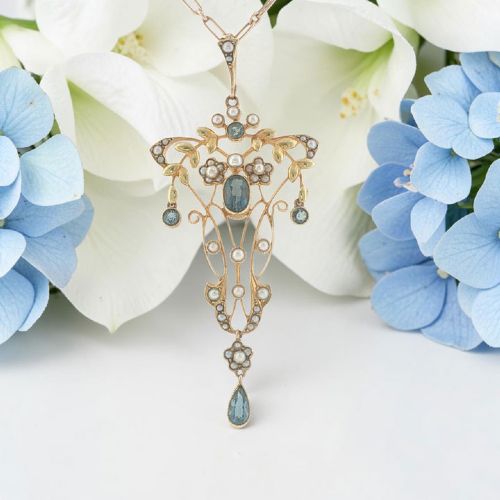
The versions most common on this page date from the Edwardian era and the 1930s Art Deco period. Buyers encounter Edwardian examples featuring seed pearls and 9ct gold alongside geometric platinum designs from the mid-twentieth century.
How they were made
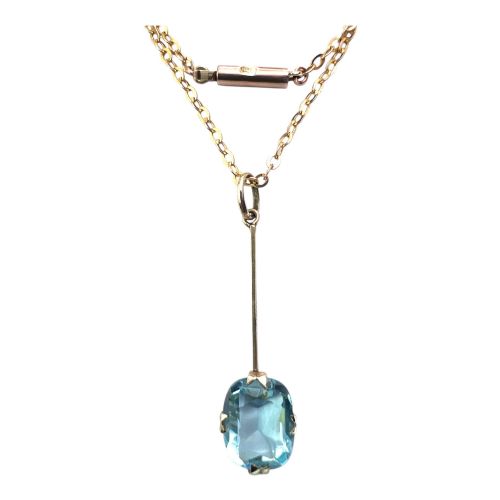
Goldsmiths utilised 9ct gold, 15ct gold, platinum, and yellow gold to construct intricate settings that secure the central stones. Stones are often paired with diamonds, white sapphires, or seed pearls to enhance the blue hues of the aquamarine.
Craftsmen employed open-back bezel and collet settings to allow light to pass through the aquamarine crystals. Drop pendants and lavaliers incorporated articulated joints to ensure the lower sections sway naturally when worn.
Vintage Aquamarine Necklace Retail Price Guide 2026
Typical asking prices for vintage aquamarine necklace among the pieces listed under this phrase on Sellingantiques today, from the lower quarter to the upper quarter. They describe what is for sale here now, not the wider market.
Listings feature pieces spanning from the Edwardian era through the 1950s, utilising yellow gold, white gold, and platinum.
What varies in quality
The depth of colour and clarity of the aquamarine dictate the visual impact of the piece. Stones with a saturated, even blue tone and minimal inclusions elevate a necklace above paler, heavily included examples.
The refinement of the metalwork and the integration of supporting gems such as diamonds separate standard production from superior craftsmanship. Original matching chains and intact, delicate seed pearl work indicate a higher grade of survival.
C'est Laudier
The Vintage Aquamarine Necklace Glossary
- Aquamarine
- A pale blue variety of the mineral beryl that forms the central stone in these necklaces. The name derives from the Latin for seawater, reflecting its characteristic tint.
- Edwardian
- A stylistic and historical period spanning the early twentieth century, known in jewellery for delicate openwork and platinum-topped gold. Pieces from this era frequently incorporate seed pearls and flowing lines.
- Art Deco
- A design movement prominent in the 1920s and 1930s defined by geometric symmetry, clean lines, and the use of platinum alongside diamonds.
- Lavalier
- A pendant necklace featuring a central gemstone with one or more smaller drops hanging below. This style gained popularity during the Edwardian period.
- Seed pearl
- A very small, naturally occurring or early cultured pearl drilled and threaded into intricate clusters or borders. They appear frequently alongside aquamarines in Edwardian drop pendants.
Vintage Aquamarine Necklace: Frequently Asked Questions
How do I date a vintage aquamarine necklace?
Dating relies on stylistic markers such as Edwardian filigree work, Art Deco geometry, or mid-century stone cuts. Hallmarks stamped on the metal provide additional clues regarding the year of manufacture.
Examining the construction of the chain and settings helps confirm whether the piece belongs to the early twentieth century or later decades.
Are aquamarines treated to improve colour?
Many aquamarines undergo gentle heating to reduce green undertones and produce a clearer blue shade. This practice has a long history in gemstone enhancement.
Historical pieces often feature stones with natural pastel tones characteristic of unheated or minimally treated material from earlier mining sources.
How should I clean my antique necklace?
Cleaning requires warm soapy water and a soft brush to remove oils accumulated beneath the stone settings. Harsh chemical dips risk damaging delicate seed pearls or softer metals.
Professional ultrasonic cleaning is unsuitable for pieces containing pearls or closed-back settings where moisture can become trapped.
Can I wear a vintage aquamarine necklace daily?
Aquamarine measures around seven and a half to eight on the Mohs scale, making it durable enough for regular wear. Careful handling prevents impact damage to the corners of emerald-cut stones.
Storing the necklace separately in a lined box protects the delicate gold chains and seed pearls from tangling and pressure.