
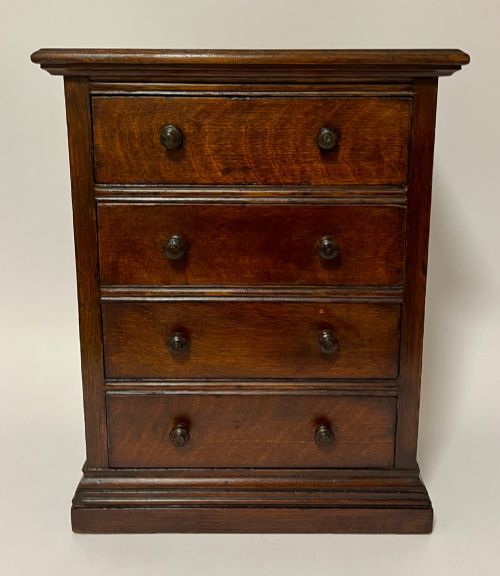


Vintage Apprentice Piece
These vintage apprentice piece items are small-scale furniture and objects made in wood, brass, and leather, prized by collectors for their intricate craftsmanship.
Vintage Apprentice Piece
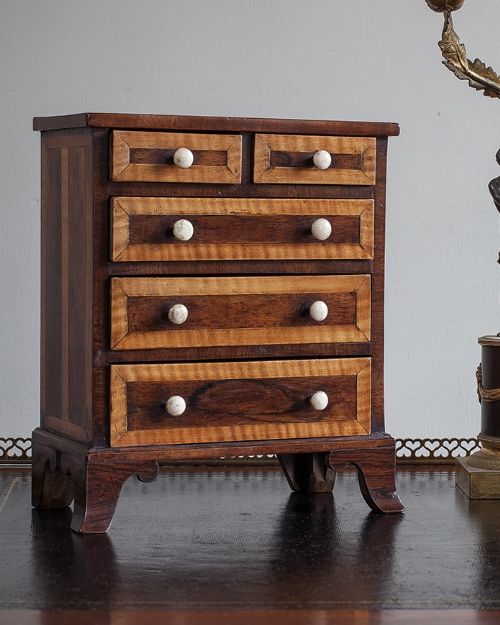
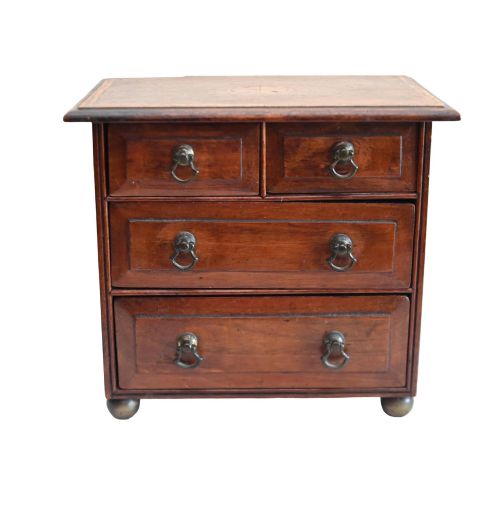
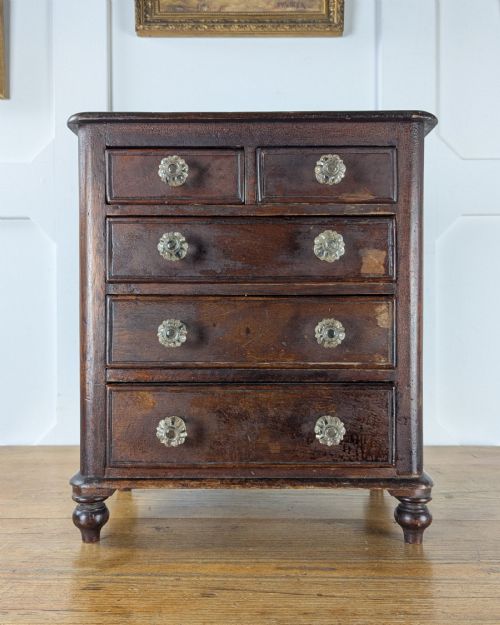
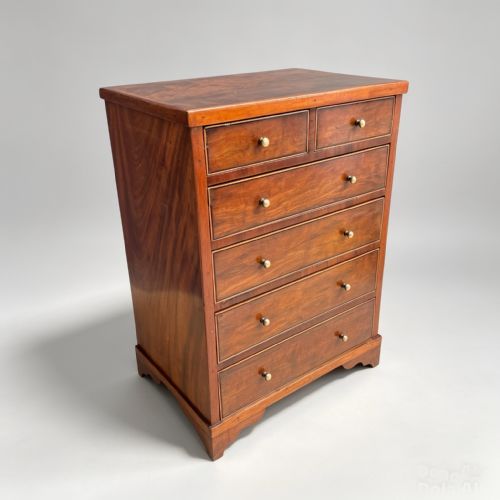
When you search for a vintage apprentice piece, you are looking at small-scale furniture models and decorative objects created across several periods including the 18th century, Victorian era, and Edwardian period. The selections here consist predominantly of miniature chests of drawers, alongside wardrobes, desks, and occasional decorative pieces.
These items originate from various traditional styles such as Georgian Revival, William and Mary Revival, and French Provincial designs. Miniature chests of drawers in mahogany and oak appear most frequently among the current listings on this page.
Makers produced these smaller items to demonstrate skill or as salesman samples, resulting in scaled-down versions of full-size furniture. Buyers encounter diverse forms ranging from fall-front desks to leather miniature shoes and small suites.
How they were made
Cabinetmakers utilised traditional timber such as mahogany, walnut, oak, and rosewood, often pairing the primary wood with secondary timbers for internal drawer linings. These woods were shaped using standard joinery techniques suited to small-scale construction.
Makers incorporated materials like brass for handles and escutcheons, bone for subtle inlay details, and leather for desk surfaces or miniature suite upholstery. Glass and painted finishes also appear on specific French and Edwardian examples.
Among the miniature chests and desks, one unexpected Edwardian listing presents an entire three-piece art deco suite rendered in leather.
What varies in quality
The degree of refinement in miniature joinery distinguishes finer examples from simpler workshop exercises. Superior pieces display precise dovetail joints, well-proportioned mouldings, and grain matching that mirrors full-scale furniture of the period.
Proportion and attention to miniature hardware contribute significantly to the overall merit of an item. Pieces retaining original brass fittings, turnings, and undisturbed patina command greater appreciation among collectors.
The Vintage Apprentice Piece Glossary
- Apprentice piece
- A small item of furniture made by a trainee to demonstrate proficiency to a guild or master. These objects replicate the full-scale forms of their era in miniature.
- Dovetail
- A joint used in drawer construction formed by interlocking wedge-shaped fingers. Fine examples show tight, precise cuts.
- Escutcheon
- A small protective plate surrounding a keyhole, frequently cast in brass on these miniature drawers and cabinets.
- Secretaire
- A cabinet or chest incorporating a pull-down writing drawer with fitted internal compartments. Miniature versions replicate this complex cabinetry on a small scale.
- Turned feet
- Feet shaped on a lathe, commonly found supporting Victorian and Georgian miniature chests of drawers.
Vintage Apprentice Piece: Frequently Asked Questions
What is an apprentice piece?
An apprentice piece is a small-scale model of furniture created by a woodworker in training to prove their skill to a master craftsman.
These items were kept as proof of capability or used as portable salesman samples to show clients designs before ordering full-size pieces.
How old are these miniatures?
The pieces listed span multiple centuries, with examples originating from the 18th century, the Victorian era, and the Edwardian period.
Matching the timber, construction methods, and hardware styles helps determine the approximate age of each individual item.
Where were they displayed?
Historical owners typically placed these small chests and cabinets on top of full-size furniture, mantelpieces, or dedicated tabletop surfaces.
Today, collectors position them on shelves, desks, or accent tables where their detailed scale can be observed up close.
Are all miniatures apprentice pieces?
Not every miniature furniture item was made by a trainee; some were produced as salesman samples, dollhouse furnishings, or decorative ornaments.
Distinguishing between categories depends on the sophistication of the joinery, the quality of materials, and historical attribution.