




Vintage Alabaster Table Lamp
A vintage alabaster table lamp brings a warm, translucent glow to a room, drawing the eye with its carved stone and period detail.
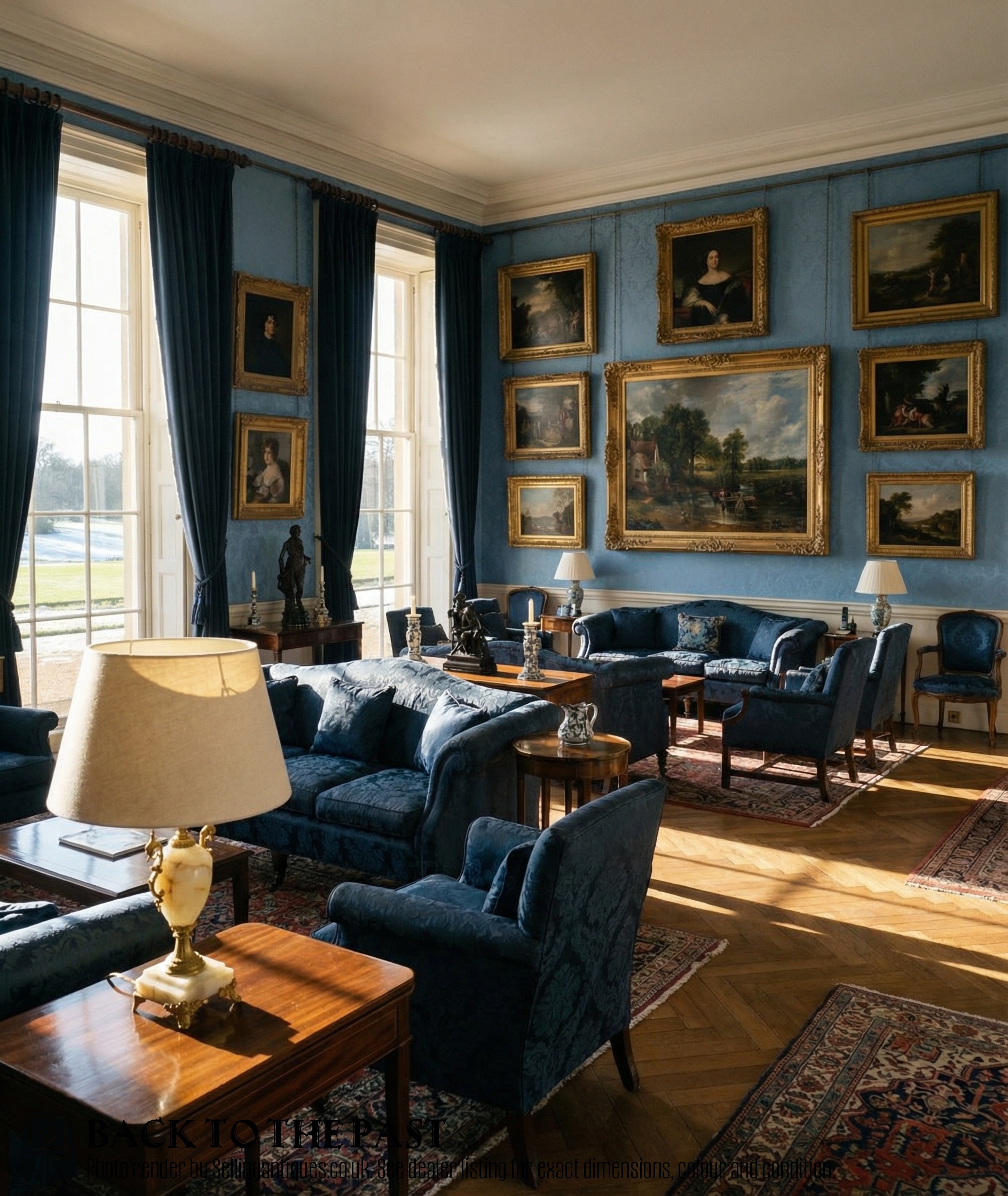
Vintage Alabaster Table Lamp
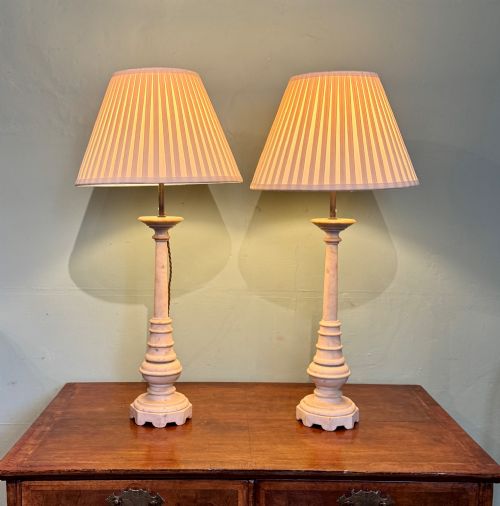
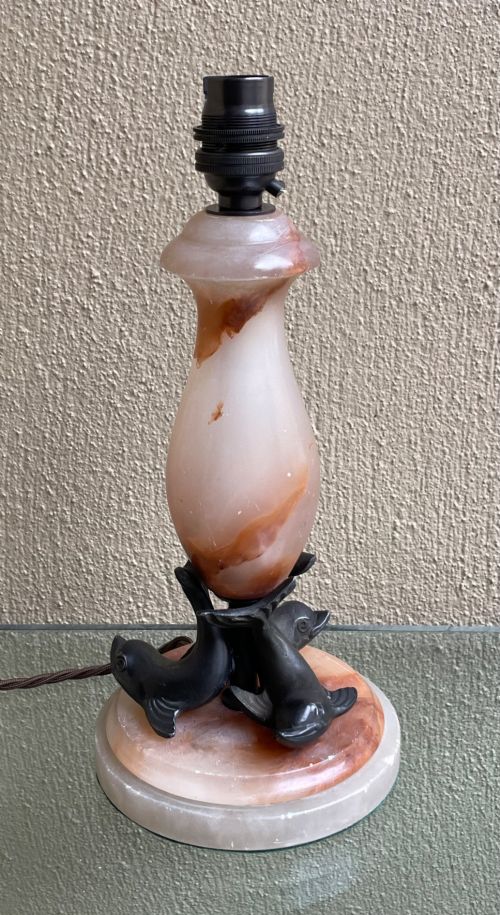
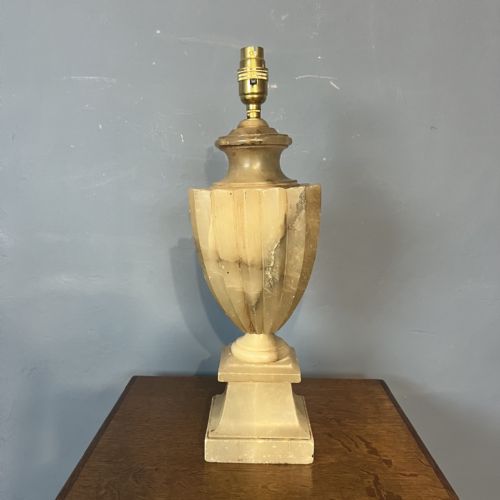
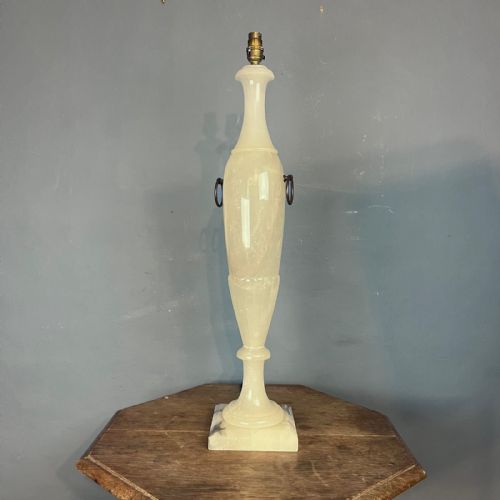
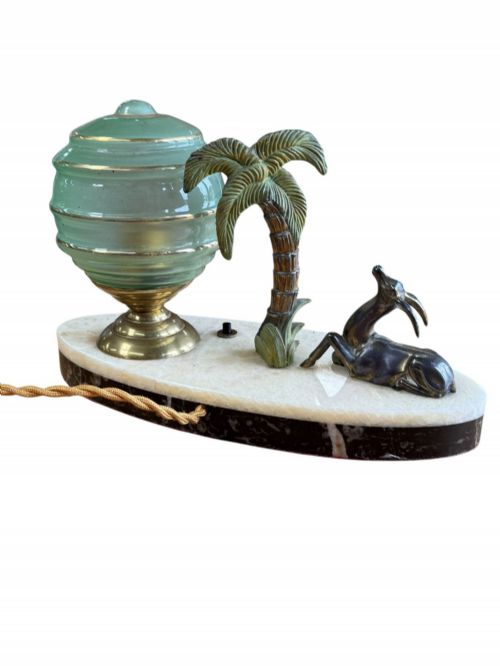
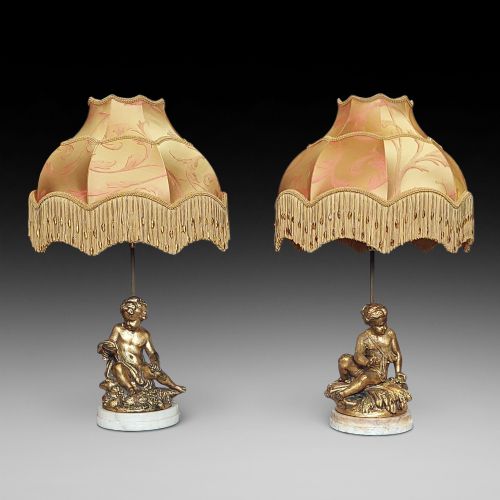
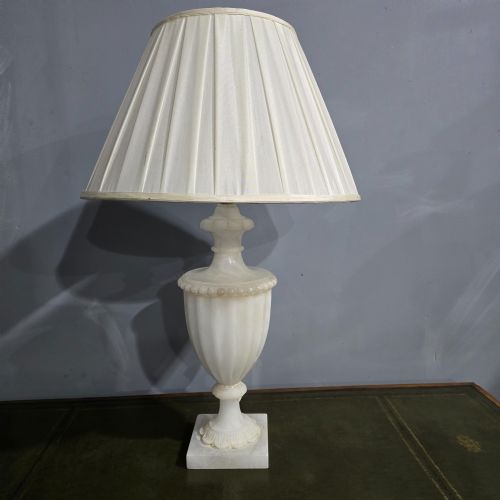
A vintage alabaster table lamp captures the sculptural forms of the early twentieth century, drawing from Edwardian elegance and Art Deco geometry. These pieces range from substantial campana urn bases to figural studies involving dolphins and ladies.
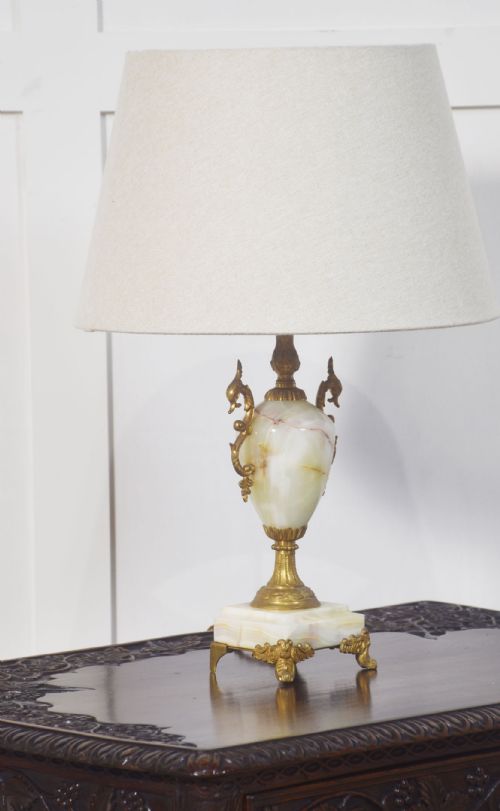
The selection on this page relies heavily on Italian craftsmanship from the 1920s and 1930s, alongside nineteenth-century and Edwardian examples. Buyers frequently encounter pairs of white marble and onyx variations mounted in metal.
Lighting from this era functions primarily as both a decorative focal point and a source of ambient illumination. The soft stone diffuses light uniquely compared to ceramic or glass alternatives.
Materials and Construction
The primary material is carved alabaster, often paired with contrasting elements such as brass, gilt metal, and silver plate. Stonework is frequently combined with marble bases and fabric shades to complete the assembly.
Makers utilised turning and hand-carving techniques to shape the soft stone into classical urns, figural supports, and geometric columns. Metal mounts and fittings secure the electrical components to the stone bodies.
The inventory spans the 1900s to the 1930s, featuring materials such as alabaster, marble, onyx, and gilt metal.
Evaluating Quality
Quality rests upon the crispness of the stone carving and the integration of metal mounts. Finer examples show deeply sculpted figural details and well-balanced proportions rather than simple turned cylinders.
The choice of material elevates certain pieces, with translucent white alabaster and richly veined onyx commanding attention. Original metal mounts and patinated silver plate further distinguish superior workshops.
The Vintage Alabaster Table Lamp Glossary
- Alabaster
- A fine-grained, translucent stone prized for carving decorative objects and lamp bases. It allows light to pass softly through its surface.
- Campana Urn
- A bell-shaped vessel form frequently used as the central body for classical lighting. This silhouette originates from ancient Roman metal and stone containers.
- Art Deco
- A design style spanning the 1920s and 1930s characterised by streamlined geometric forms and stylised figural work. Lamps from this movement often feature stepped bases and metallic contrasts.
- Onyx
- A banded variety of chalcedony quartz often utilised alongside or in place of marble for heavy decorative bases. Its natural striping provides distinct visual depth.
Vintage Alabaster Table Lamp: Frequently Asked Questions
How do I clean alabaster?
Alabaster is a soft and porous stone that absorbs liquids easily. Dust the surface gently with a dry microfibre cloth and avoid water or chemical cleaners.
Moisture can permanently stain or dissolve the polished finish. Professional restoration is recommended for heavily soiled or damaged pieces.
Are these lamps wired for modern use?
Most vintage pieces have been rewired at some point in their history to meet contemporary safety standards. Buyers should inspect the flex and plug upon arrival.
Qualified electricians can easily update internal components while preserving the original exterior stonework and metal mounts.
How do I date an alabaster lamp?
Dating relies on stylistic clues such as Edwardian classical motifs or Art Deco geometric lines. The construction of the metal mounts and wiring access points also provides chronological context.
Comparing the turned stone profile against documented pieces from the 1920s and 1930s helps narrow down the period of manufacture.
Can I replace the fabric shade?
Shades can be replaced to suit interior colour schemes, provided the fitting matches the original harp or carrier. Many period lamps look best with simple silk or pleated shades.
Ensure the new shade does not exceed the recommended bulb wattage to protect the surrounding stone from excess heat.