

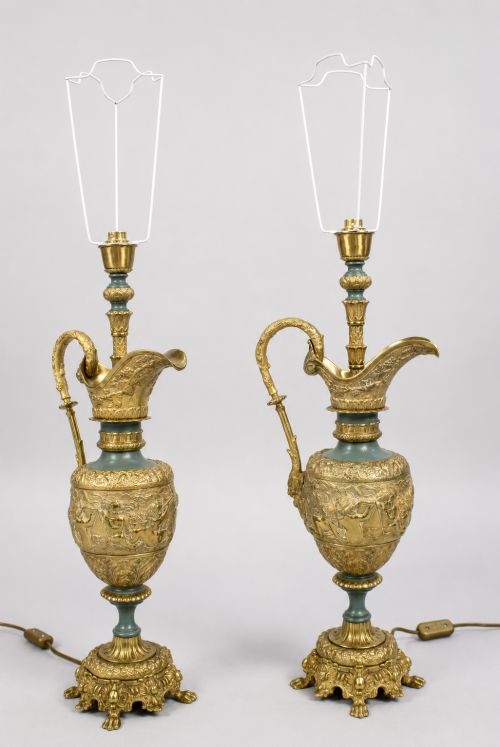


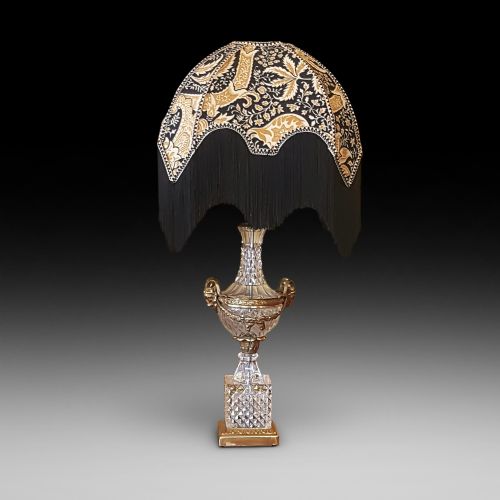


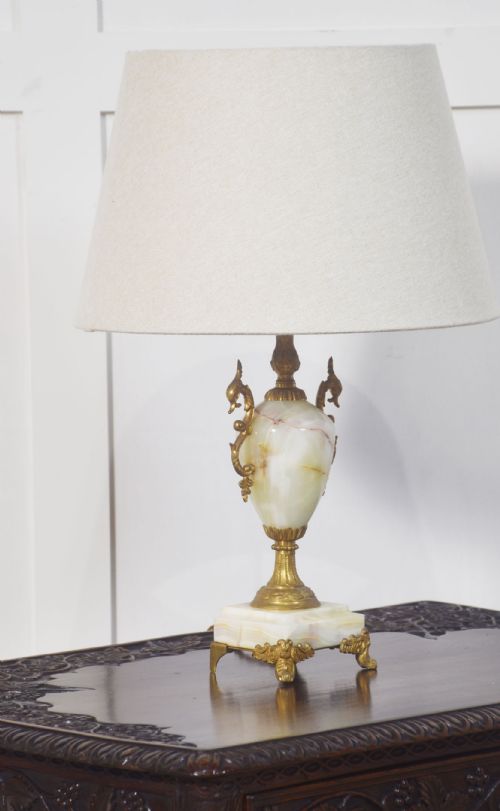


Gilt Metal Urn Lamp
These gilt metal urn lamps bring classical form and warm metallic light to a room, spanning periods from the Victorian era through the Edwardian years.
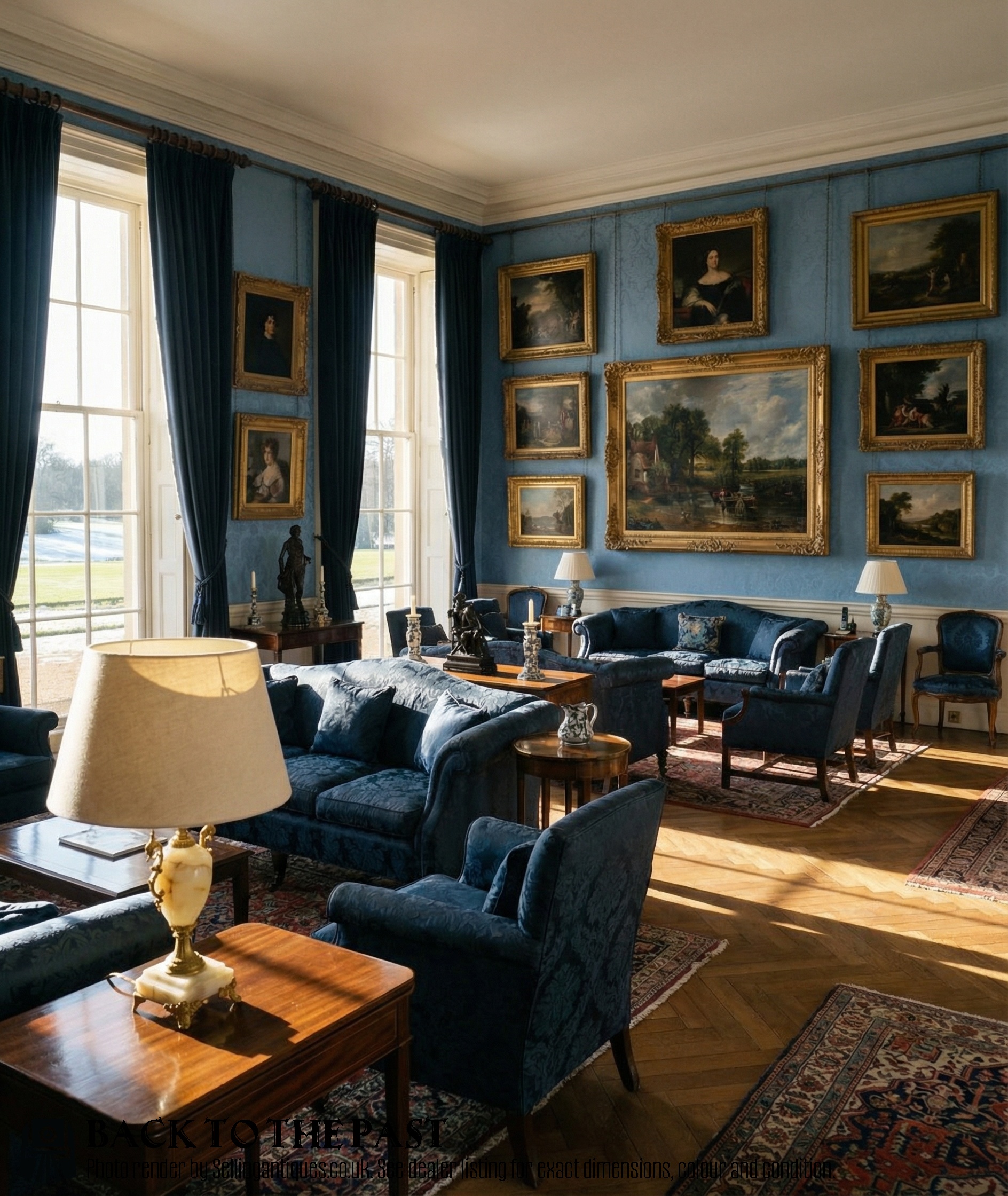
Gilt Metal Urn Lamp
A gilt metal urn lamp takes classical vessel shapes, including ewers, amphorae, and Medici urns, and adapts them for domestic illumination. These pieces serve as striking focal points on side tables and desks, combining sculptural presence with practical lighting.
The selection here draws heavily on late 19th-century French and Victorian designs, often channeling Neoclassical, Empire, and Rococo Revival aesthetics. You will encounter paired arrangements alongside individual statement vessels, reflecting how makers varied their output for different interior scales.
How they were made
Makers utilised cast gilt metal, ormolu, and gilt bronze for the primary body structures, frequently mounting them on contrasting bases of onyx or incorporating components of porcelain, enamel, cut glass, and toleware. These varied materials were assembled with threaded rods and heavy mounts to ensure stability for the tall forms.
Surface decoration relies on fire gilding, hand painting, and applied cast ornament such as paw feet, cherubs, and classical swags. The integration of fabric shades completes the construction, balancing the substantial metallic weights of the urn bodies.
Gilt Metal Urn Lamp Retail Price Guide 2026
Typical asking prices for gilt metal urn lamp among the pieces listed under this phrase on Sellingantiques today, from the lower quarter to the upper quarter. They describe what is for sale here now, not the wider market.
Keep an eye out for diminutive cast cherubs clinging to the shoulders of ormolu lamp bases.
What varies in quality
The refinement of the casting work dictates the distinction between standard production and superior examples. Crisp detailing in the applied mounts, such as paw feet and handle attachments, separates finer pieces from simpler utilitarian castings.
Material selection also drives the hierarchy, particularly the inclusion of rich ormolu, hand-painted porcelain panels, or genuine onyx bases rather than plain substitutes. The integration of the electrical fittings into the original vessel without compromising the structural integrity defines the best-preserved specimens.
The Gilt Metal Urn Lamp Glossary
- Ormolu
- Finely chased gilt bronze, typically associated with decorative mounts on 19th-century furnishings and lighting.
- Ewer
- A large jug with a wide spout, frequently utilised as the primary silhouette for classical table lamps.
- Medici urn
- A bell-shaped crater urn form featuring a footed base and flared rim, originating from ancient marble vases.
- Toleware
- Painted and lacquered metalware, often seen in decorative lamp bodies from the period.
- Neoclassical
- A style drawing inspiration from the classical art and architecture of ancient Greece and Rome.
Gilt Metal Urn Lamp: Frequently Asked Questions
What periods do these lamps come from?
The pieces span the 19th century through to the early 20th century, covering the Victorian and Edwardian eras.
Production dates cluster heavily around the late 19th century and the year 1900, reflecting popular revivalist tastes in interior decoration.
How do I style an urn lamp?
These substantial pieces anchor a room best when placed on sturdy wooden side tables, chests, or console surfaces.
Pair symmetrical designs on matching surfaces or let an individual ewer or amphora lamp stand alone as a sculptural reading light.
What materials are used in the bodies?
Construction relies primarily on metals such as brass, gilt metal, gilt bronze, and ormolu.
Many examples incorporate contrasting elements of onyx, porcelain, enamel, cut glass, and fabric components.
Are these lamps found in pairs?
The inventory frequently includes matching pairs of late 19th-century ewer and table lamps.
Single statement urn lamps also appear regularly alongside these paired configurations.