





Brass Onyx Bedside Lamp
A brass onyx bedside lamp brings a warm, tactile weight to a room, combining natural stone with cast metal to anchor a table.
Brass Onyx Bedside Lamp
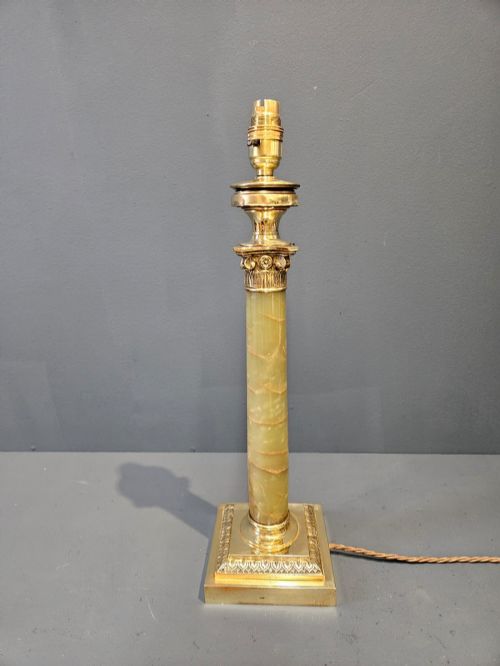
A brass onyx bedside lamp combines a turned or cast metal structure with natural banded stone, creating a sturdy base for illumination. These table lamps range from compact boudoir lighting to substantial columnar designs suited for a low table.
Most examples encountered on this page date from the Victorian era through the early twentieth century, taking inspiration from classical and neoclassical aesthetics. French workshops feature strongly, alongside domestic Victorian and Edwardian productions that utilise similar architectural vocabulary.
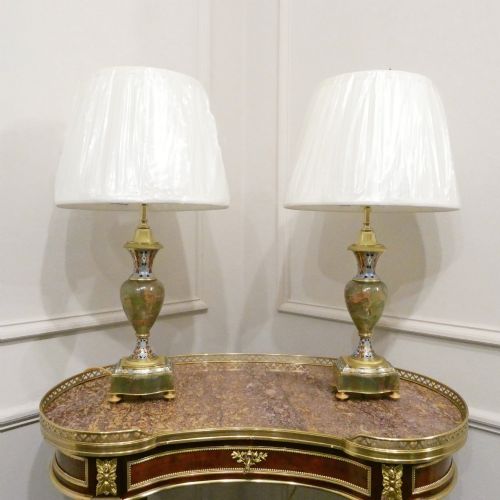
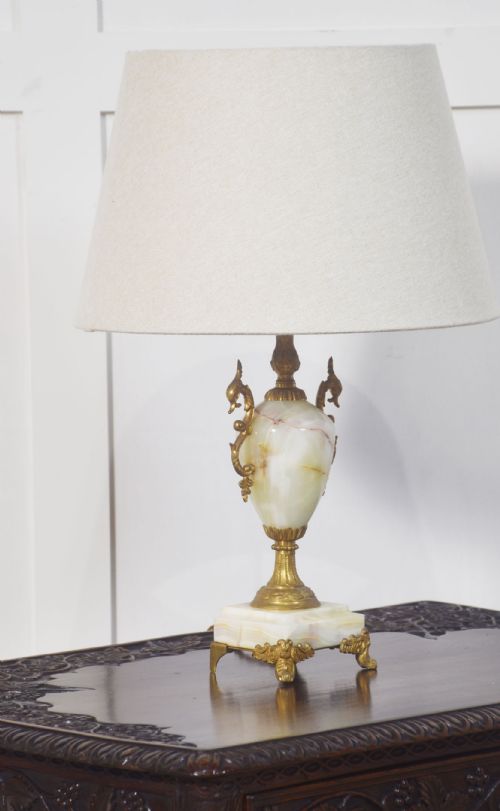
Forms vary from simple cylindrical columns to elaborate cassolette shapes mounted with gilt bronze and enamel details. Fabric shades commonly complete the pieces, diffusing light across the polished mineral surfaces.
Materials and construction
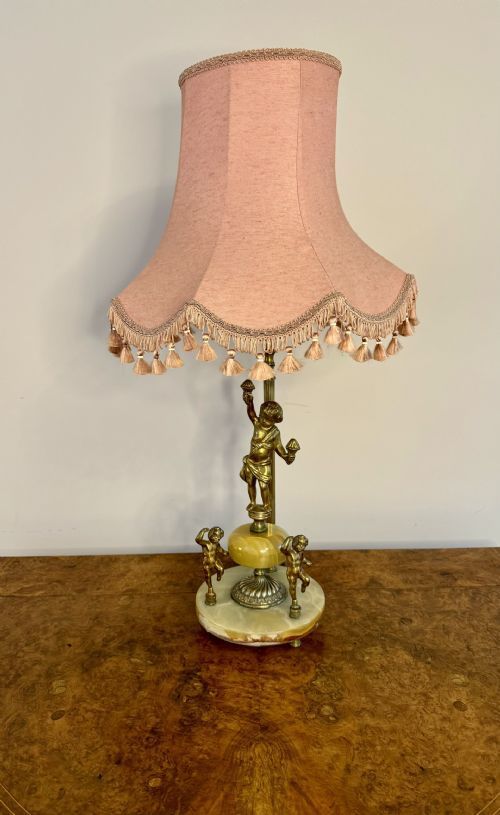
Makers shaped heavy blocks of white and coloured onyx or marble into shafts and bases, often pairing the stone with spun or cast brass and gilded metal mounts. Champlevé enamel and bronze fittings frequently add intricate decorative highlights to the stone bodies.
Metal components were cast, turned, and assembled using threaded rods and screws to secure the heavy mineral sections without cracking the fragile stone. Fabric elements were added to complete the fittings, though shades are frequently modern replacements on antique bodies.
Brass Onyx Bedside Lamp Retail Price Guide 2026
Typical asking prices for brass onyx bedside lamp among the pieces listed under this phrase on Sellingantiques today, from the lower quarter to the upper quarter. They describe what is for sale here now, not the wider market.
Listings feature periods spanning from the nineteenth century through the Art Deco era, predominantly utilising brass, onyx, and marble.
Judging quality in these lamps
Quality rests in the depth of the onyx banding and the crispness of the brass or gilt bronze mountings. Finer pieces display substantial stone weight with tight mineral grain and hand-chased metal details rather than simple pressed sheet components.
Proportion and architectural balance separate standard domestic production from exceptional French neoclassical or cassolette forms. The integration of enamel work and the weight of the metal fittings signal the level of craftsmanship invested in the individual lamp.
The Brass Onyx Bedside Lamp Glossary
- Onyx
- A banded variety of chalcedony quartz, though antique lamp bases frequently utilise calcite or similar decorative stones commercialised under this name. This material provides a translucent quality that catches and reflects ambient light.
- Cassolette
- A decorative vessel or vase form adapted into a lamp base, often featuring a removable lid or pierced metal collar. French makers frequently employed this classical shape during the nineteenth century.
- Champlevé
- An enamel technique where troughs are gouged into a metal surface and filled with vitreous paste before firing. This colourful decoration appears on mounts and collars of finer period pieces.
- Neoclassical
- A design style drawing on classical Greek and Roman architecture, visible in the columns and urn shapes of these lamps. The aesthetic dominated late Victorian and Edwardian formal decorative arts.
- Gilt bronze
- Copper alloy treated with a gold amalgam or finish to provide a rich, durable surface layer. It distinguishes higher-status mounts from simple lacquered brass.
Brass Onyx Bedside Lamp: Frequently Asked Questions
How do I wire an antique lamp?
Older lamps require rewiring to meet modern safety standards while preserving the original brass components. Professional electricians can thread modern flex through the internal channels without damaging the stone body.
It is essential to check that the internal hardware accommodates contemporary bulb holders safely. Most antique table lamps accept standard modern plugs once updated.
What is the difference between onyx and marble?
Onyx is a translucent, banded stone formed from mineral springs, whereas marble is a recrystallised carbonate rock with more varied veining. Both materials appear frequently in these nineteenth and twentieth century lamp bases.
Sourcing varied according to regional preferences and the stylistic demands of French or British makers. The stones provide a heavy, stable footing for tall table lighting.
How do I clean an onyx lamp base?
Dust the stone and metal components regularly with a soft, dry cloth to prevent grime accumulation. Avoid abrasive cleaners or excess moisture, which can damage exposed brass and porous mineral surfaces.
Preserving the aged patina on the metal mounts is central to maintaining the character of the piece. Gentle care ensures the natural banding of the stone remains clear.
What shade suits a brass and onyx base?
Fabric shades in neutral silks or linens balance the heavy texture of polished stone and metal. Pleated designs often complement the traditional proportions of Edwardian and Victorian forms.
The scale of the shade should match the visual weight of the base to maintain proper architectural balance. Proportions vary depending on whether the lamp is intended for a bedside table or a larger sideboard.