




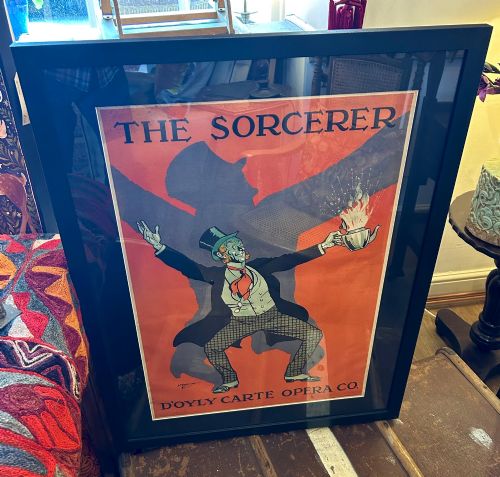
Vintage Advertising
Vintage advertising encompasses authentic trade signs, display cabinets and enamel placards that once promoted commerce in streets and shops.
Vintage Advertising
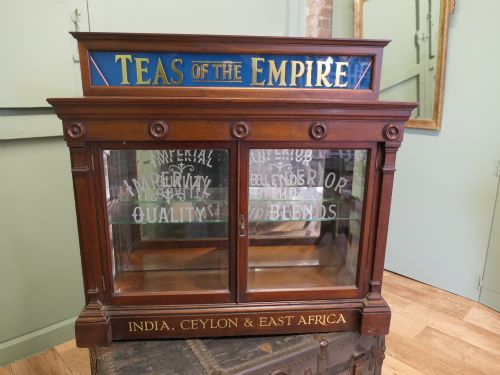
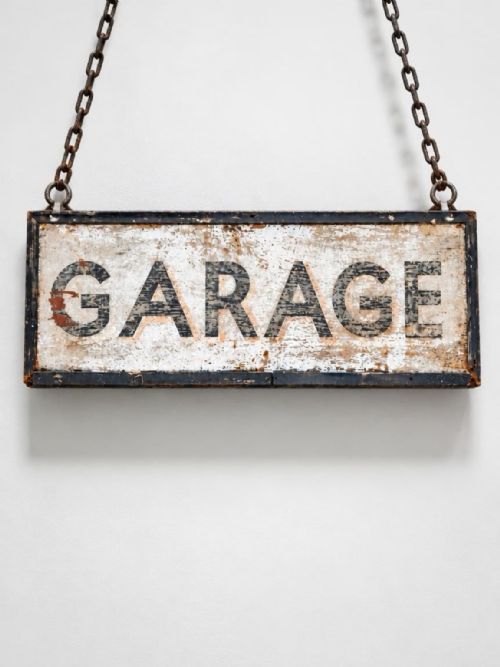
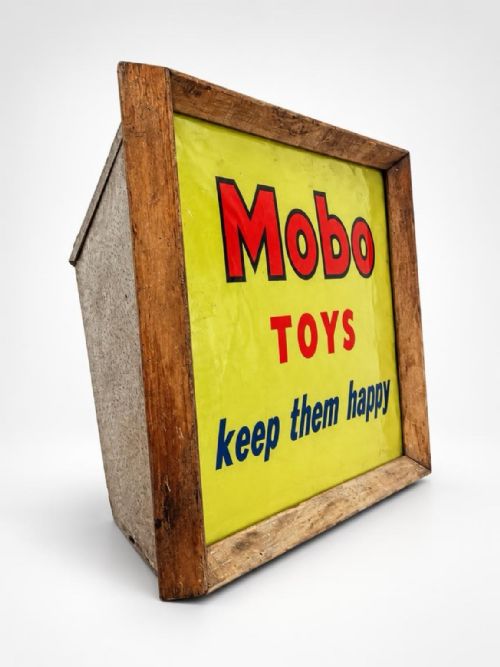
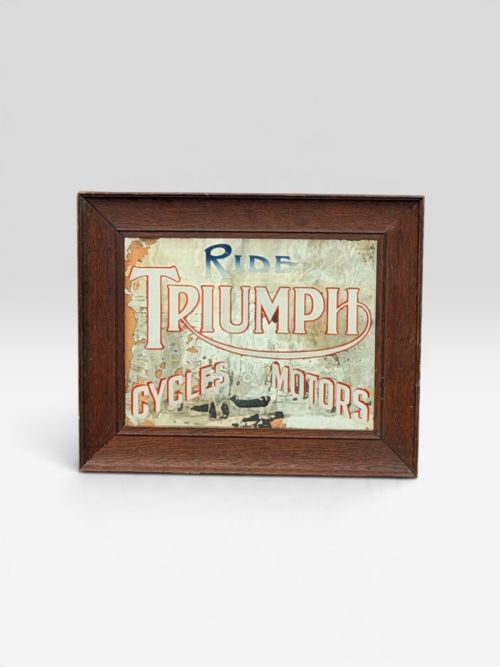
When you search for vintage advertising, you encounter commercial artefacts produced from the nineteenth century through to the mid-twentieth century. These objects include wall signs, trade signs, shop display models and dedicated display cabinets designed to promote household goods, groceries and services.
The pieces on this page span several distinct periods, drawing from Victorian and Edwardian commerce as well as Art Deco and mid-century commercial designs. You meet items fashioned for specific trades, ranging from grocers and dairies to public houses and tobacconists.
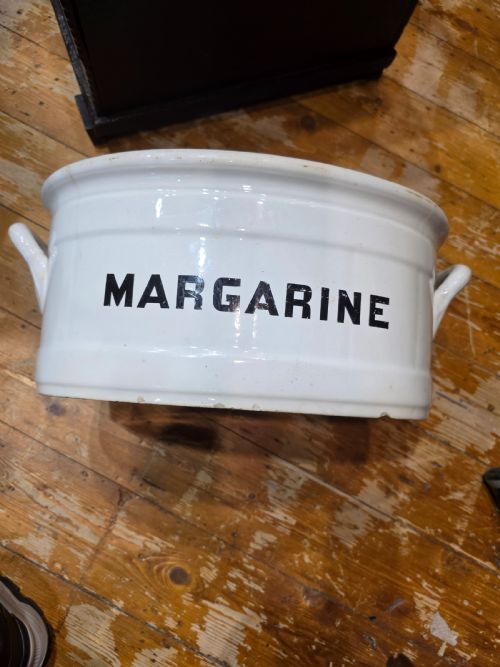
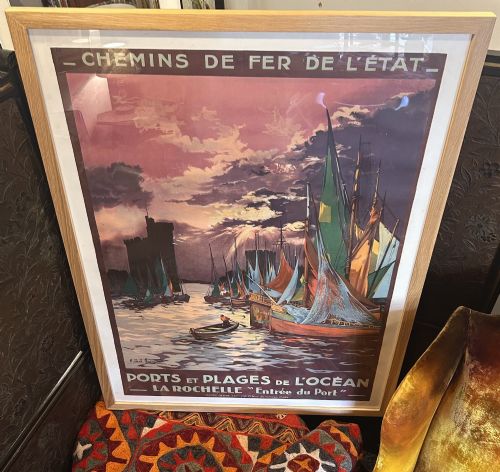
Forms vary from robust ironstone milk pails and ceramic butter slabs to large enamel pictorial signs and reverse-painted glass panels. Each piece reflects the functional commercial requirements of its era, serving to attract custom directly from the street or within the shop interior.
Materials and construction
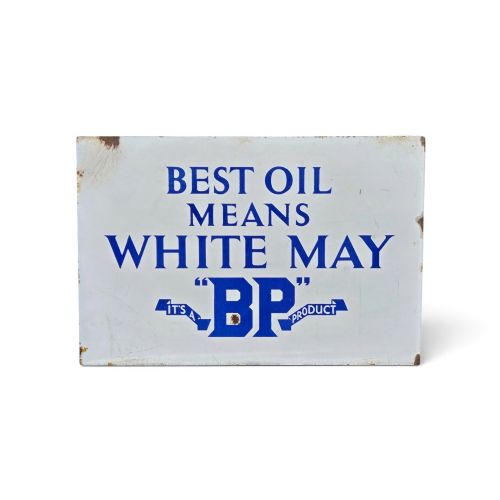
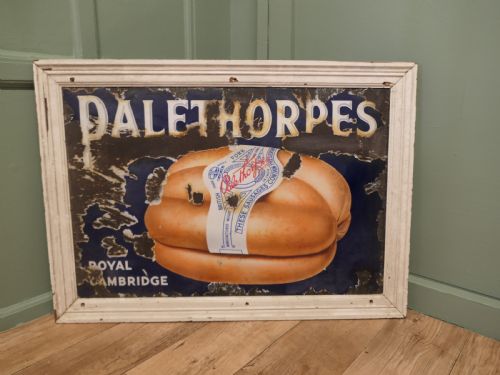
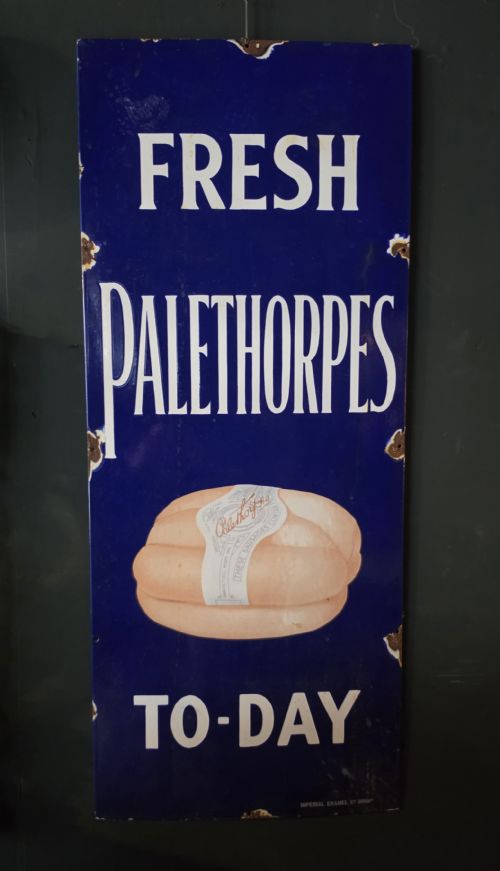
Makers utilised durable materials suited to daily commercial wear, frequently combining iron, brass and wood with vitreous enamel, glaze and paint. Enamel signs fused powdered glass onto heavy metal sheets at high temperatures, creating glossy, weather-resistant surfaces designed for exterior mounting.
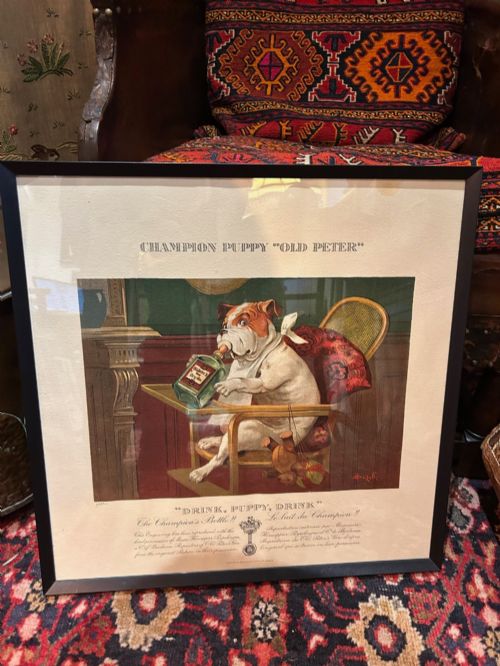
Woodwork in trade cabinets and display units typically involved oak and mahogany, built with robust joinery to support heavy stock and endure constant handling. Paper and cardboard prints employed lithographic techniques to achieve vibrant, multi-coloured illustrations for interior promotion.
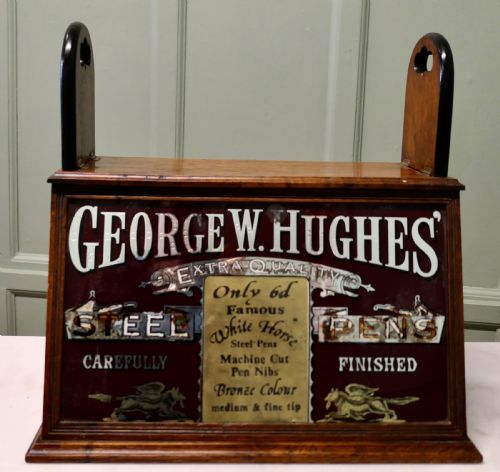
Glass elements utilised reverse-painting methods or delicate etching to display lettering and imagery securely behind a protective transparent layer. Stoneware and ceramic items like dairy jars and grocers' tubs relied on heavy-duty firing and salt glazes to withstand moisture and constant scrubbing.
Vintage Advertising Retail Price Guide 2026
Typical asking prices for vintage advertising among the pieces listed under this phrase on Sellingantiques today, from the lower quarter to the upper quarter. They describe what is for sale here now, not the wider market.
An automated cobblers shop display model brings clockwork charm to the trade.
Assessing quality and authenticity
Quality in commercial artefacts rests on the preservation of original surfaces, legible typography and crisp pictorial detail. Pieces that retain their factory-applied paint, original mounting flanges or untouched enamel display superior integrity compared to heavily restored examples.
The sophistication of the graphics and the complexity of the manufacturing process dictate distinction across the range. Hand-painted wooden trade signs showing skilled brushwork or double-sided enamel panels with rich, deep-fired pigments demonstrate higher artisanal standards.
Context and completeness further elevate a piece, such as a display cabinet retaining its original mechanical components or glass panels remaining unbroken within their initial frames. The presence of authentic maker stamps or manufacturer markings adds documented provenance to the object.
Mintons·Minton Hollins
The Vintage Advertising Glossary
- Enamel sign
- A metal placard fused with powdered glass via high-heat firing. These robust boards resisted weathering and were widely mounted outdoors on shop exteriors.
- Trade sign
- A dedicated identifier or pictorial board hung outside a premises to indicate a specific profession. They utilised wood, metal or glass to attract passing clientele.
- Reverse-painted glass
- A technique where paint and gilding are applied to the rear face of a glass sheet. This protected the artwork from dust and physical damage while providing a high-gloss finish.
- Trade figure
- A three-dimensional carved or moulded model representing a specific occupation. These served as striking focal points outside shops to draw public attention.
Vintage Advertising: Frequently Asked Questions
What is vintage advertising?
Vintage advertising comprises physical items created to promote products, shops and services during the nineteenth and twentieth centuries. These objects include painted trade signs, enamel placards, ceramic display tubs and cabinets.
Merchants used these items both internally and externally to draw customers and establish brand presence. Today, collectors value them as tangible records of commercial history and graphic design.
How were enamel signs mounted?
Enamel signs frequently featured dedicated mounting holes reinforced with brass grommets or attached metal flanges. These allowed the heavy panels to project perpendicularly from shop walls for maximum visibility.
Original mounting hardware helps confirm authenticity and indicates how the sign interacted with the streetscape. Care must be taken to support the weight securely when hanging them today.
How do I date an advertising sign?
Dating relies on stylistic clues, typography, manufacturing materials and the specific brand history. Art Deco fonts and vibrant lithography often point towards the interwar decades, while ornate serif lettering suggests Victorian origins.
Maker marks, patent dates stamped into metal, or registered design numbers provide precise chronological anchors. Comparing the depicted products against historical trade catalogues further narrows the period.
Where should I display trade signs?
Trade signs suit prominent wall spaces in kitchens, hallways or living areas where their graphic qualities can be fully appreciated. Due to their weight, particularly with enamel or cast iron items, secure wall anchoring into studs or masonry is essential.
Keeping them away from direct, harsh sunlight prevents the fading of paper prints and painted surfaces. Ambient indoor conditions protect exposed metals from moisture and subsequent corrosion.