





Vintage Academic Oil Portrait
These vintage academic oil portrait pieces capture rigorous draughtsmanship and formal sitters, offering serious presence for any room.
Vintage Academic Oil Portrait
A vintage academic oil portrait represents disciplined study, rigorous draughtsmanship, and formal composition created within traditional European and British schools. When searching for a vintage academic oil portrait, collectors typically encounter works spanning from the eighteenth century through to the mid-twentieth century.
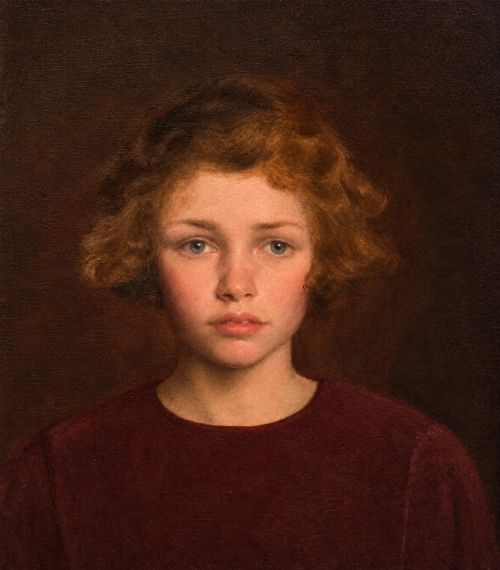
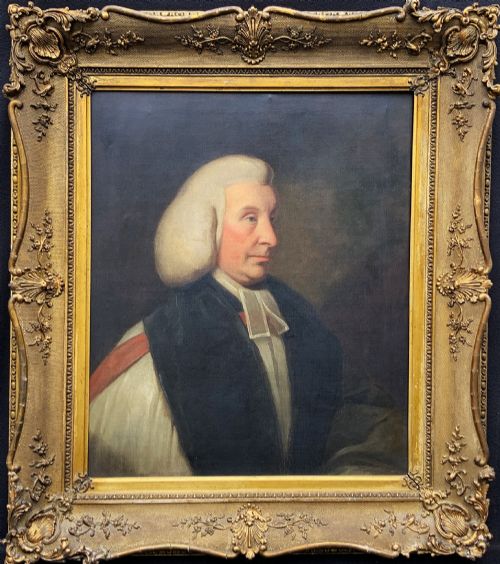
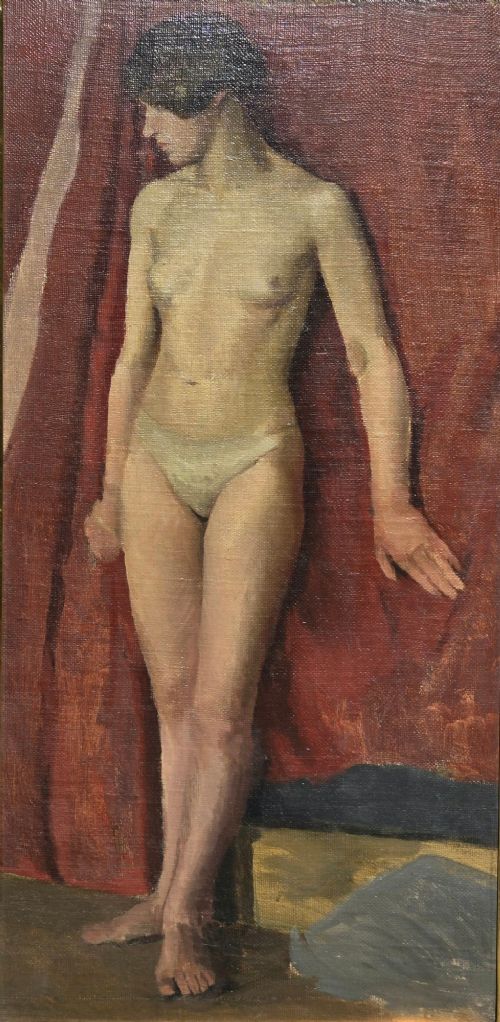
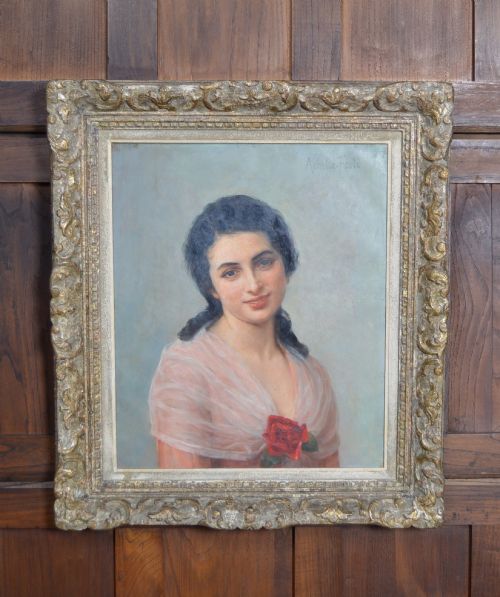
The pieces on this page range from nineteenth-century realism and academic studies to Edwardian, Georgian, and Modern British interpretations. Subjects include formal likenesses of gentlemen and ladies, narrative character studies, and studio figure work.
Most examples originate from British and continental European studios, often reflecting the rigorous training of institutions like the Royal Academy. Canvas and panel paintings dominate the selection, frequently housed within period wooden frames.
Materials and technique
These works rely primarily on oil paint applied to stretched canvas or wooden boards, utilising traditional layering and glazing techniques to build depth and skin tones. Painters employed fine brushes to achieve smooth tonal transitions characteristic of formal academic training.
Supports were often prepared with gesso grounds to seal the canvas or wood before pigment was applied. Frames are frequently constructed from timber, incorporating applied gesso ornamentation and gilding.
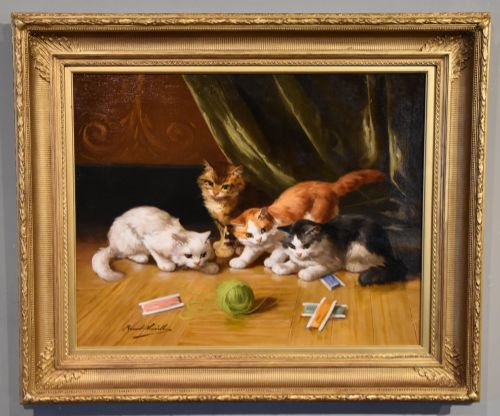
Several artists turned their rigorous academic training away from humans entirely, choosing instead to paint meticulous portraits of pampered kittens.
Judging the standard
Quality rests primarily on the surety of the draughtsmanship and the psychological depth captured in the sitter's expression. Superior examples demonstrate confident handling of light and shadow, particularly in facial modeling and fabric folds.
The strength of the composition and the anatomical precision separate standard studio exercises from masterworks. Original framing and well-documented provenance further elevate the standing of an individual canvas.
Dumini Leopoldo·Achille Fould·Alfred Arthur Brunel de Neuville·Alexandre Louis Martin·Allan Douglas Davidson·James Clark·Francisco Jose Domingo y Marques·Arthur Spooner·Geza Vastagh·Cowan Dobson·Frank Thomas Copnall·William Dring·Adrian Bury·George R Havelka·Frank Samuel Eastman
The Vintage Academic Oil Portrait Glossary
- Academic Realism
- A style of painting produced under the influence of European academies of art, prioritising precise draughtsmanship and classical composition. This approach demands strict adherence to anatomical accuracy.
- En Grisaille
- A painting executed entirely in shades of grey or neutral monochrome. Artists frequently utilised this method for preparatory studies or to simulate sculptural reliefs.
- Gesso
- A plaster mixture used as a smooth base coat on wood panels or canvases before painting. It also forms the moulded decorative elements on traditional frames.
- Provenance
- The chronological history of the ownership of a painting. Clear documentation establishes authenticity and past exhibitions.
- Panel
- A rigid support surface made of wood used by artists prior to the widespread adoption of stretched canvas. Oak and mahogany were common choices.
Vintage Academic Oil Portrait: Frequently Asked Questions
What defines an academic portrait?
An academic portrait follows the strict technical training of traditional art academies, emphasising precise anatomy, lifelike skin tones, and formal composition. These works reject loose impressionism in favour of rigorous draughtsmanship and observed reality.
Subjects were often posed carefully within controlled studio lighting to allow the artist to demonstrate complete mastery over shadow and form. This discipline applies equally to full-length figures and intimate bust studies.
Where should I hang these portraits?
These works require stable interior conditions away from direct sunlight, excessive humidity, and sudden temperature shifts. Hanging them on interior partition walls helps protect the canvas and wooden stretcher frames from warping.
Proper picture lighting enhances the tonal contrasts and deep glazes characteristic of oil paint. Adequate clearance from radiators prevents the gesso and canvas from drying out and cracking.
How do I date a canvas?
Dating relies on examining the stretcher frame construction, canvas weave, nail types, and any artist signatures or inscriptions on the reverse. Older canvases often feature hand-planed wooden stretchers and square-cut tacks.
Stylistic cues in the sitter's clothing, hairstyle, and framing materials also provide reliable chronological markers. Comparing techniques with known dated works by the same school narrows the period further.