
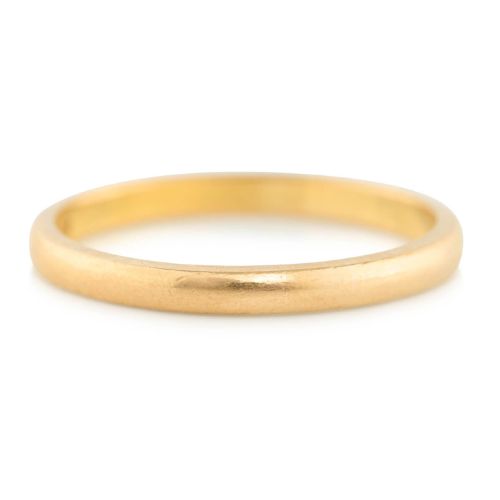


Vintage 22ct Gold Ring
A vintage 22ct gold ring brings a rich, deep warmth and a high purity of metal that modern high-street jewellery rarely matches.
Vintage 22ct Gold Ring
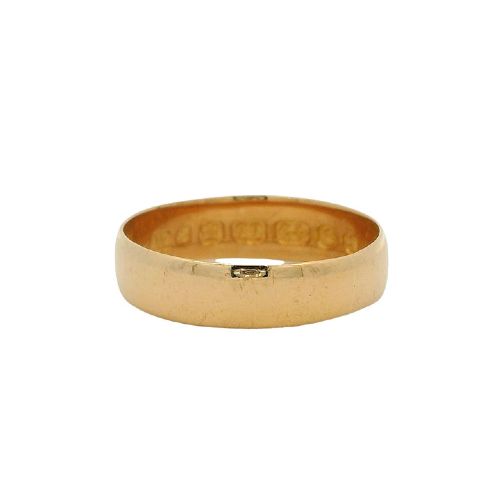
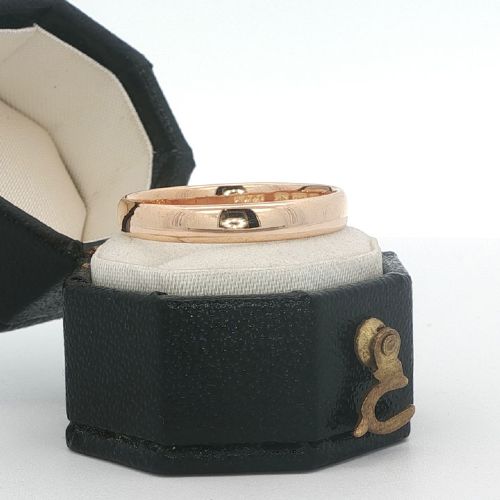
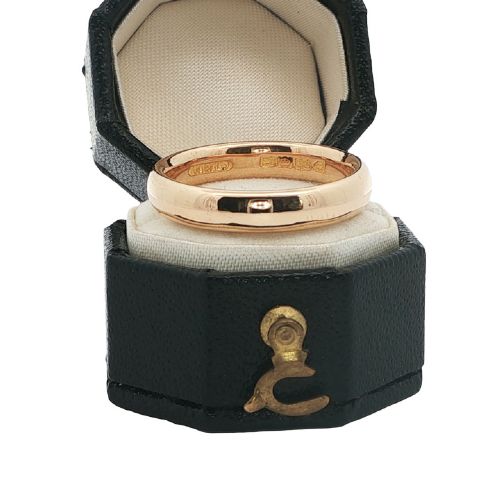
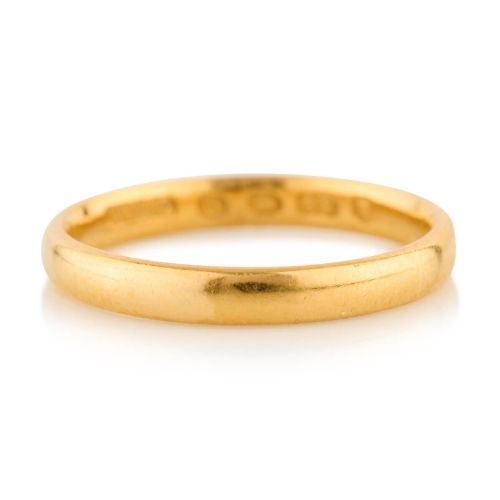
A vintage 22ct gold ring is most commonly encountered as a plain wedding band spanning periods from the Victorian era through the mid-twentieth century, including the Edwardian, Art Deco and 1930s decades. These bands appear in various widths, often court-shaped, and carry British hallmarks that record exact assay years such as 1889, 1908, 1926, 1936, 1952, 1955, 1963 and 1964.
Materials and construction
The defining material of these pieces is 22ct gold, which contains a high proportion of pure gold, yielding a characteristic rich yellow or rosy tone compared to lower-carat alloys. This high gold content makes the metal softer and more ductile, which accounts for the smooth wear seen on older bands.
Makers shaped these rings into classic profiles, including court-shaped bands with rounded inner and outer surfaces for comfortable wear. Gemstone pieces incorporate claws or settings to secure diamonds, rubies, turquoise and citrine into the gold structure.
Listings feature periods spanning from the Victorian era through the Edwardian, Art Deco, and Mid-Century decades, up to the 1960s.
Distinctions in quality
Quality in a 22ct gold ring rests heavily on the crispness of the original hallmarks and the preservation of the band's profile against decades of gentle wear. Heavier gram weights and consistent band widths indicate robust survivals from the Victorian and mid-century periods.
For gemstone variants, the quality depends on the matching of stones, such as the arrangement in a daisy cluster, and the structural integrity of the setting holding the diamond, ruby or turquoise secure within the high-purity metal.
W. E. D. L·Brody Williams
The Vintage 22ct Gold Ring Glossary
- Hallmark
- An official stamp applied by an assay office to indicate the purity of the metal, the maker, and the year of testing. British marks provide precise dating for nineteenth and twentieth-century pieces.
- Court-shaped
- A ring profile with a rounded exterior and interior curve designed for a comfortable fit against the finger. This shape appears frequently in traditional wedding bands.
- Cluster ring
- A design featuring a central gemstone surrounded by a cluster of smaller stones, often taking a daisy or flower form in mid-century pieces.
- Stacking ring
- A slender band designed to be worn alongside other rings on the same finger. These pieces often feature narrower millimeter widths.
Vintage 22ct Gold Ring: Frequently Asked Questions
How do I know my ring size?
Ring sizes are measured using standard finger gauges, matching the diameters recorded in historical British sizing from past decades.
Because fingers change with temperature, checking size against a current well-fitting ring helps confirm the correct fit for bands listed by millimeter width.
Why is 22ct gold softer than 9ct?
Twenty-two carat gold contains a much higher proportion of pure gold and fewer alloy metals, which makes the material softer.
This higher purity produces the distinct deep yellow colour cherished by collectors, though it results in natural softening over generations of daily wear.
How can I date my ring?
British hallmarking laws require official stamps that include assay office marks, maker marks, and date letters.
By cross-referencing these stamped letters and symbols with historical assay records, you can determine the exact year the ring was tested and passed.
Can these rings be resized?
A jeweller can typically adjust the size of a solid gold band by adding or removing a small section of metal.
Due to the high purity and softness of 22ct gold, work requires care to preserve any surrounding hallmarks stamped into the shank.