
Gold Wedding Ring
A gold wedding ring carries the weight of personal history, spanning Victorian bands, Edwardian designs, and mid-century modern classics.
Gold Wedding Ring
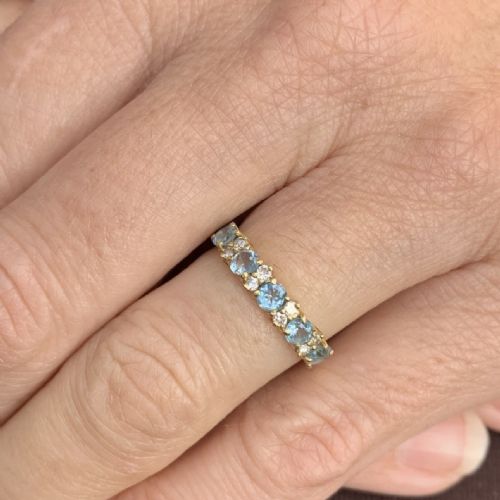
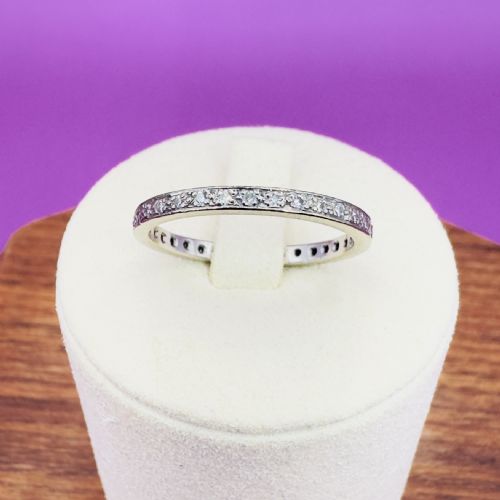
A gold wedding ring represents a enduring symbol of union, found across eras from the nineteenth century through the 1960s. Collectors and wearers encounter plain high-purity gold bands, patterned Victorian designs, and diamond-set eternity rings.
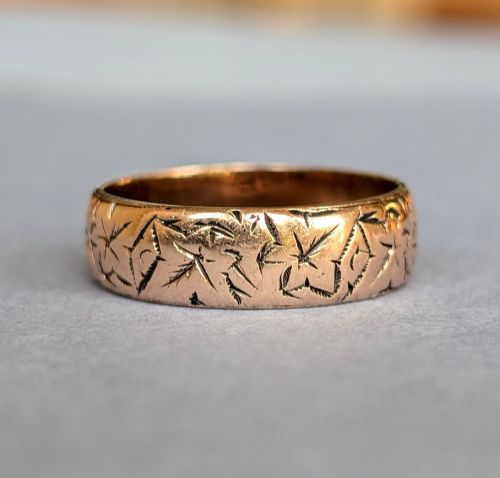
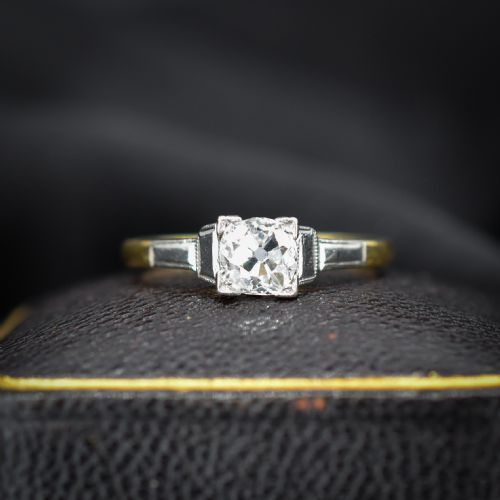
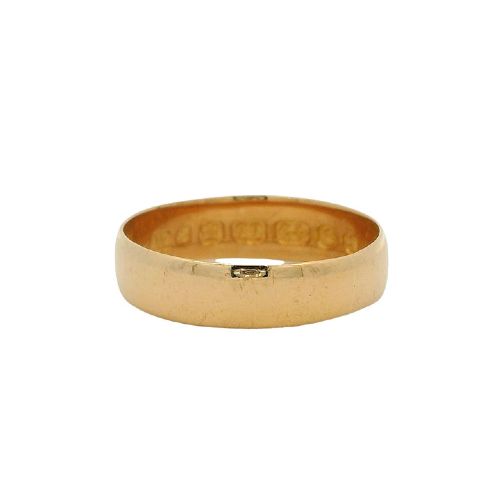
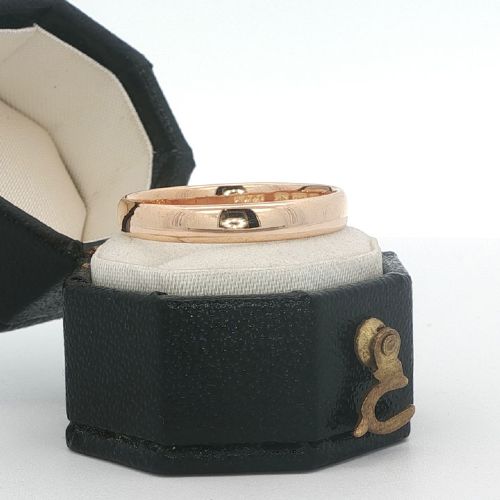
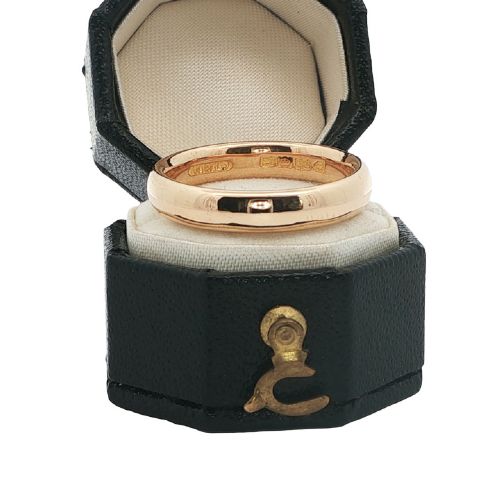
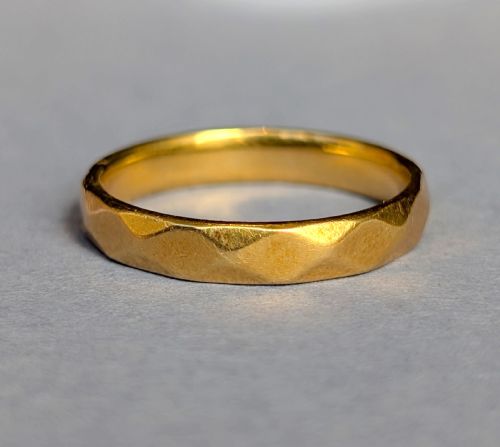
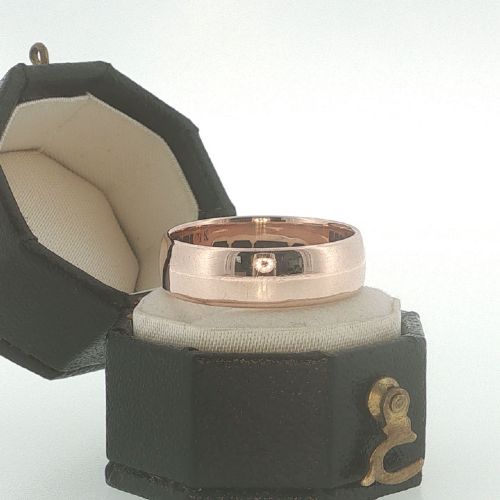
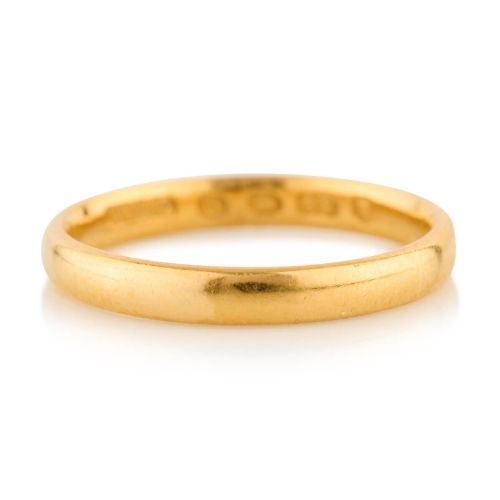
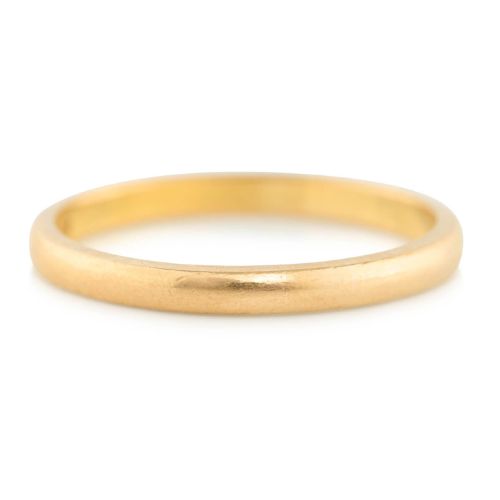
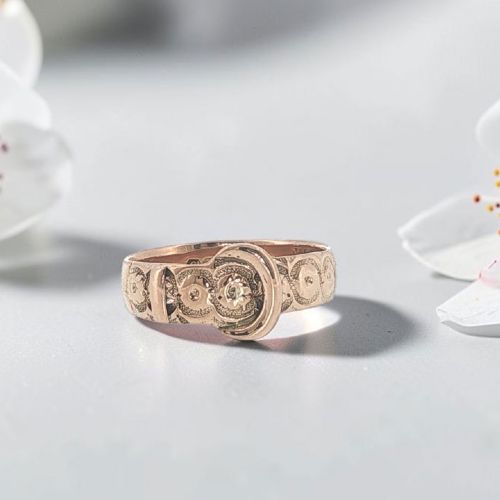
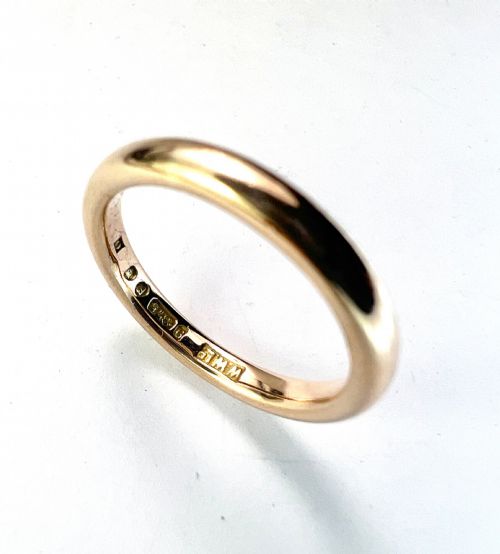
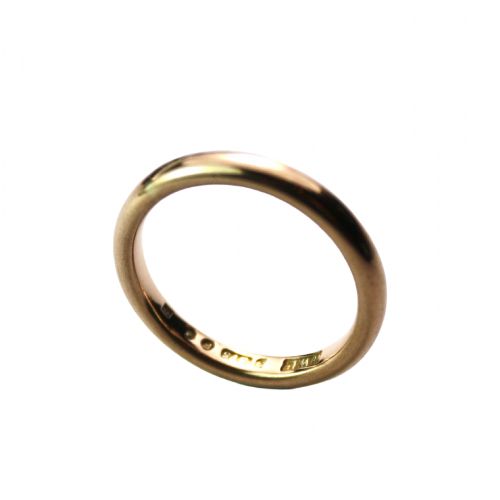
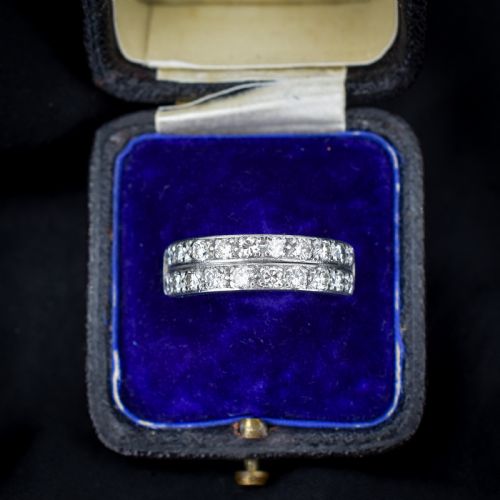
The selection ranges from heavy 22ct yellow gold bands dated by assay office hallmarks to delicate 9ct rose gold stacking rings and Art Deco diamond engagement pieces. Plain court-shaped profiles and engraved nineteenth-century styles appear frequently among the pieces.
How They Were Made
Goldsmiths utilised varying purities of gold, notably rich 22ct yellow gold alongside durable 9ct and 18ct white or yellow gold alloys. Platinum also emerged in mounting diamond-set rings during the twentieth century.
Traditional manufacturing involved shaping metal into D-shaped or court profiles, often finished with hand-engraved motifs, millegrain edges, or secure claw settings for diamonds and sapphires.
What Varies in Quality
The integrity of the gold alloy and the clarity of official assay office hallmarks define a piece's baseline standard. Heavier gauges of 22ct gold retain their structural depth and comfort better over decades of daily wear than thinner stamped alternatives.
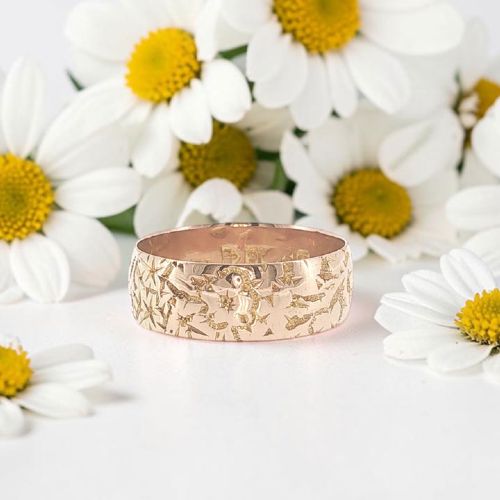
Artisanal execution separates standard commercial production from superior examples, visible in the crispness of hand-engraved floral patterns or the precise alignment of old-cut diamonds in eternity and half-eternity settings.
William Griffiths And Son·W E D L·Brody Williams
The Gold Wedding Ring Glossary
- Court-shaped
- A ring profile with a rounded exterior and a curved interior surface designed for comfortable everyday wear. This ergonomic shape reduces friction against adjacent fingers.
- Hallmark
- An official stamp applied by an assay office indicating metal purity, origin city, and date of manufacture. These tiny pressed marks provide a secure historical timeline for antique jewellery.
- D-shaped
- A ring profile featuring a flat interior surface and a domed exterior resembling the letter D in cross-section. Traditional Victorian and Edwardian bands frequently utilise this geometry.
- Millegrain
- A decorative technique creating a raised border of tiny, bead-like metallic points along the edge of a setting. Art Deco pieces often employ this method to frame diamonds.
- Old-cut
- A diamond faceting style prevalent before modern brilliant cuts were standardised, characterised by smaller tables and high crowns. These stones exhibit a distinctive, softer candlelight scintillation.
Gold Wedding Ring: Frequently Asked Questions
How do I identify the date of a gold wedding ring?
Assay office hallmarks stamped inside the band provide the specific year of testing and manufacture. Date letters correspond to official registry cycles used across British assay offices.
Additional clues include the prevailing style, such as Victorian engraving or mid-century minimalism, which corroborate the hallmarked decade.
What is the difference between 9ct and 22ct gold bands?
Purity defines the distinction, with 22ct containing a much higher proportion of pure gold compared to 9ct alloys. This high gold content gives 22ct rings a rich, deep yellow hue and a softer, heavier feel.
In contrast, 9ct gold incorporates more base metals, offering greater resistance to scratching and everyday wear at the expense of colour richness.
Can antique wedding rings be resized easily?
Most plain gold bands permit straightforward sizing by a skilled jeweller who can add or remove a small section of metal. Solid 22ct and 9ct plain rings adapt well to these adjustments without compromising structure.
However, patterned bands, engraved designs, and full eternity rings with stones set all the way around present significant challenges and risk damaging the craftsmanship.