
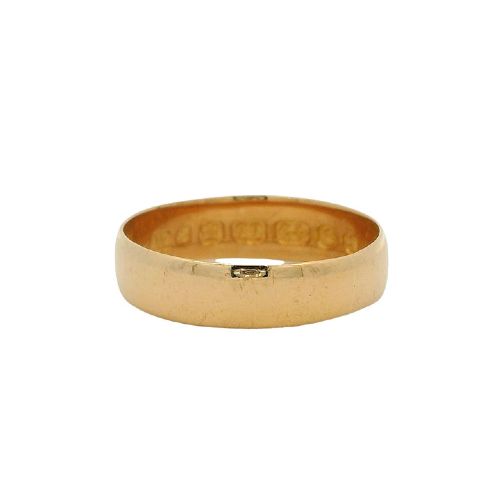
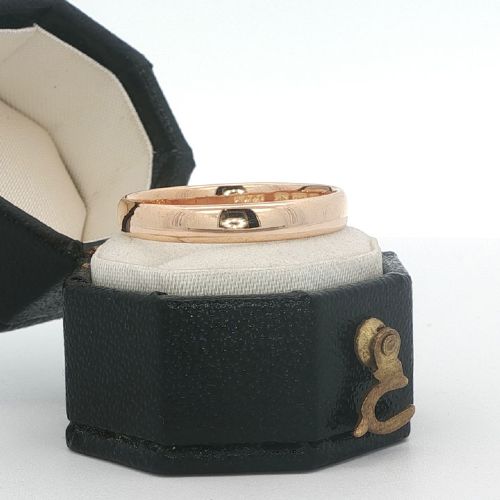
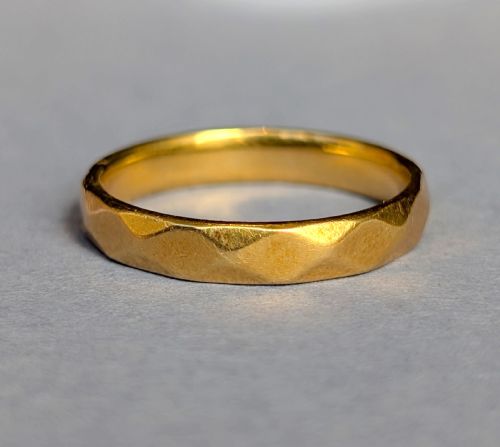


Plain Gold Band Ring
A plain gold band ring is a simple circle of precious metal carrying history on the finger.
Plain Gold Band Ring
A plain gold band ring is an enduring symbol of commitment, taking the form of a simple circular hoop worn daily across generations. When you examine this selection, you encounter pieces spanning from the Victorian era through the Edwardian period, Art Deco years, and into mid-century modern designs.
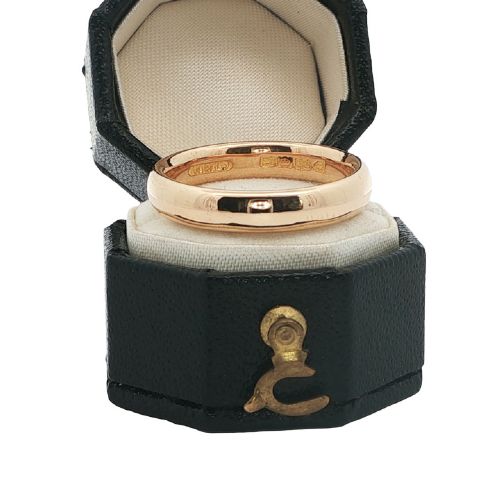
The versions you are most likely to meet on this page include solid wedding bands and stacking rings produced in various decades of the twentieth century. These objects bridge the gap between practical adornment and historical artefact, often bearing clear hallmarks that anchor them to specific years and assay offices.
Gold Purity and Manufacture
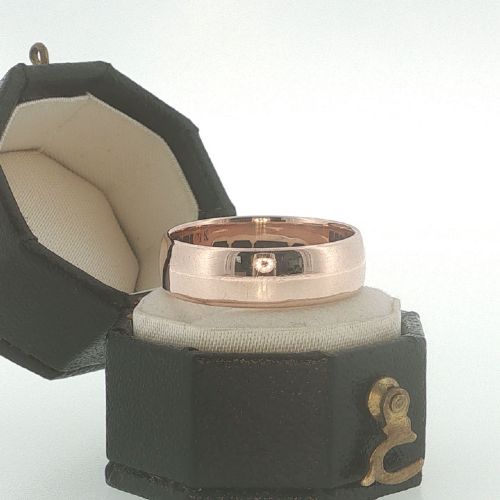
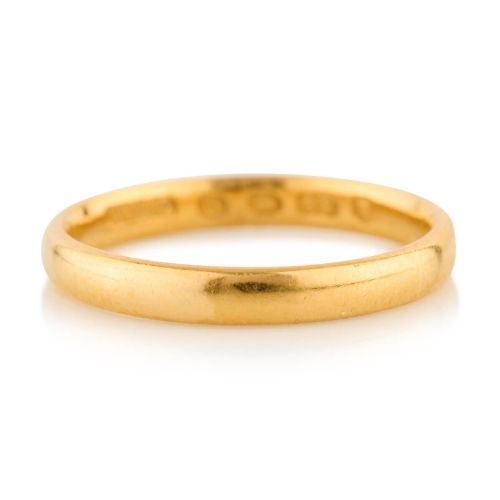
These rings were fashioned primarily from gold of differing purities, ranging from nine carat rose gold and eighteen carat gold up to rich twenty-two carat yellow gold. Higher carat metals yield a deeper, warmer hue and a softer lustre that accumulates gentle signs of wear over decades of daily use.
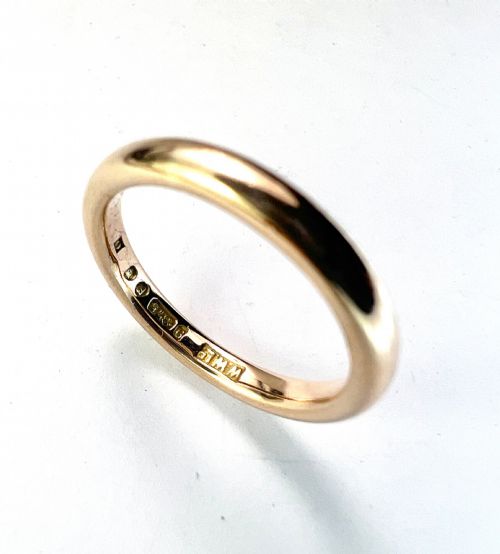
Goldsmiths shaped these solid metal strips into smooth hoops, frequently finishing them with crisp hallmarks stamped on the inner shank to denote the metal standard, assay office, and year of creation.
Some rings carry secret messages or dates punched by Victorian smiths who anticipated our modern obsession with personal history.
Proportion and Metal Density
Quality in a plain gold band ring rests in the heft of the metal and the integrity of the original profile. Heavier gauges and higher carat purities provide a substantial feel on the hand, whereas thinner bands show the effects of resizing or prolonged wear much more readily.
The clarity and legibility of the original hallmarks also separate standard examples from finer pieces, as crisp stamps preserve the precise date and origin of the ring without wearing away.
W. E. D. L
The Plain Gold Band Ring Glossary
- Hallmark
- An official mark stamped into the metal to indicate its purity, the maker, and the year of assay. These tiny symbols provide the backbone for dating antique jewellery accurately.
- Carat
- The measure of gold purity, where twenty-four carat represents pure gold. Lower numbers like nine or eighteen indicate the proportion of alloy metals mixed in for strength.
- Shank
- The circular band portion of a ring that encircles the finger. Its width and thickness dictate the overall sturdiness of the piece.
- Stacking ring
- A slender band designed to be worn alongside other rings on the same finger. This style became popular for combining multiple milestones or simply layering different metal tones.
Plain Gold Band Ring: Frequently Asked Questions
How do I know my ring size?
Ring sizes are measured using standard alphabetical or numerical scales that correspond to the inner diameter of the band. Visiting a jeweller with a sizing wand provides the most accurate measurement for a comfortable fit.
Because these are historical items, historical sizing may occasionally differ slightly from modern standards, making it wise to check the specific measurements provided in each listing.
Can antique gold bands be resized?
Most solid gold bands can be adjusted by a skilled jeweller who can add or remove a small section of metal. This process requires care to preserve any nearby hallmarks stamped on the inner shank.
Heavier twenty-two carat bands take resizing particularly well due to the malleable nature of high purity gold, though consultation with a specialist ensures the structural integrity remains intact.
Why choose twenty-two carat gold?
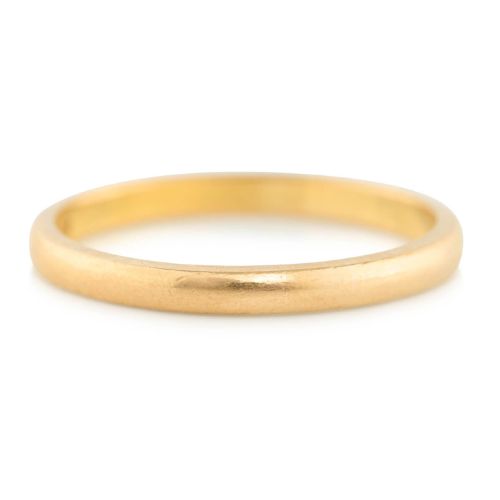
Twenty-two carat gold contains a very high proportion of pure gold, resulting in a distinctively rich, deep yellow colour that differs noticeably from modern lower carat alloys. This high purity metal develops a soft, buttery patina over time rather than tarnishing.
While softer than nine or eighteen carat gold, twenty-two carat bands offer a traditional weight and warmth that collectors and traditionalists prize for daily wear.