


Hallmarked Gold Wedding Ring
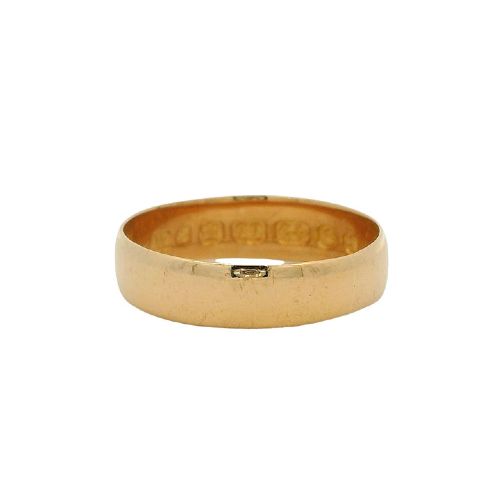
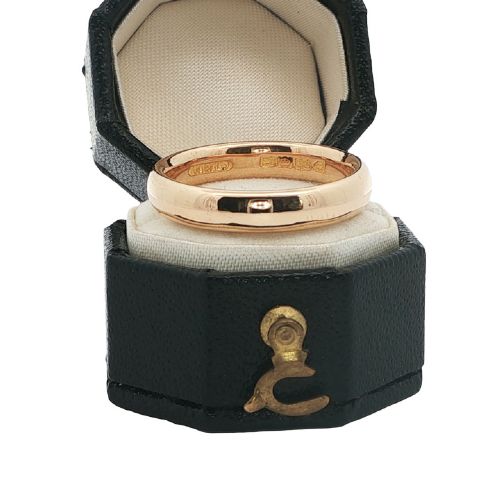
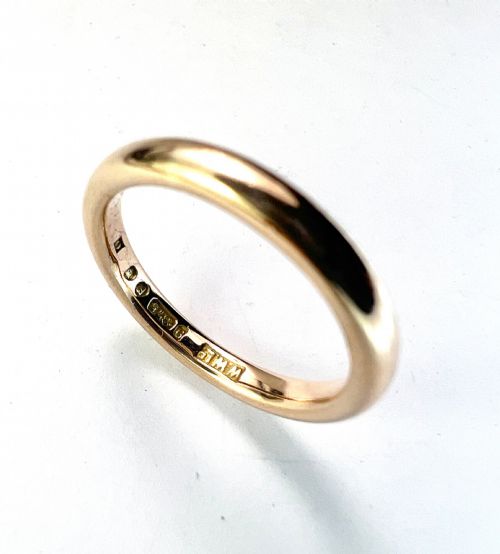
A hallmarked gold wedding ring carries decades of documented history on the inner band, offering a tangible link to past eras.
Hallmarked Gold Wedding Ring
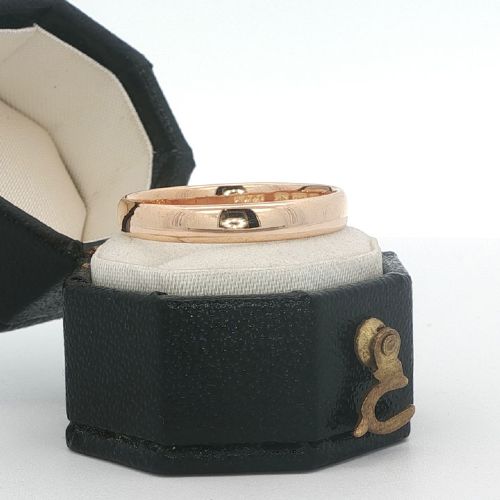
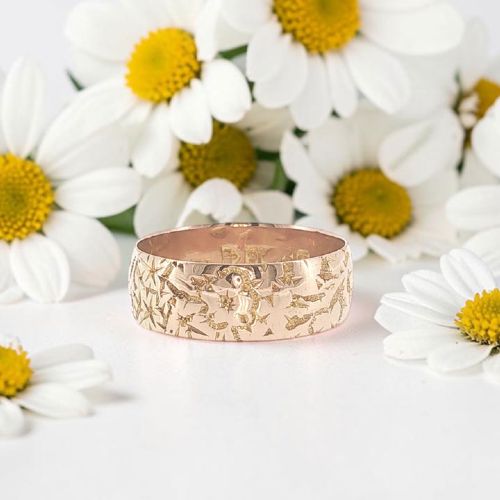
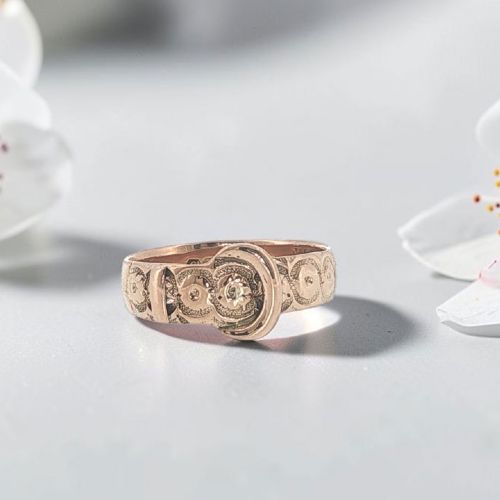
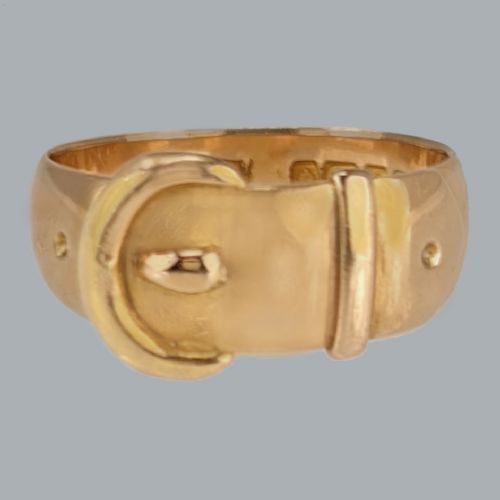
A hallmarked gold wedding ring represents a enduring symbol of union, found across multiple periods from the Victorian era through the mid-twentieth century. These bands take the form of plain circular hoops, buckle designs, keeper rings, and gypsy settings designed for daily wear.
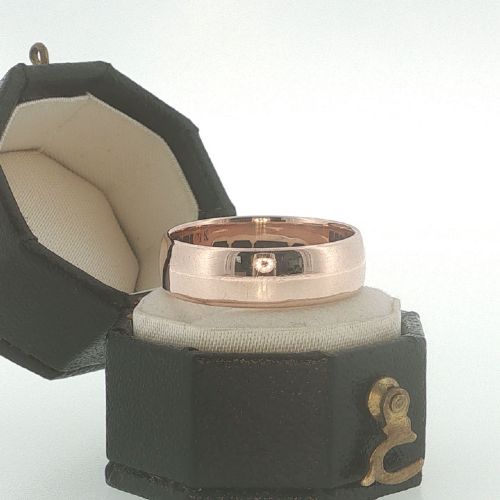
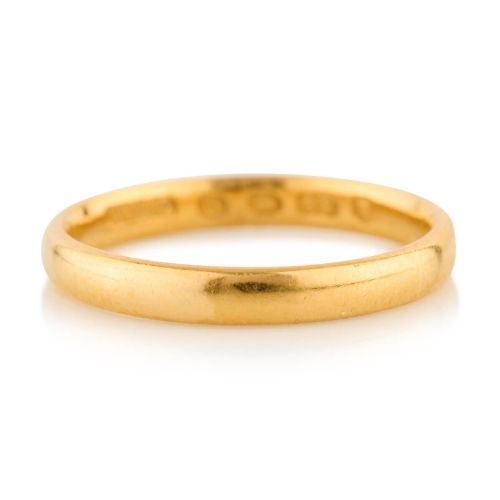
The pieces appearing on this page span styles from Traditional British and Edwardian to Mid-Century and Art Deco. Buyers frequently encounter 22ct gold, 18ct gold, and 9ct rose gold iterations bearing clear assay office stamps.
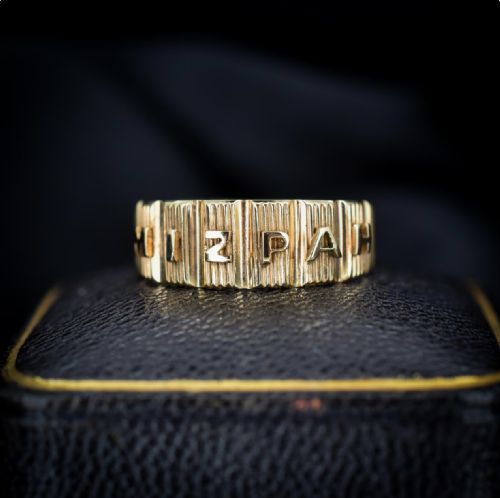
Mizpah rings and court-shaped bands also emerge within this selection, providing distinct regional and chronological characteristics. Each ring demonstrates the specific craftsmanship of its decade of origin, from 1880 examples up to the 1960s.
Materials and Construction
Goldsmiths shaped these rings from high-purity metals including 22ct, 18ct, and 9ct yellow or rose gold. The metal was formed into varying widths, ranging from slender stacking bands to substantial six-millimetre widths.
Makers shaped the profiles into traditional flat, D-shaped, or court sections to ensure comfortable wear on the finger. Surface finishes were often left plain, though specific examples incorporate engraved details, buckle motifs, or flush-set gemstones like garnets and diamonds.
The listings on this page span periods from the Victorian era through the 1960s, featuring gold purities from 9ct up to 22ct.
Assessing Quality and Character
Quality in a hallmarked gold wedding ring rests upon the clarity and completeness of the official stamps. Crisp assay office marks, maker initials, and date letters verify the metal purity and origin.
The original weight and thickness of the gold band determine its durability over generations of wear. Rings retaining their full band width and sharp internal hallmarks demonstrate superior preservation compared to heavily polished examples.
W. E. D. L·William Griffiths and Son
The Hallmarked Gold Wedding Ring Glossary
- Hallmark
- An official stamp applied by an assay office indicating the metal purity, origin, and year of manufacture. These small stamped symbols provide the primary method for dating antique jewellery.
- Court shape
- A ring profile featuring a curved exterior and a domed interior. This specific shape reduces friction against adjacent fingers.
- D shape
- A band profile showing a flat inner surface and a curved outer surface resembling the capital letter D in cross-section. This traditional profile appeared frequently in nineteenth-century workshops.
- Keeper ring
- A decorative band historically worn alongside an engagement ring to prevent it from slipping off the finger. Victorian examples often incorporate elaborate chased or buckle designs.
- Mizpah ring
- A piece of jewellery exchanged between two people as a token of remembrance or emotional connection. The term translates from Hebrew as an emotional watchtower or gathering place.
Hallmarked Gold Wedding Ring: Frequently Asked Questions
How do I date a gold wedding ring?
Dating relies entirely on the official hallmarks stamped inside the band. Assay offices used specific date letters alongside city symbols and purity marks to record the exact year of manufacture.
Matching these stamped letters against standard regional assay tables reveals the period, ranging from Victorian Chester stamps to mid-century London hallmarks.
What is the difference between 9ct and 22ct gold?
Purity separates these metals, with 22ct gold containing a much higher proportion of pure gold than 9ct variants. This gives high-karat bands a richer, deeper yellow hue.
Lower karat options like 9ct gold and 9ct rose gold include higher alloy content, which historically offered greater resistance to daily wear and a distinct coppery tone.
Can antique wedding rings be resized?
Professional jewellers can alter the size of most solid gold bands by adding or removing a small section of metal. The feasibility depends on the specific width and any continuous engraving around the hoop.
Resizing may disturb or remove a portion of the original hallmark stamp, so jewellers preserve the stamped sections on the inner band whenever possible.