


Solid Gold Wedding Ring
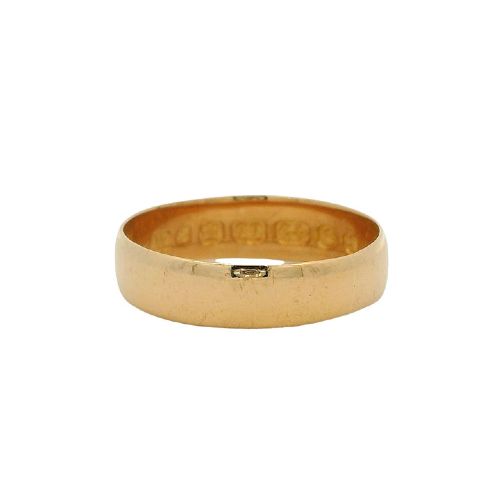
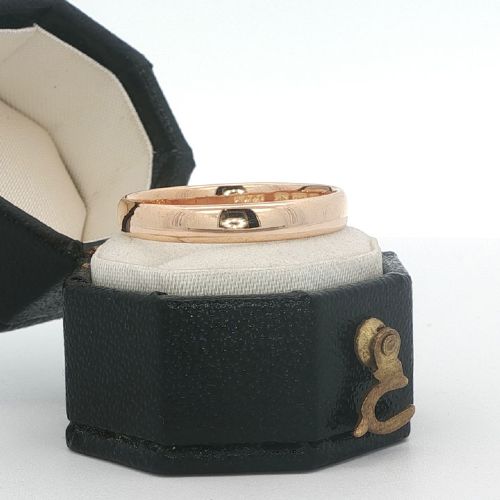
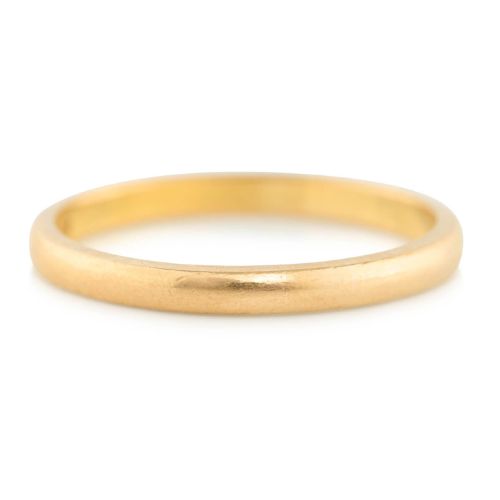
A solid gold wedding ring is a traditional band shaped from high-purity metal, prized for its enduring weight and simple, circular form.
Solid Gold Wedding Ring
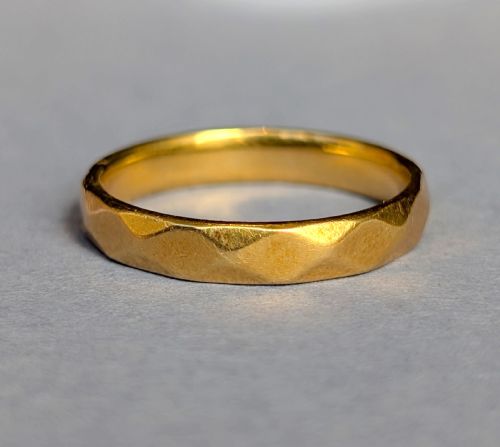
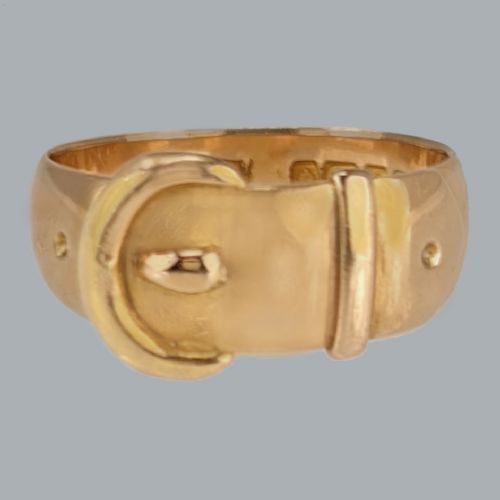
A solid gold wedding ring appears here in plain bands and buckle forms, representing decades of British jewellery production from the late Victorian period through the mid-twentieth century. The selection leans heavily towards high-purity yellow gold rings, with widths spanning from slim stacking pieces to substantial four-millimetre bands.
Buyers seeking a solid gold wedding ring will most frequently encounter nineteenth and twentieth-century examples stamped with British hallmarks, indicating assay office origins in cities such as London and Birmingham. These pieces reflect specific stylistic eras, including Edwardian work, Art Deco periods, and mid-century modern designs.
How they were made
The construction of a solid gold wedding ring relies on working precious metal alloys into seamless bands, utilising materials predominantly recorded as 22ct gold, 18ct gold, and 9ct gold. Workshops shaped these rings from heavy gauge metal to ensure structural integrity without stones.
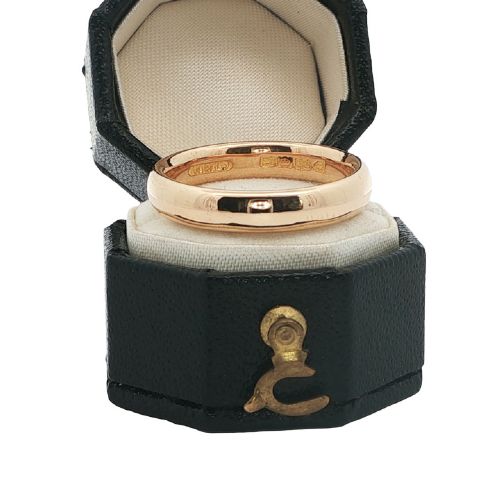
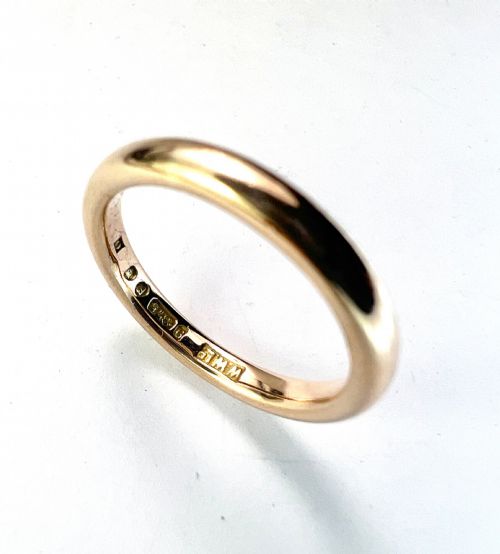
Goldsmiths applied hallmarks and date letters directly onto the interior surface using traditional punch marks, providing a permanent record of the metal purity and the year of assay.
Listings feature yellow gold materials spanning 9ct, 18ct, and 22ct standards alongside Edwardian and Mid-Century styles.
What varies in quality
Quality in a solid gold wedding ring rests primarily on the fineness of the gold alloy and the preservation of its original profile and hallmark clarity. Higher carat weights, particularly 22ct yellow gold, offer a richer colour and denser metal mass compared to lower alloy equivalents.
The crispness of the original edges and the depth of the stamped hallmarks distinguish finer workshop output from pieces thinned by decades of daily wear on the hand.
William Griffiths And Son·W E D L
The Solid Gold Wedding Ring Glossary
- Hallmark
- An official stamp applied to precious metals indicating purity, origin, and assay year. These marks provide the primary means of dating British jewellery.
- Carat
- A unit measuring the purity of gold in an alloy, where twenty-four parts represents pure metal. Common variants in these rings include 9ct, 18ct, and 22ct.
- Band ring
- A plain ring of uniform width and profile worn on the finger as a symbol of marriage. They are typically unadorned to suit continuous daily wear.
- Buckle ring
- A ring fashioned in the likeness of a buckled belt, popular during the Victorian and Edwardian periods. This decorative form often symbolised fidelity and commitment.
- Assay office
- An official body testing precious metal purity and applying statutory hallmarks. London and Birmingham offices appear frequently on British rings from these periods.
Solid Gold Wedding Ring: Frequently Asked Questions
How do I know the gold purity?
British rings carry stamped hallmarks that indicate the exact proportion of precious metal within the alloy. Look inside the band for numerical stamps corresponding to carat weight.
Assay marks and sponsor stamps accompanying the purity number confirm the standard of the metal used by the workshop.
What periods do these rings date from?
The listings span from the late nineteenth century through the Edwardian era and into the mid-twentieth century. Specific decades are identifiable through official assay date letters.
Traditional British designs remained consistent in form, while mid-century and Art Deco influences introduced subtle variations in profile and width.
Can these rings be resized easily?
Solid gold wedding rings are generally straightforward for a skilled jeweller to alter because they lack stones and complex settings. The process involves adding or removing a small section of metal.
Resizing may disturb historical hallmarks located near the join, making careful laser soldering preferable on antique bands.
What is the difference between 9ct and 22ct gold?
Twenty-two carat gold contains a much higher proportion of pure gold, resulting in a deeper, richer yellow colour and a heavier physical weight. Nine carat gold contains more alloy metals, increasing durability while producing a paler hue.
Both standards appear widely in British wedding bands across different economic eras.