


Unisex Gold Band
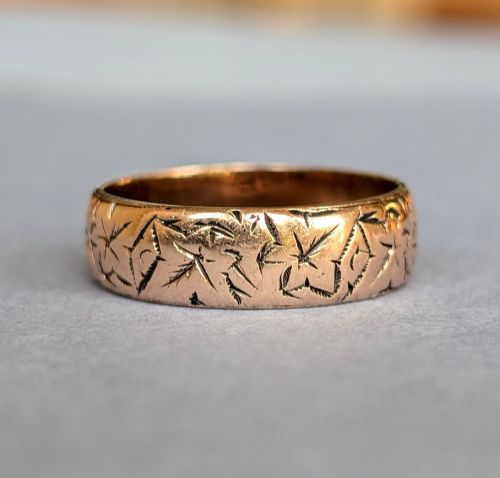
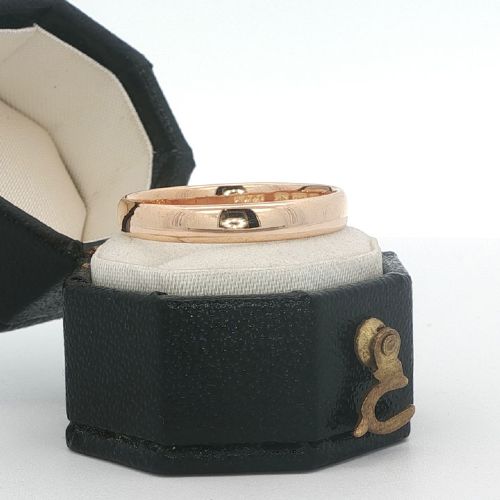
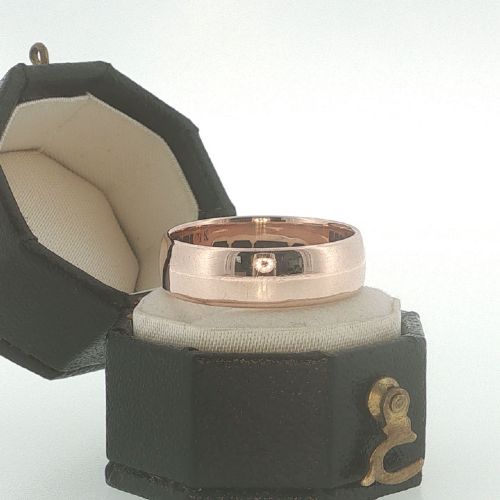
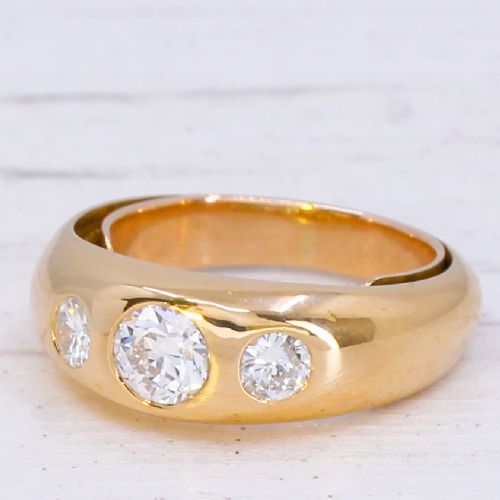
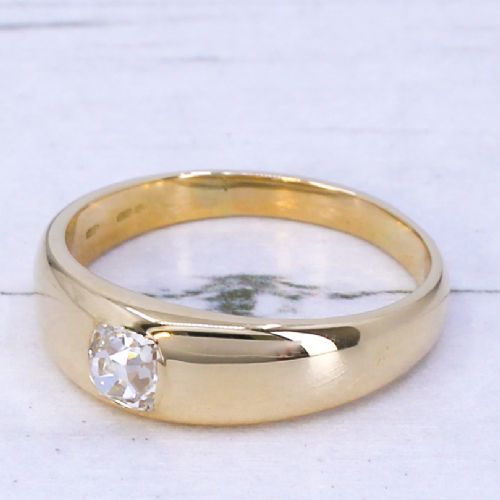
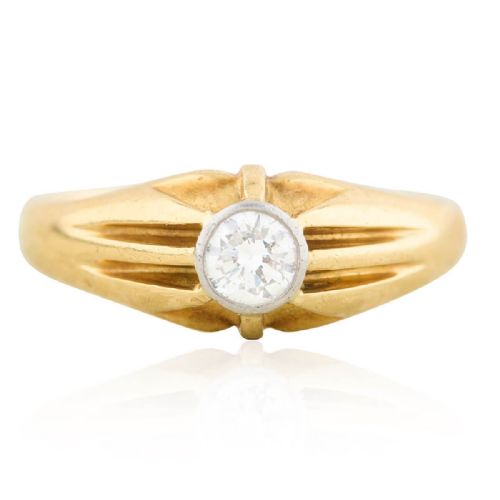
These unisex gold band rings span from the Victorian era through the mid-century, offering simple wedding bands and diamond gypsy settings.
Unisex Gold Band
When you search for a unisex gold band, you are looking at rings that include plain wedding bands and stone-set styles such as gypsy and solitaire rings. The pieces listed here cross multiple eras, including the Edwardian period, Art Deco, and the mid-century.
You will most frequently meet wedding bands rendered in 9ct rose gold, 18ct gold, and heavy 22ct yellow gold. Alongside these plain hoops sit diamond-set designs featuring old cut stones.
The origins span the 19th century up to the 1960s, showing traditional British craftsmanship and modernist touches. Plain bands and diamond rings alike suit everyday wear across genders.
How they were made
The construction relies on precious metals shaped into solid bands of varying widths, such as three millimetres and five millimetres. Workshops utilised 9ct rose gold, 18ct yellow gold, and high-purity 22ct gold to create enduring forms.
Gemstone rings integrate diamonds, including old cut stones secured within gypsy settings or solitaire mounts. Hallmarks stamped into the metal record the purity and origin of the gold.
Listings span from the 19th century through the 1950s and 1960s, featuring both plain wedding bands and diamond-set gypsy rings.
What varies in quality
Quality shows in the weight and purity of the gold, with 22ct yellow gold offering a richer colour and heavier feel than 9ct rose gold. The thickness of the band and the preservation of original hallmarks dictate the integrity of plain rings.
For diamond-set pieces, the quality rests in the cut and carat weight of the stones, ranging from smaller accent diamonds to substantial old cut solitaires. The precision of the gypsy setting influences how securely the stones sit within the metal band.
Piaget·W. E. D. L
The Unisex Gold Band Glossary
- Gypsy ring
- A style where the gemstone is flush-set directly into the thick gold band, popular in the Victorian and Edwardian eras. The metal tapers smoothly up to the stone.
- Solitaire
- A ring featuring a single prominent diamond or gemstone mounted on a precious metal band. Old cut diamonds frequently appear in these settings.
- Hallmark
- An official stamp applied to precious metals indicating the purity of the gold, such as 9ct, 18ct, or 22ct. These marks help verify the period and maker.
- Carat
- The unit of weight used for diamonds, seen in sizes ranging from fractional weights up to over half a carat. It determines the physical mass of the gemstone.
- Rose gold
- A gold alloy containing copper, which gives the metal a distinct reddish hue. This alloy appears frequently in 9ct wedding bands from the early twentieth century.
Unisex Gold Band: Frequently Asked Questions
Are these bands suitable for everyday wear?
Solid gold bands in heavier purities like 22ct or robust 18ct gold stand up well to daily use on the hand. Plain designs lack protruding claws, making them practical for continuous wear.
Diamond gypsy rings also offer durability because the stones sit flush within the metal. Regular checks ensure the gold remains strong over decades of use.
What is an old cut diamond?
Old cut diamonds feature hand-faceted surfaces shaped before modern machine cutting techniques were standardised. These stones possess a softer sparkle with deeper culets.
You will find them set into Edwardian and mid-century gypsy and solitaire rings on this page.
Can these rings be resized?
Most plain gold bands can be adjusted by a skilled jeweller who adds or removes a small section of metal. The presence of hallmarks near the sizing area requires careful work.
Diamond gypsy rings demand extra attention during resizing to avoid disturbing the flush-set stones.