


Traditional Wedding Band
A traditional wedding band is a classic circle of precious metal worn to mark marriage, ranging from heavy Victorian gold to mid-century designs.
Traditional Wedding Band
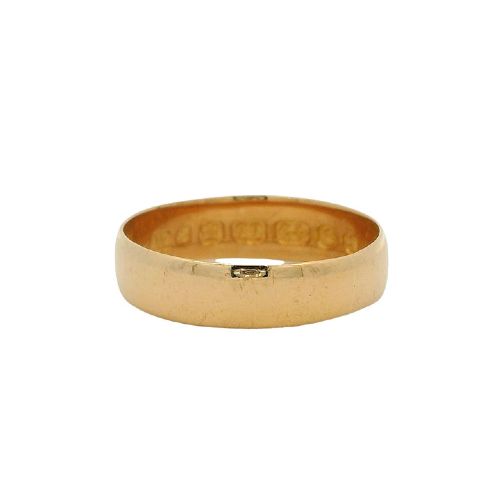
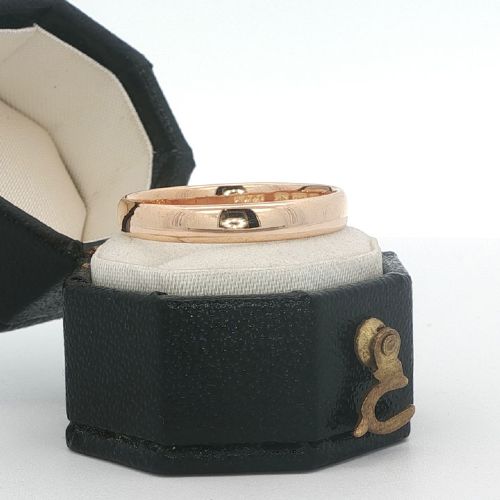
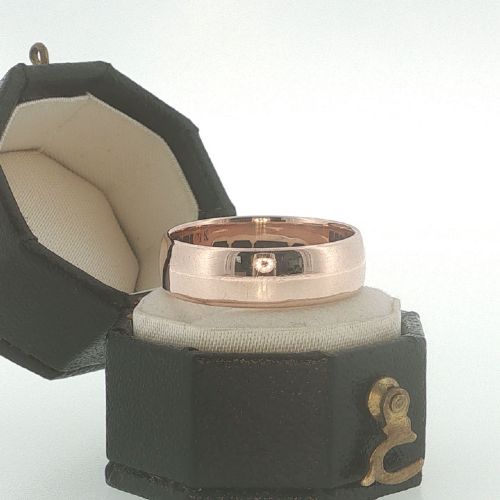
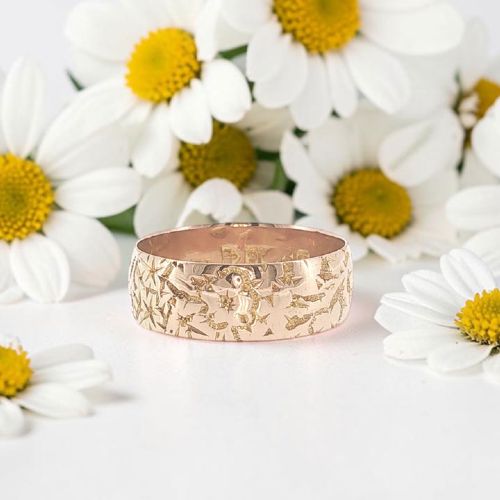
A traditional wedding band is a simple ring of precious metal worn upon the finger to signify marriage. The pieces seen here span the Victorian, Edwardian, Art Deco, and mid-century periods, showing how goldsmiths shaped metal across decades.
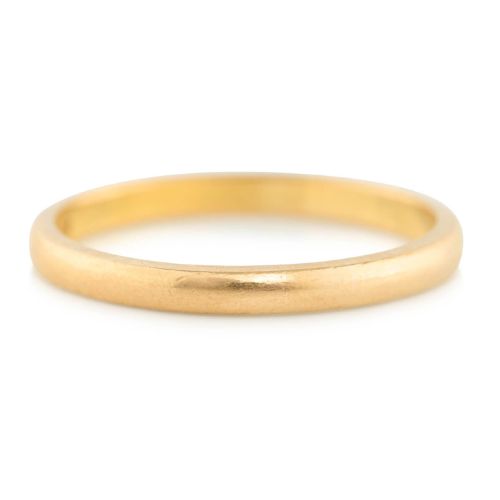
Most examples found on this page are fashioned from high-purity yellow gold, particularly twenty-two carat gold, alongside nine-carat rose gold and eighteen-carat gold. Plain bands dominate, though stone-set variations involving diamonds and sapphires also appear.
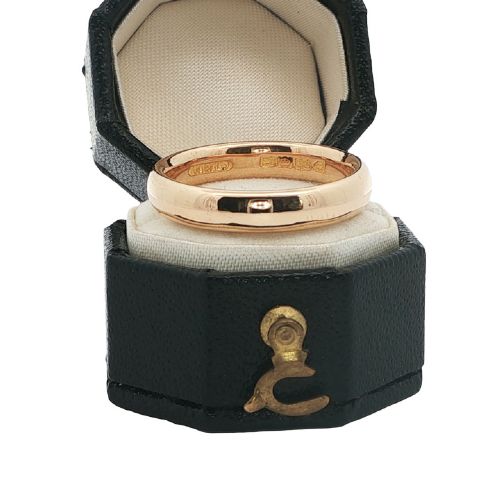
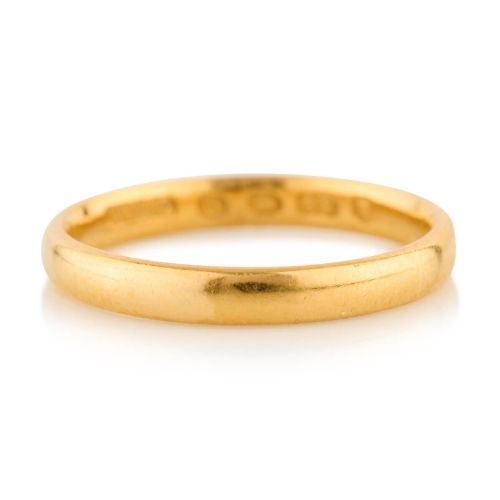
Widths vary from slender bands to substantial hoops measuring several millimetres across. Hallmarks stamped within the metal frequently record the assay office, such as London or Chester, alongside specific years of manufacture.
How they were made
Goldsmiths shaped these rings from high-purity metals like twenty-two carat gold, eighteen-carat gold, and platinum using traditional forming and casting techniques. The high gold content yields a rich, deep yellow colour that develops a soft patina over decades of wear.
Certain pieces feature hand-engraved surface patterns characteristic of the Victorian era, whilst others rely entirely on smooth, polished contours. Hallmarks were stamped directly into the inner shank using metal punches to record assay offices and dates.
Listings feature yellow gold, rose gold, and platinum across Victorian, Edwardian, Art Deco, and mid-century periods.
What varies in quality
Quality in a traditional wedding band rests upon the purity of the metal and the preservation of its original hallmarks and weight. Heavy twenty-two carat gold rings retain their structural substance better than lighter, thinner counterparts.
The clarity of stamped assay marks and the crispness of any engraved details separate standard examples from finer pieces. Wear on the inner and outer surfaces shows how much of the original metal mass remains intact.
The Traditional Wedding Band Glossary
- Hallmark
- An official stamp struck into precious metal indicating its purity, the assay office, and the year of testing. These marks provide definitive evidence of a ring's origin and age.
- Assay office
- An official body responsible for testing the purity of precious metal items and stamping them with a hallmark. Offices like London and Chester feature prominently on these rings.
- Carat
- A unit measuring the purity of gold, where twenty-four carats represents pure gold. High-purity bands use twenty-two carat gold for a richer colour.
- Shank
- The circular band of a ring that encircles the finger. In wedding bands, the shank is often plain, though some feature engraved patterns.
- Half eternity ring
- A ring set with a single row of gemstones, such as diamonds or sapphires, spanning halfway around the band. This style appears alongside plain gold wedding bands in the listings.
Traditional Wedding Band: Frequently Asked Questions
What metal is best for daily wear?
High-purity gold like twenty-two carat is softer and develops a smooth patina over time, whereas eighteen-carat gold and platinum offer greater resistance to daily knocks. Platinum and higher carat golds tolerate continuous everyday wear well.
Consider your lifestyle and physical work habits when choosing which metal alloy suits your daily routine.
Can antique wedding bands be resized?
Many plain gold bands can be altered by a skilled jeweller who adds or removes a small section of metal from the shank. However, resizing rings with continuous engraving or stone settings requires specialist care.
Alterations may risk disturbing or removing the original hallmarks stamped inside the band.
How do I care for antique gold?
Clean your gold ring using warm water, mild soap, and a soft cloth to remove everyday oils and debris. Avoid harsh chemical cleaners that might damage the surface or weaken any stone settings.
Store antique rings separately in soft pouches to prevent them from scratching against other jewellery.