
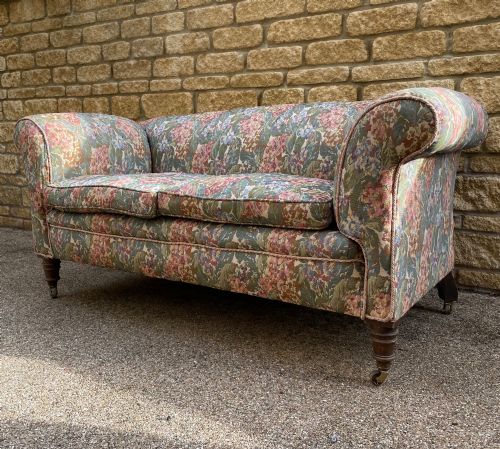
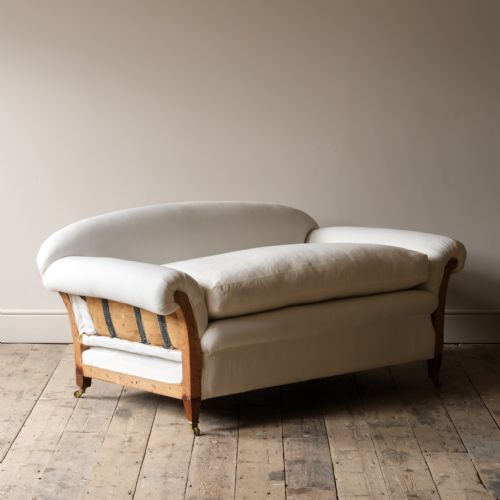


Vintage 2 Seater Settee
A vintage 2 seater settee brings compact seating into a room, joining period craftsmanship with enduring domestic comfort.
Vintage 2 Seater Settee
A vintage 2 seater settee is a smaller-scale upholstered seating option that appears across numerous historical periods, ranging from the Victorian era through to the Art Deco movement. These compact pieces accommodate two people comfortably without dominating a floor plan, making them practical for sitting areas and bedrooms alike.
The selections available span multiple stylistic traditions, including classic English Country House designs, French giltwood frames, and Queen Anne walnut forms. You will encounter straightforward timber frames alongside heavily upholstered Chesterfields and drop-arm configurations designed for reclining.
Makers and retailers such as Howard & Sons, Harry and Lou Epstein, and Liberty have retailed or built notable examples of these smaller sofas. The materials reflect their era of origin, combining traditional hardwood frames with period textiles, leather, and canework.
Materials and construction methods
Frames rely on sturdy timbers such as mahogany, walnut, and general hardwoods, providing the structural foundation for both carved show-frames and fully upholstered bodies. Inlaid details, giltwood finishes, and turned legs appear frequently on models from the nineteenth and early twentieth centuries.
Listings feature 19th Century, Edwardian, and 1930s periods, using materials like brass, walnut, leather, and velvet across various sofa forms.
Factors that distinguish quality
The integrity of the underlying wooden frame and the precision of any hand-carved details or inlay work set superior examples apart from standard production pieces. Original finishes, such as patinated leather or fire-gilt surfaces, retain greater historical interest than later alterations.
Proportion and scale dictate the visual success of a settee, particularly in vernacular styles like English Country House seating or French Louis-influenced designs. The quality of the joinery and the durability of the internal webbing or springs determine how well the structure holds its shape over decades of use.
Howard And Sons·Harry And Lou Epstein·Hampton And Sons
The Vintage 2 Seater Settee Glossary
- Chesterfield
- A traditional sofa style characterised by deep button tufting, rolled arms of the same height as the back, and full upholstery. This form is frequently found in rich brown or green leather.
- Drop-arm
- A mechanical seating feature where one or both armrests can be lowered to convert the sofa into a daybed or lounging surface. Victorian models often utilise this mechanism.
- Giltwood
- Timber that has been coated with a thin layer of gold leaf or gold paint, commonly seen on decorative French seating from the nineteenth century. It adds a bright, reflective finish to carved frames.
- Canework
- Woven rattan or cane panels integrated into the backrests or seat frames of chairs and settees. This technique provides a lighter, semi-transparent alternative to solid upholstery.
- Serpentine camel back
- A curved, undulating top rail on a sofa back that mimics the gentle humps of a camel. This aesthetic appears on Georgian-proportioned pieces from the nineteenth century.
Vintage 2 Seater Settee: Frequently Asked Questions
How do I spot an original Victorian settee?
Look closely at the construction materials, joinery techniques, and the type of timber used in the frame. Victorian pieces typically employ solid hardwoods like walnut or mahogany beneath traditional upholstery foundations.
Examine the wear patterns and the finish of the wood to determine age. Period pieces carry authentic signs of handling and hand-turned joinery that machine-made reproductions lack.
Can I use a vintage settee every day?
Most vintage settees are structurally robust enough for daily domestic seating, provided the internal webbing and springs are sound. Many examples successfully combine historical charm with practical living.
If a piece requires reupholstery, a professional restorer can reinforce the internal frame and springs. This ensures the settee remains comfortable and supportive for regular use in a modern home.
How do I choose between leather and fabric upholstery?
Leather upholstery offers a durable, patinating surface that ages distinctively with use, as seen on classic Chesterfield designs. It suits busy rooms and develops a rich character over time.
Fabric upholstery, including velvet, calico linen, and patterned textiles, brings softness and colour variety to a space. Fabric choices allow a settee to tie into specific interior colour schemes, though they may require more careful maintenance.