
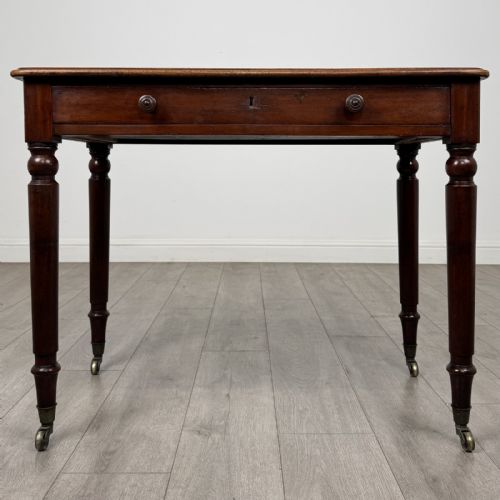
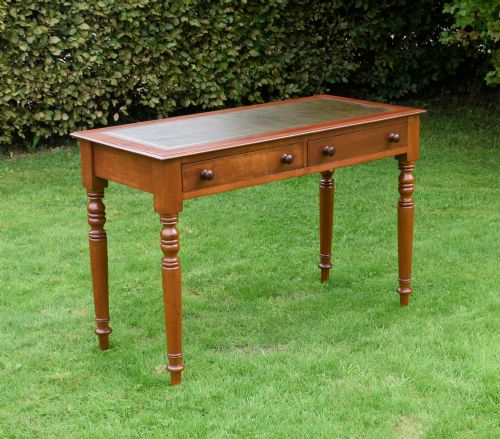
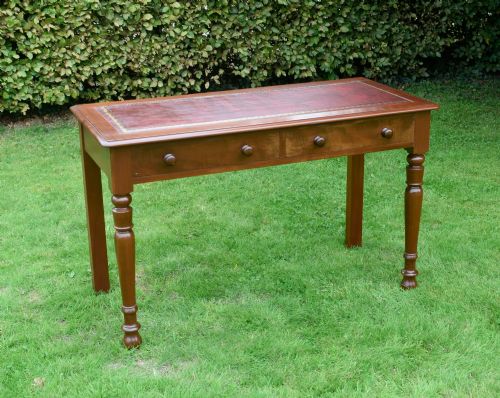
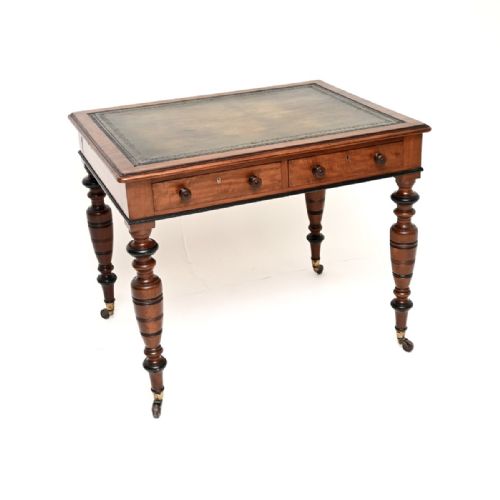
Victorian Writing Desk Turned Legs
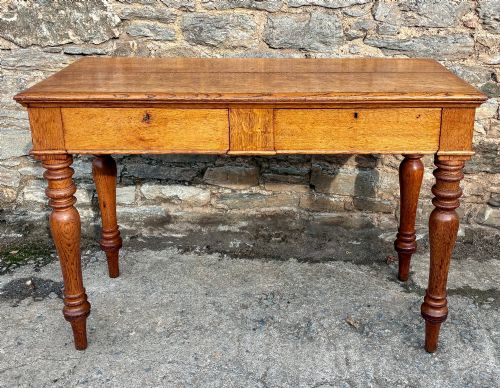
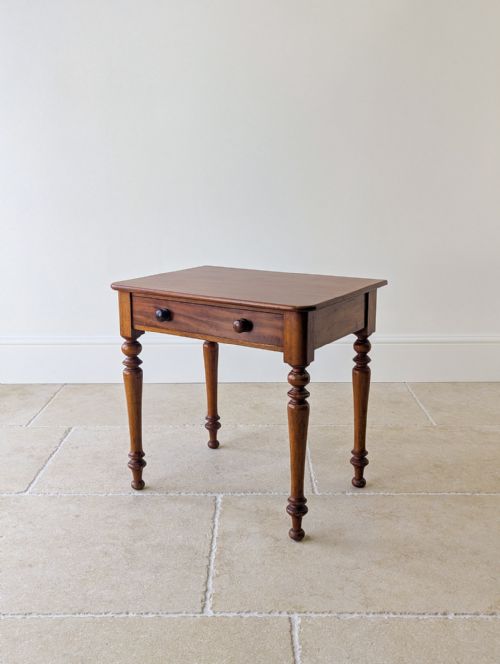
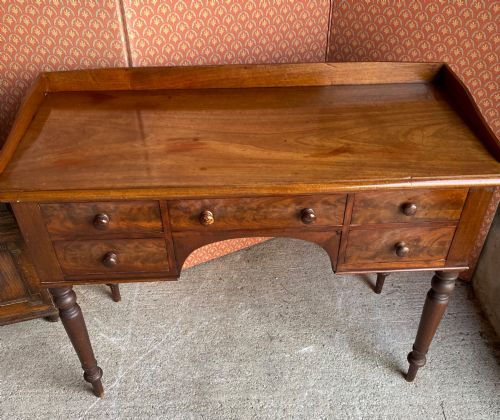
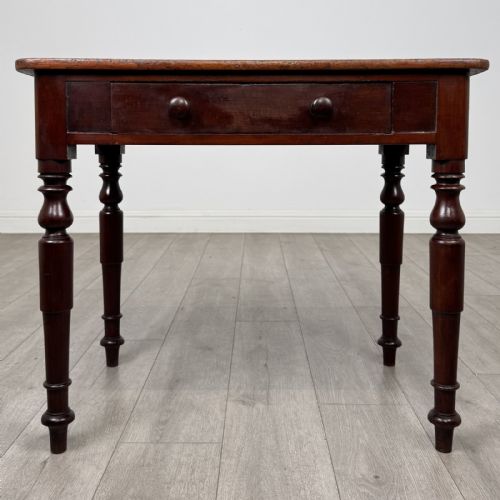
These Victorian writing desk turned legs pieces combine nineteenth-century workspace utility with the character of turned supports, offering a practical writing surface for the home.

Victorian Writing Desk Turned Legs
A victorian writing desk turned legs search brings up nineteenth-century tables, side tables, and dressing tables that were utilised for daily correspondence and clerical work. The pieces on this page span the Victorian period alongside examples from the broader nineteenth century, Georgian era, and specific decades such as eighteen-sixty and eighteen-seventy.
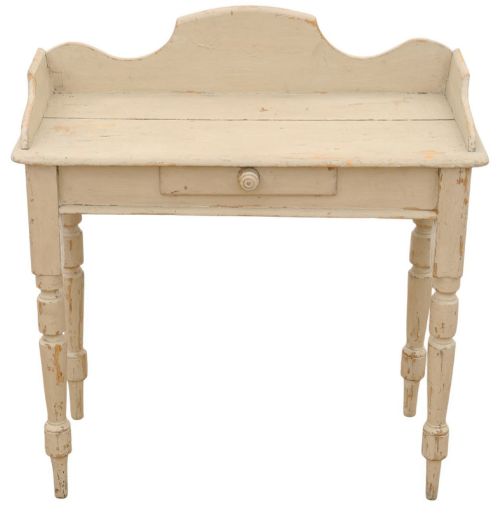
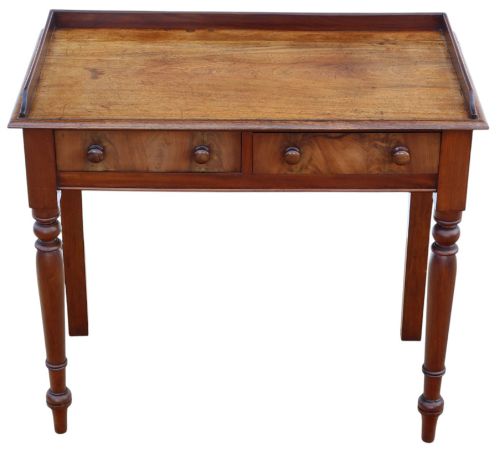
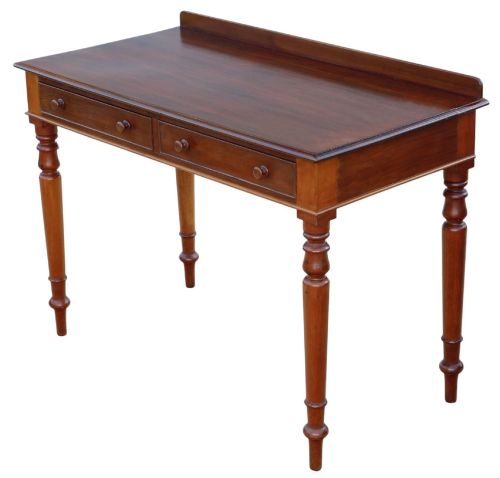
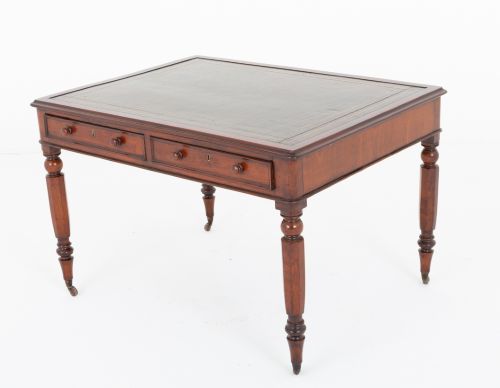
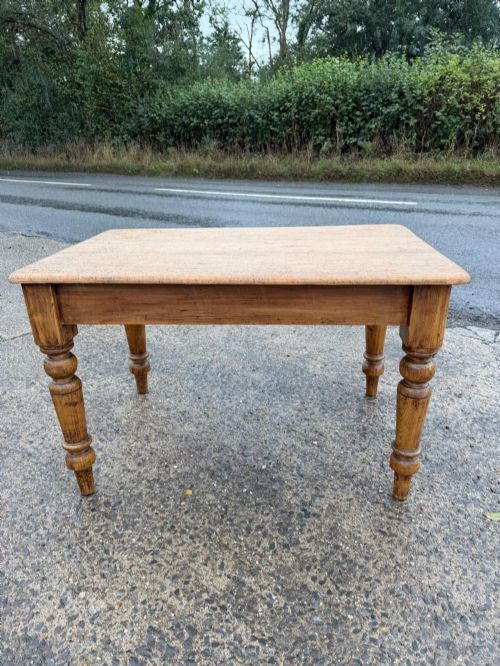
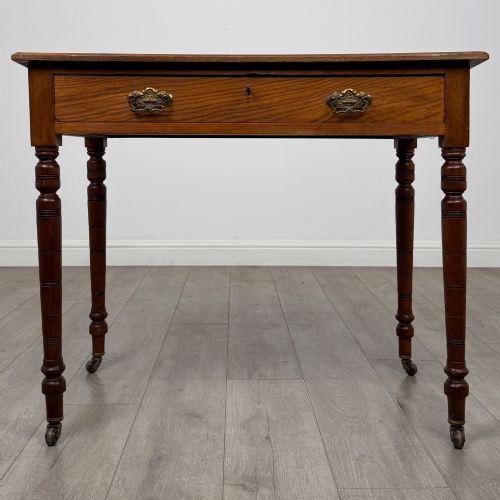
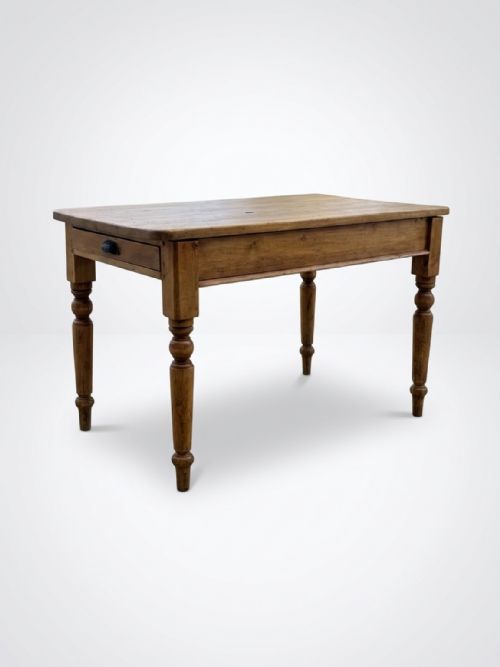
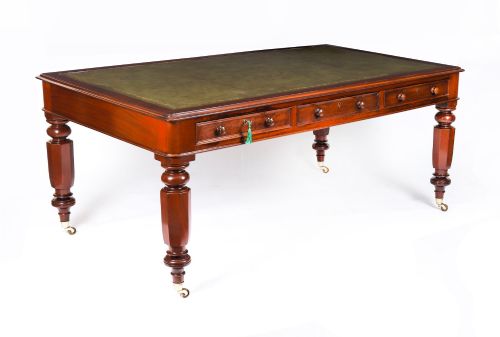
Most entries are utilitarian writing tables, library tables, and side tables constructed in timber with single or multiple drawers set into the front frieze. Formats range from modest pine kitchen and side tables to partners desks and flame mahogany library tables.
Makers and workshops of the era produced these desks in various timber species, incorporating occasional superstructures, leather inserts, and painted finishes alongside the characteristic turned legs.
What separates the grades
Quality in these desks rests on the selection of timber and the crispness of the turning on the legs. Dense, well-figured woods like flame mahogany and satin birch demonstrate a higher grade of manufacture than basic utility pine.
Construction details such as secondary timbers, dovetail joints in the drawers, and original brass hardware distinguish workshop pieces from ordinary domestic furniture. The integration of leather writing surfaces and refined proportions further elevate a piece.
Some desks double as candlemaker's tables, proving that nineteenth-century multitasking involved a lot of wax.
Heal and Son·Gillows·J A Mein Edinburgh Cabinet Maker·Liberty
The Victorian Writing Desk Turned Legs Glossary
- Frieze
- The horizontal band beneath the top of a table or desk, frequently housing one or more drawers.
- Partners desk
- A large desk designed with drawers and cupboards on both sides so two people could work opposite each other.
- Flame mahogany
- Mahogany timber cut to reveal a distinctive flickering, flame-like grain pattern used on high-grade nineteenth-century furniture.
- Superstructure
- A set of small drawers or compartments built on top of the main writing surface.
Victorian Writing Desk Turned Legs: Frequently Asked Questions
What is a Victorian writing desk with turned legs?
These are nineteenth-century tables and desks featuring cylindrical turned wooden supports beneath a practical writing surface or drawer frieze.
They were designed for domestic correspondence, study, and administrative tasks in homes and libraries.
How do I identify a nineteenth-century desk?
Look at the timber selection, drawer construction, and hardware to determine the period of manufacture. Nineteenth-century pieces typically employ solid mahogany, walnut, or pine with hand-cut joints.
Turned legs and traditional finishes like wax or polish further point to Victorian workshop methods.
Where were these desks used originally?
These tables served in home studies, libraries, bedrooms as dressing tables, and parlour rooms for writing letters.
Larger partners desks were utilised in offices and libraries where two individuals needed workspace simultaneously.
How should I care for a wood and leather desk?
Keep wooden surfaces nourished with appropriate wax polish and protect timber from direct sunlight and extreme temperature changes. Avoid placing liquids directly on the leather top to prevent staining.