


Victorian Writing Desk Set
A victorian writing desk set organises ink, pens and correspondence in one decorative tray or stand, bringing nineteenth-century order to a modern desktop.
Victorian Writing Desk Set
A victorian writing desk set brings together inkwells, pen trays and stationery holders in portable stands or fitted bases intended for correspondence. The pieces seen here span the nineteenth century, including specific decades from the eighteen-fifties through to nineteen hundred, alongside Edwardian examples.
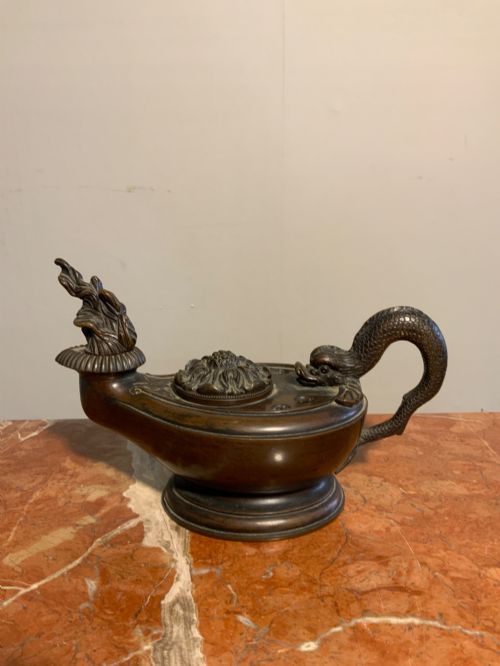
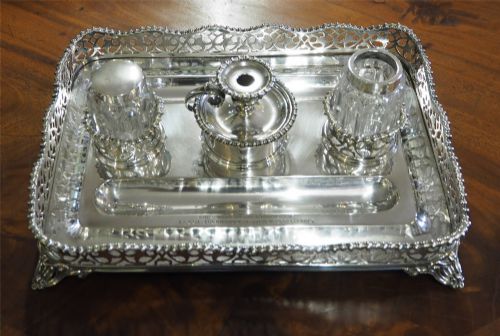
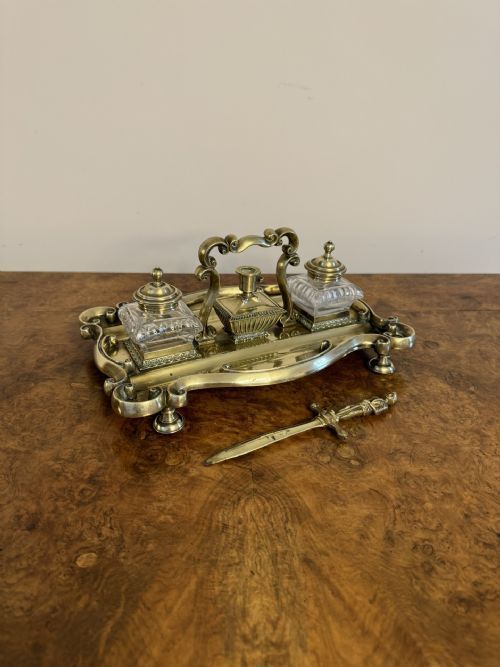
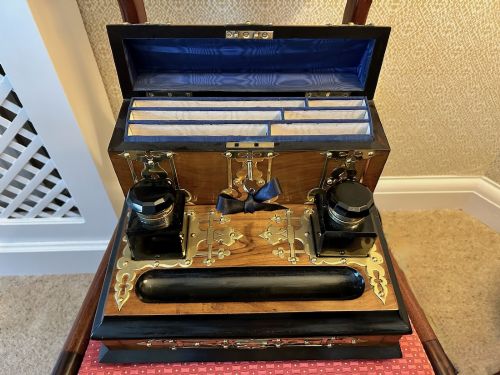
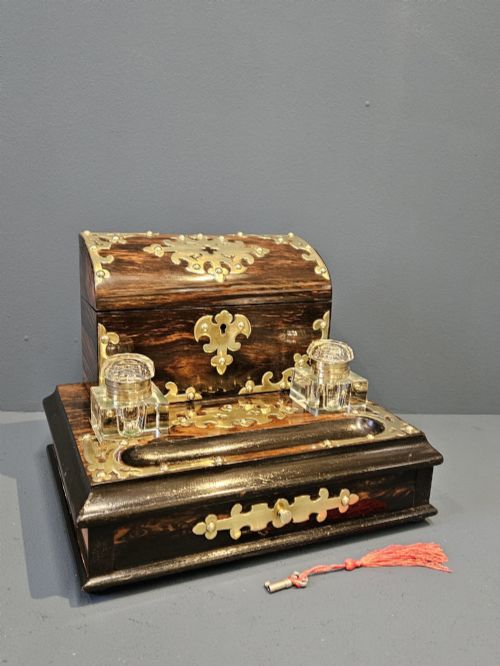
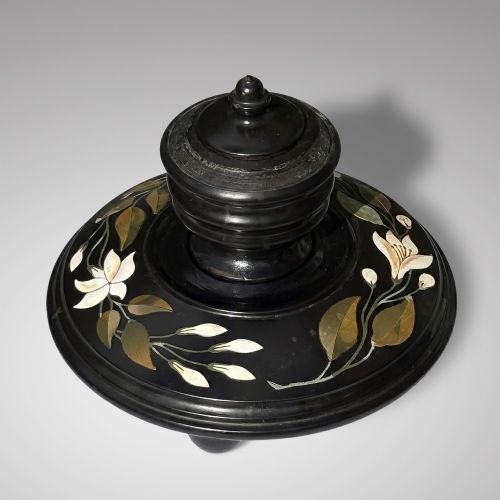
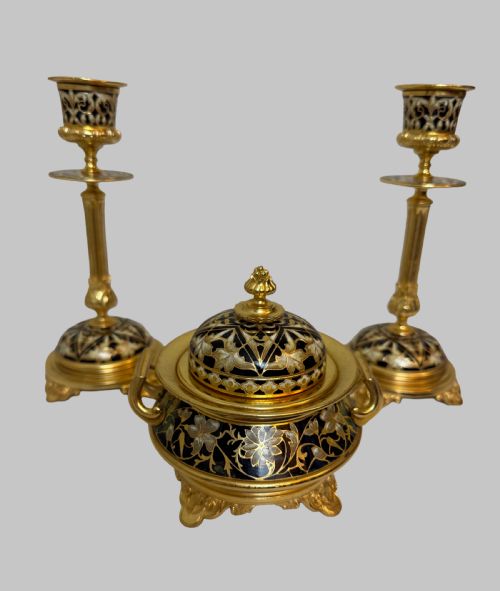
Most pieces combine a central tray with one or two glass or ceramic inkwells, often accompanied by matching items such as chambersticks, candlesticks or stamp boxes. Materials range from native and exotic woods like walnut, coromandel and oak to cast metals, marble and papier-mâché.
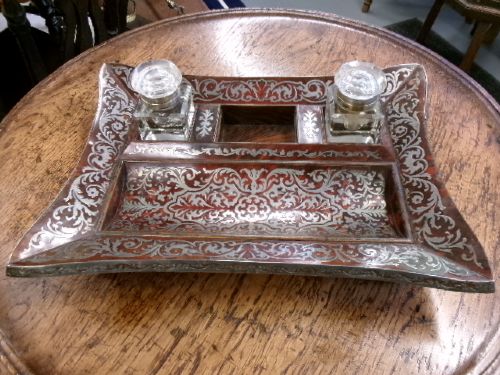
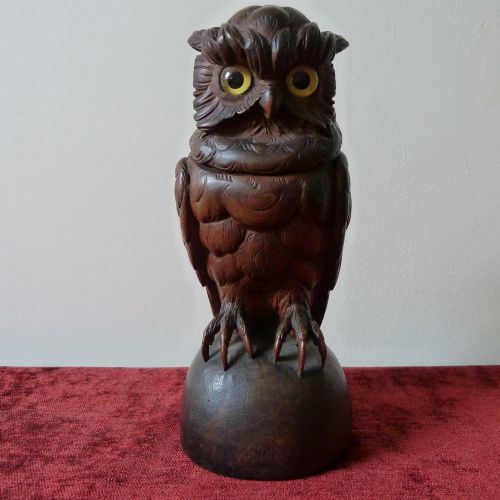
Origins vary from English workshops and makers in London and Sheffield to continental European centres producing champlevé enamel, boulle work, or carved Black Forest animal figures. The selection includes grand grand-tour souvenirs alongside functional desk tidies meant for daily household use.
Materials and Technique
Makers relied heavily on dense timbers such as coromandel, walnut and mahogany, frequently enhanced with brass stringing, mother-of-pearl inlay or tortoiseshell veneers. These wooden chassis provided sturdy foundations for fitted compartments and heavy glass ink inserts.
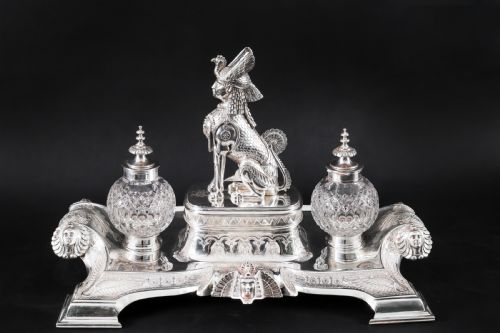
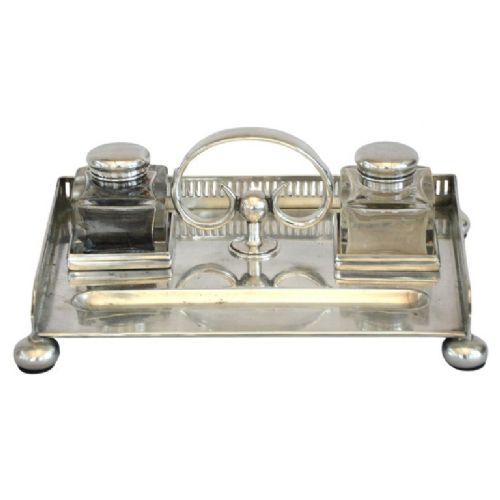
Metal components involved cast brass, ormolu, bronze and silver plate from firms like Elkington and Walker and Hall, alongside sterling silver mounts bearing hallmarks. Champlevé enamelling and gilt bronze added colour and texture to French and English desk stands alike.
Specialised decorative arts appear through hand-carved oak and horn animal figures, Ashford marble inlays, and painted Kashmiri or Victorian papier-mâché. Glass elements typically feature cut glass or heavy moulded reservoirs with hinged metal lids.
Styles recorded across the listings include Victorian, Edwardian, French Napoleon III, Black Forest, Anglo-Indian, Art Nouveau and French Empire.
Defining Quality
Quality rests on the integrity of the materials and the precision of the assembly, distinguishing heavy cast metals and solid exotic timbers from lighter plated substitutes. Superior pieces feature well-fitted components where every lid, pen rest and ink bottle sits securely in its designated recess.
Artistic execution sets apart standard utility desk stands from elaborate decorative works utilising intricate boulle work, hand-painted porcelain or finely detailed bronze casting. The presence of matching sets, original cut glass inserts and documented maker marks elevates the standing of an individual piece.
Elkington·Wilkinson And Co·Walker And Hall·Robert Garrard·Minton
The Victorian Writing Desk Set Glossary
- Standish
- A portable desk stand or tray fitted to hold inkwells, sanders, and pen holders for writing correspondence.
- Boulle work
- Marquetry technique utilising tortoiseshell and brass inlay developed in France and popular on nineteenth-century desk accessories.
- Ormolu
- Gilt bronze ornamentation applied to furniture and decorative metalwork during the nineteenth century.
- Champlevé
- Enamelling method where artist channels are gouged into metal and filled with coloured glass paste before firing.
- Ashford marble
- Decorated limestone inlaid with various mineral stones, produced in Derbyshire during the Victorian era.
Victorian Writing Desk Set: Frequently Asked Questions
What is a Victorian writing desk set?
A Victorian writing desk set is a portable or stationary stand designed to hold inkwells, pens and writing accessories together on a table.
These pieces served a practical function in nineteenth-century households where daily correspondence required dedicated ink reservoirs and blotting tools.
How were these desk sets used?
They sat on writing tables or library desks to keep ink, quills and stationery organised in one central location.
Many included removable glass inkwells with hinged lids to prevent the ink from drying out between writing sessions.
Are the inkwells removable?
Most inkwells in these sets lift out of their fitted wooden or metal bases for easy cleaning and refilling.
Original glass inserts often match the contours of the tray and feature cut glass patterns typical of the period.
How do I date a desk set?
Dating relies on stylistic clues, material choices, and occasionally metal hallmarks or maker stamps stamped into the base.
Victorian pieces often reflect broader artistic movements such as Gothic Revival, Egyptian Revival, or Art Nouveau.
How should I care for wood and brass?
Wooden surfaces benefit from occasional waxing with neutral beeswax to preserve the grain of walnut, coromandel or mahogany.
Brass and bronze parts should be kept dry and cleaned gently without harsh metal polishes that remove historic patination.