


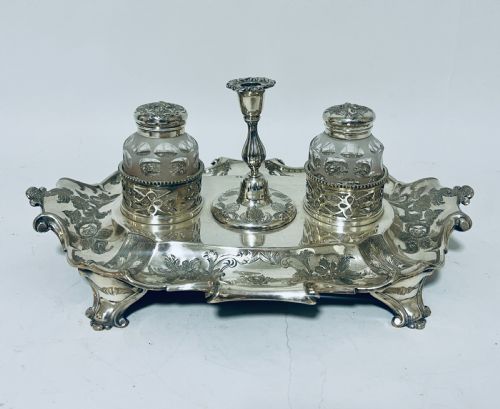

Victorian Double Inkwell Set
A victorian double inkwell set brings the weight of nineteenth century correspondence to a desk, holding ink for the serious writer.
Victorian Double Inkwell Set
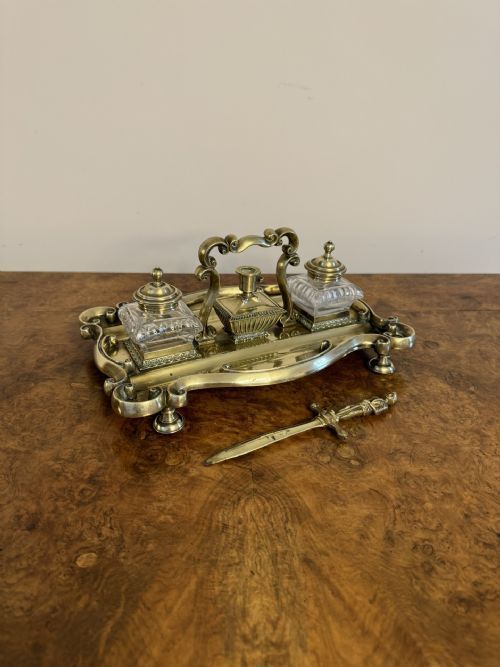
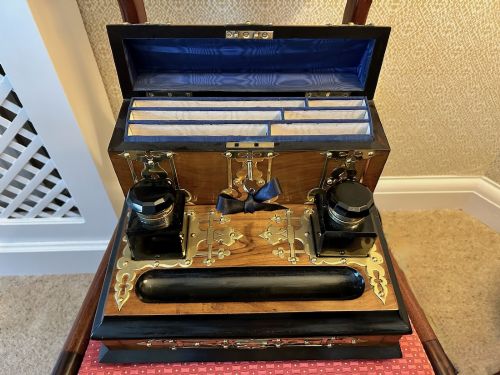
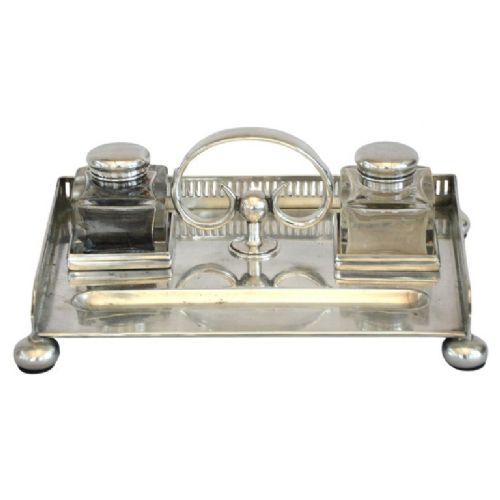
A victorian double inkwell set gathers the necessary tools of the nineteenth century writer onto a single platform of wood, metal, or stone. These desk accessories appear most often in brass, silver plate, and walnut, spanning periods from the mid-nineteenth century through the Edwardian era.
The objects take the form of desk stands, inkstands, and fitted desk tidies, frequently incorporating cut glass inkwells alongside compartments for pens and stamps. French Napoleon III, Empire, and Black Forest styles sit alongside English brass and silver-plated examples.
Materials and construction
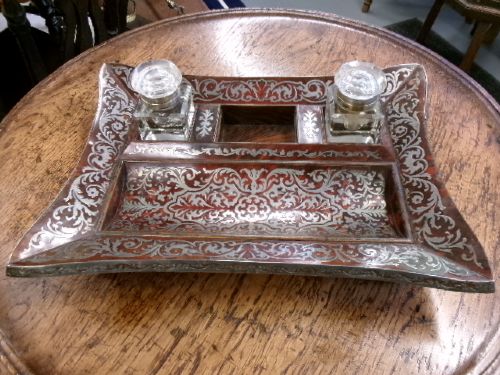
The construction relies on sturdy foundations of walnut, mahogany, oak, and marble, combined with cast or mounted metals such as brass, ormolu, and silver plate. Boulle work and intricate hand carving distinguish the wooden and tortoiseshell cases.
Glass is utilised for the removable inkwell inserts, often cut with deep patterns, while hinged metal lids protect the ink from drying. Makers mounted these elements securely into shaped trays, sometimes adding drawers or chambersticks to the assembly.
Materials span cut glass, brass, silver plate, ormolu, walnut, mahogany, oak, horn, and marble.
Judging the work
The distinction between tiers rests upon the crispness of the metal casting and the precision of the wood inlay or carving. Heavy cast brass, genuine ormolu, and thick silver plating separate substantial desk sets from lighter commercial productions.
Integrity of the fitted components matters greatly; sets retaining their original matching cut glass inkwells and working hinged lids hold higher regard than those with mismatched replacements.
James Cartland and Sons·Walker and Hall·Martin Hall·A Marionnet·Moser
The Victorian Double Inkwell Set Glossary
- Inkstand
- A tray or stand designed to hold one or more inkwells, pens, and related writing accessories. These fixtures anchored the nineteenth century writing table.
- Ormolu
- Gilt bronze produced by applying a mercury and gold amalgam to cast bronze. This technique creates a rich golden surface found on French desk accessories.
- Boulle work
- An elaborately detailed marquetry of tortoiseshell and brass inlay. Developed in France, this method decorates the finest wooden desk stands.
- Standish
- A portable desk stand or tray fitted with inkwells, sanders, and penholders. The term denotes a formal writing apparatus of considerable weight.
- Faience
- Tin-glazed earthenware, seen on Dutch Delft desktop pieces. It provides a ceramic alternative to metal and wooden desk sets.
Victorian Double Inkwell Set: Frequently Asked Questions
What is a victorian double inkwell set used for?
These sets held black and red ink for correspondence, bookkeeping, and document signing in the nineteenth century. The dual containers allowed a writer to switch between ink colours without cleaning a single quill or nib.
Today they serve as decorative desktop organisation for pens, stamps, and small stationery items. They bring period character to modern home offices and studies.
How do I distinguish brass from ormolu?
Brass is a solid alloy of copper and zinc that maintains a bright metallic yellow tone or darkens evenly with age. Ormolu consists of bronze gilded with a layer of gold through a mercury process, producing a warmer, deeper golden lustre.
Ormolu mounts generally appear on French furniture and high-end nineteenth-century desk sets. Solid brass construction is more common on utilitarian English pieces.
Are the glass inserts usually original?
Glass inserts face a high risk of breakage over decades of use and cleaning. Many surviving sets feature replacement glass inkwells that fit the original collar.
Matching cut glass liners that sit flush within the brass or silver collars represent a more complete state. Collectors look closely at the fit and glass quality to determine originality.
How should I clean a brass and walnut desk set?
Dust accumulates in the carved details of wooden bases and around metal mounts. A soft dry brush removes debris without disturbing the aged surface of the wood or metal.
Harsh metal polishes strip the historic patina from brass and silver plate. Light cleaning with a damp cloth preserves the character accumulated over the nineteenth century.