






Victorian Work Table Castors
Victorian work table castors anchor these sewing and occasional tables, offering collectors sturdy mobility beneath mahogany and walnut frames.
Victorian Work Table Castors
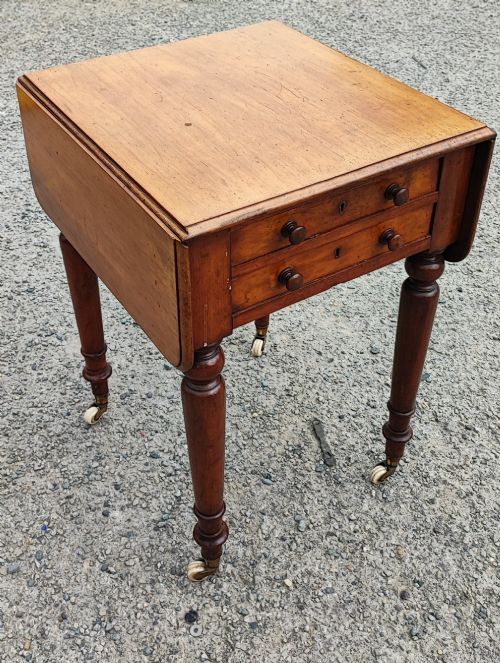
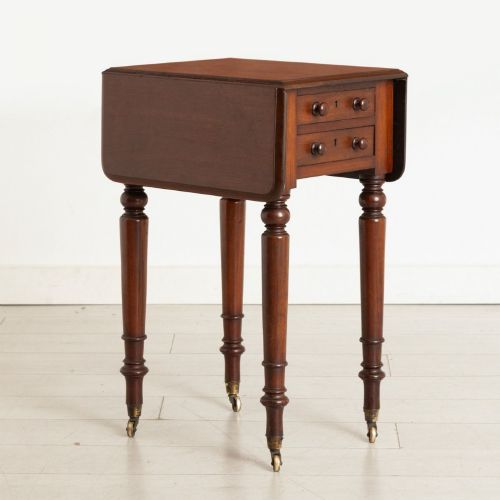
Victorian work table castors appear beneath nineteenth-century sewing, occasional, and Pembroke tables designed for domestic use. The pieces span periods from the Georgian era through the late Victorian years, encompassing drop-leaf, foldover, and writing variants.
Mahogany and walnut form the primary timber bodies resting upon these small wheel fittings, often featuring fitted interiors for sewing or writing. Walnut and burr walnut examples frequently incorporate elaborate inlays or leather tops alongside their support castors.
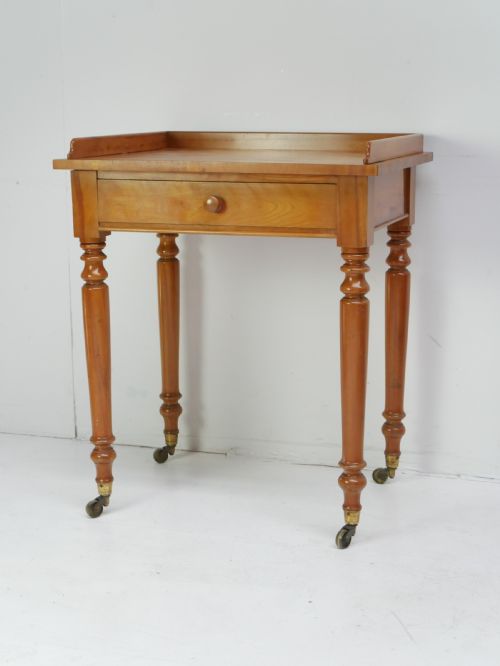
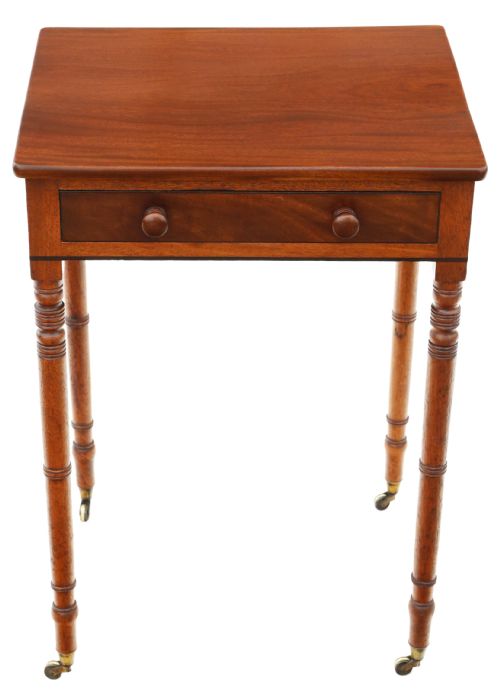
The archive and current selection show these small support wheels chiefly supporting multi-use tables where portability around a Victorian parlour mattered. Sewing tables and Pembroke designs dominate the forms carrying these specific floor-contact components.
Materials and construction
Brass provides the foundational metal for the small wheel mounts and sockets attached to the base of each timber leg. Cabinet makers joined solid mahogany, walnut, and satinbirch frames using traditional joinery before securing the metal running gear to the feet.
Secondary elements include ceramic inserts within the roller housings, alongside leather writing surfaces and fruitwood inlay embellishing the main tabletops. Burr walnut veneers over solid carcases demonstrate the cabinet-making standards applied during the nineteenth century.
Original brass wheels ensure these tables still glide across modern carpets just as easily as they did across Victorian parlour floors.
Judging quality and integrity
The refinement of the timber selection marks the difference between standard production tables and finer workshop pieces, particularly in the choice of figured burr walnut or dense mahogany. Superior examples display crisp fruitwood inlay and well-executed secondary veneers rather than plain surfaces.
Completeness of original furniture hardware, including the small brass wheels and turning knobs, elevates the standing of an individual table. The integration of the wheel mounts into the base of the legs reveals the original maker's attention to detail.
Waring and Gillow
The Victorian Work Table Castors Glossary
- Castor
- A small wheel mounted on a swivel or socket fixed to the foot of a piece of furniture to allow easy movement. These fittings are commonly found on nineteenth-century sewing and occasional tables.
- Pembroke table
- A small rectangular table featuring two hinged drop leaves on opposing sides. Such tables frequently incorporate work drawers and support castors.
- Burr walnut
- Timber taken from the warted growths on walnut trees, yielding highly figured grain patterns. Cabinet makers used this material for decorative veneering on Victorian tables.
- Drop leaf
- A hinged flap on a table top that can be raised to extend the surface area or lowered when space is restricted. These flaps are typical on sewing and Pembroke forms.
- Satinbirch
- A pale, lustrous timber utilised for nineteenth-century furniture carcases and decorative surfaces. It provides a lighter contrast to dark mahogany and walnut.
Victorian Work Table Castors: Frequently Asked Questions
What is a work table?
A work table is a nineteenth-century small table equipped with drawers or compartments designed specifically for needlework, sewing, and small writing tasks.
These pieces usually feature a rectangular top, often with drop leaves, standing on four legs fitted with small wheels for relocation around a room.
Why do these tables have castors?
Castors allowed Victorian households to move sewing and occasional tables easily beside chairs or near light sources without lifting heavy timber frames.
The small brass wheels provided smooth mobility across carpets and wooden floors during daily domestic activities.
How do I date a Victorian table?
Dating relies on timber choices, construction methods, and stylistic cues recorded across the nineteenth century, ranging from Georgian survivals to later walnut pieces.
Archive records and current listings point to specific decades between 1800 and 1900 based on veneer types and leg turning styles.
Are these tables suitable for modern use?
These compact tables function effectively as lamp tables, bedside stands, or small desks in contemporary living spaces.
Their narrow footprints and movable wheeled bases allow them to fit beside modern seating while providing concealed storage within original compartments.