

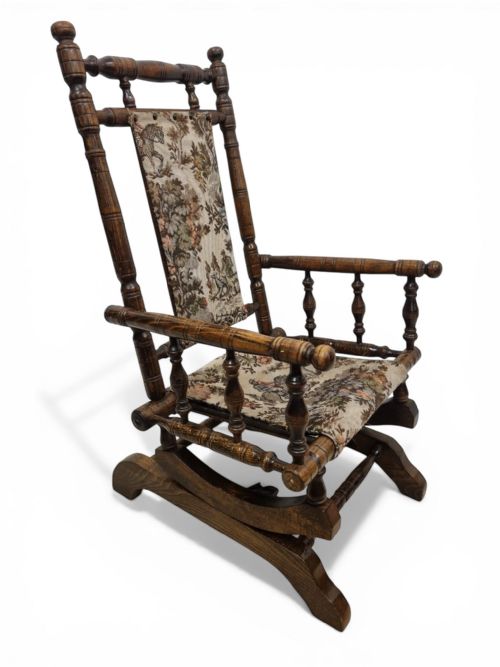


Victorian Wooden Nursery Furniture
Victorian wooden nursery furniture brings together domestic antiques designed for children, offering tactile craftsmanship from earlier centuries.
Victorian Wooden Nursery Furniture
Victorian wooden nursery furniture spans seating, sleeping quarters, and play objects created for young children during the nineteenth century and adjacent periods. Buyers examining this category encounter items designed for daily domestic use in past households, reflecting the practical needs of families long ago.
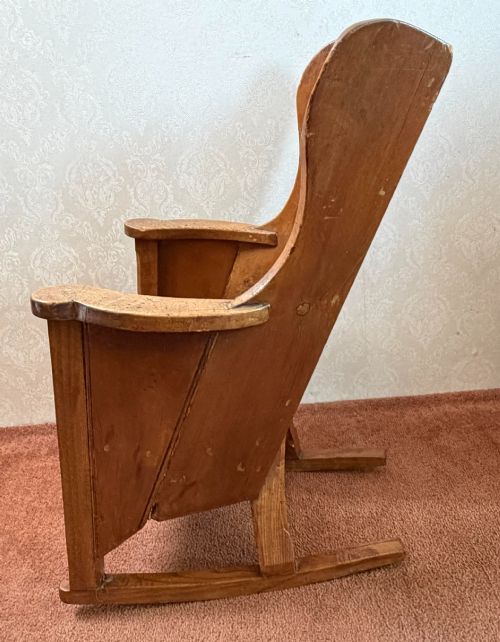
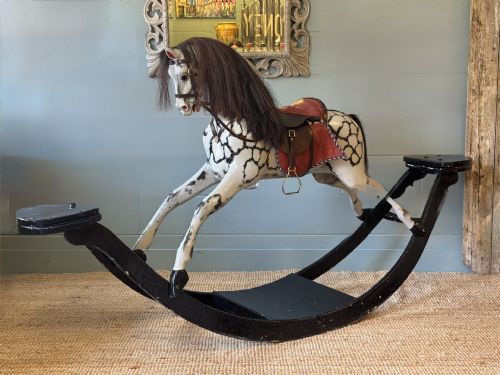
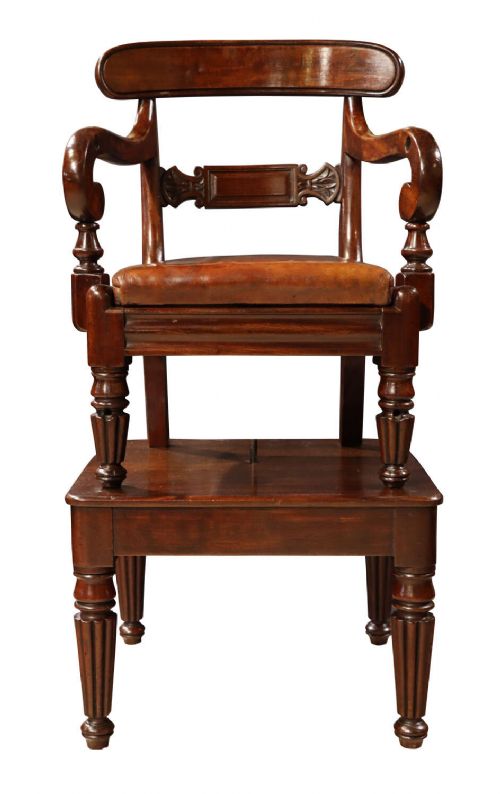
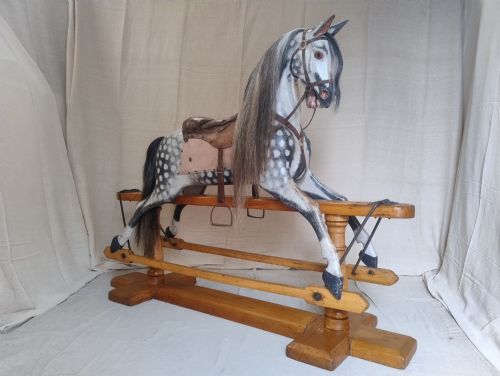
The selections most frequently met on this page include child-sized rocking chairs, high chairs, cradles, and larger play pieces such as rocking horses. These objects survive in woods like mahogany, elm, pine, and ash, often retaining utilitarian forms shaped by vernacular craft traditions or urban cabinet makers.
Materials and construction
Cabinet makers and vernacular craftsmen utilised solid timbers including mahogany, ash, elm, beech, and pine to build pieces sturdy enough for daily juvenile use. Construction techniques varied from traditional Windsor hoopback joinery with turned spindles to panelled box frames and metamorphic mechanisms that converted chairs into alternative seating.
Surfaces received treatments ranging from clear polishes on figured mahogany to original paint finishes and cane, rush, or horsehair upholstery. Metal brackets and hinges appeared on metamorphic designs, while rockers were integrated directly into the bases of cribs and horses.
One child's exercise chair in yew wood survives to remind us that nineteenth-century toddlers needed a workout too.
Indicators of quality
Quality in these items rests upon the choice of timber and the integrity of the original construction, distinguishing robust utilitarian objects from finer parlour pieces. Pieces executed in dense hardwoods like mahogany or figured yew wood demonstrate superior material selection compared to standard pine.
The presence of original surfaces, such as early paint or undisturbed cane and upholstery, elevates an example above heavily restored items. Mechanical sophistication also marks out better pieces, particularly in metamorphic high chairs and complex crib rockers.
G and J Lines of London·Heals and Son
The Victorian Wooden Nursery Furniture Glossary
- Metamorphic
- Furniture designed to transform from one form into another, such as a high chair converting into a low chair and table.
- Windsor
- A chair built with a solid wooden seat into which the legs and back spindles are wedged directly. This vernacular method provides notable structural strength.
- Bergere
- A type of seated furniture featuring woven cane panels in the back or sides. It adds textural lightness to mahogany frames.
- Commode chair
- An enclosed chair fitted with a chamber pot beneath a removable seat or lid. These served domestic hygiene needs in nineteenth-century nurseries.
- Vernacular
- Objects built by local tradesmen following regional traditions rather than high-style metropolitan pattern books. These pieces often display honest, unpretentious construction.
Victorian Wooden Nursery Furniture: Frequently Asked Questions
What is a metamorphic child's chair?
A metamorphic child's chair is a dual-purpose piece engineered to shift between a tall high chair and a low play table or chair.
These pieces utilised clever hinges and pivots to serve two domestic functions within a single footprint.
Were cradles always mounted on rockers?
Cradles in this category appear both with curved wooden rockers attached to the base and as static panelled boxes or canopy frames.
Rockers allowed caregivers to soothe infants without lifting the entire sleeping structure.
What woods were used for nursery furniture?
Makers employed a wide selection of timbers depending on the intended destination of the piece and the maker's workshop tradition.
Mahogany appeared in formal urban commissions, while ash, elm, beech, and pine dominated country vernacular output.