
Victorian Wooden Linen Press
A victorian wooden linen press is a substantial storage piece designed for textiles, offering serious capacity and traditional presence.
Victorian Wooden Linen Press
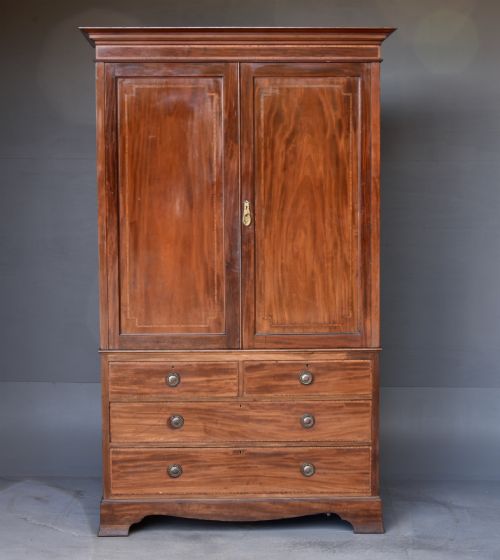
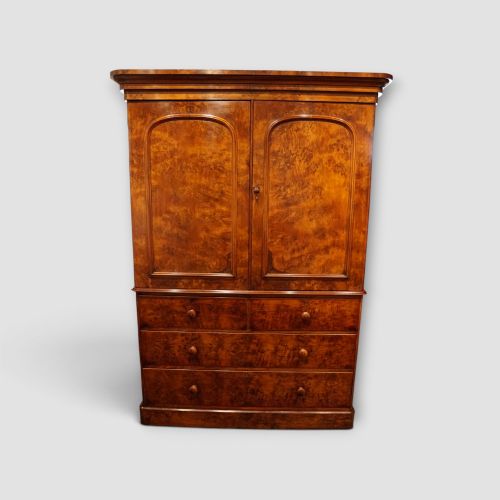
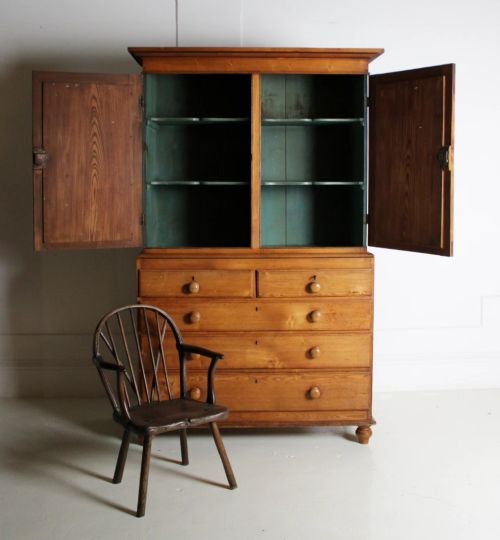
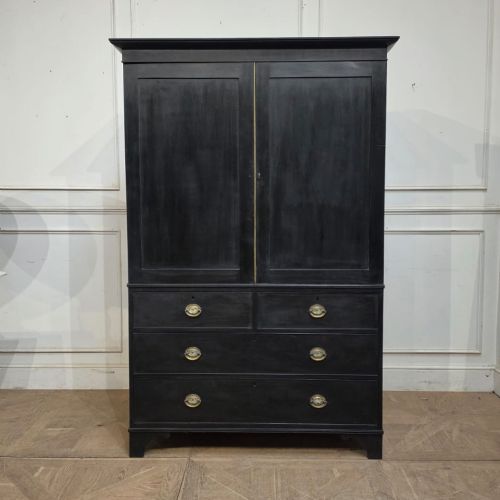
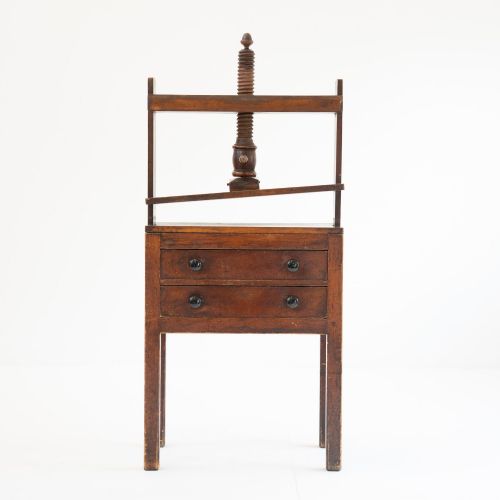
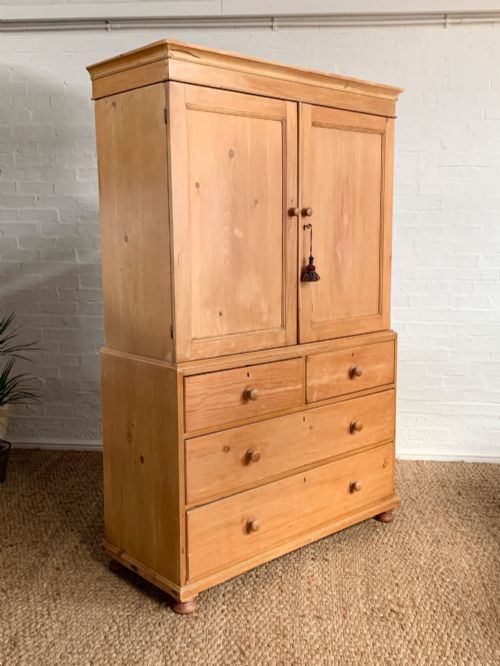
When searching for a victorian wooden linen press, buyers encounter large storage items built primarily during the nineteenth century. These items typically combine upper cupboard sections with lower banks of drawers, serving as functional storage for household linens and garments.
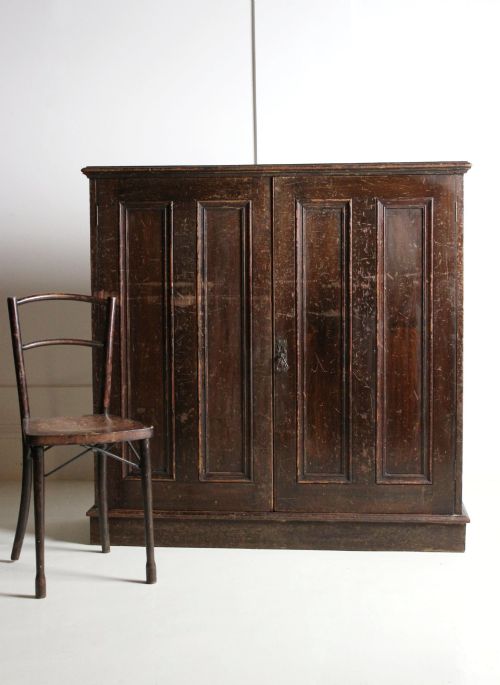
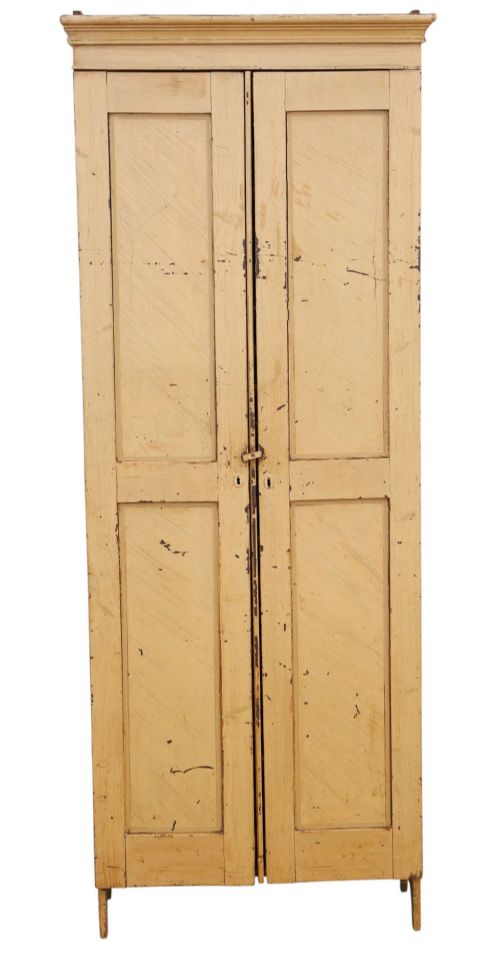
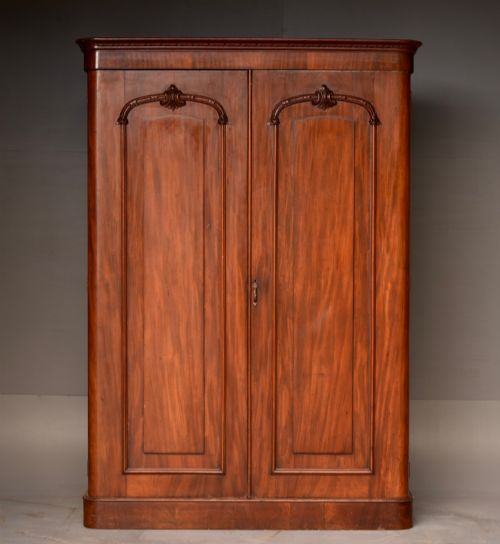
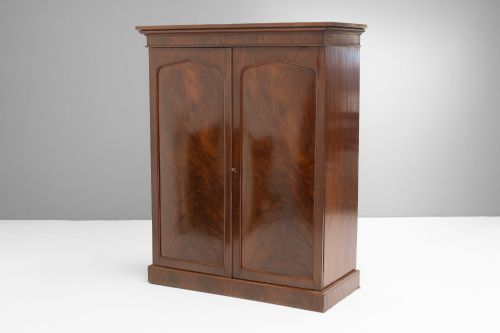
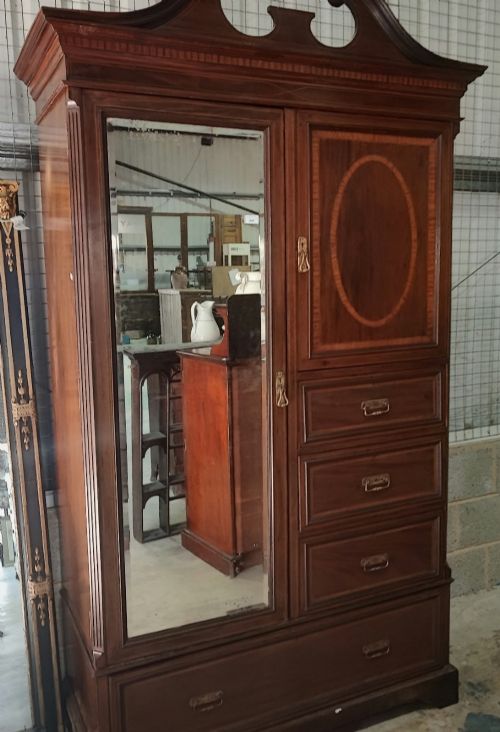
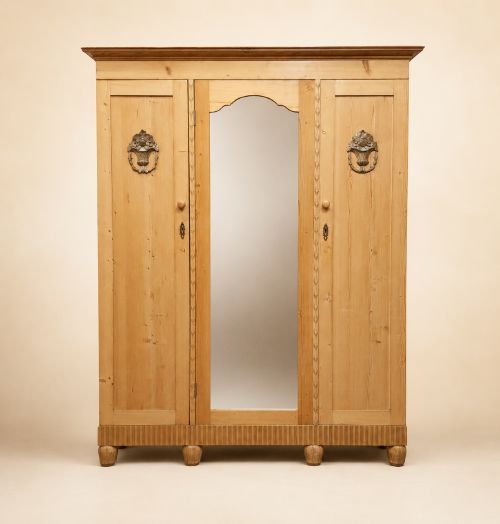
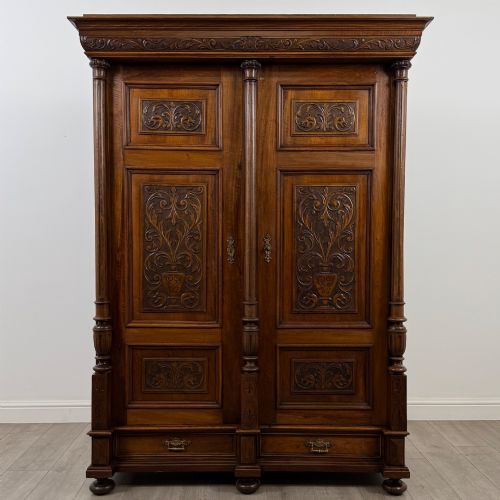
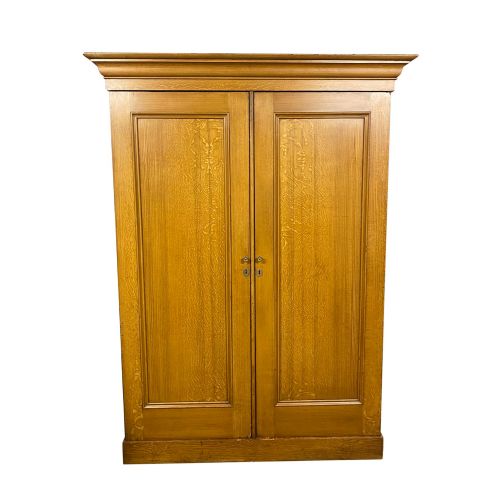
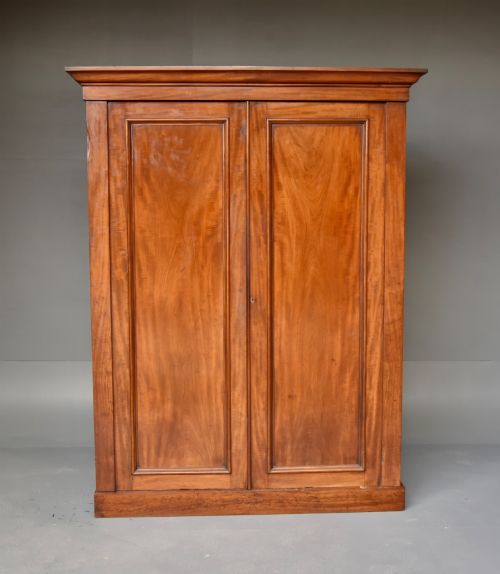
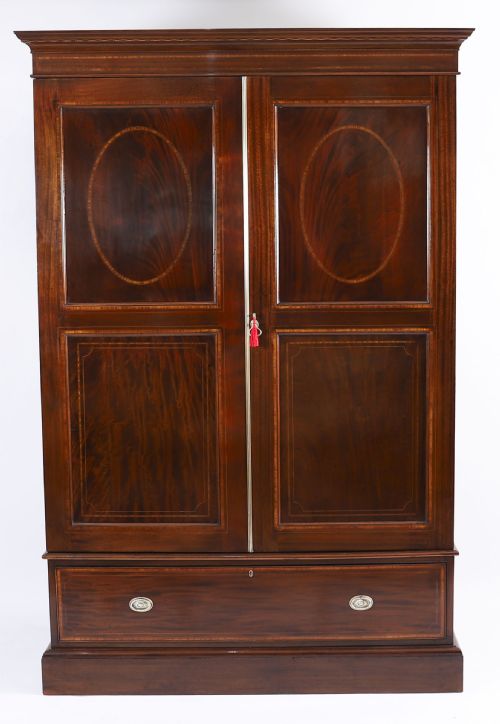
The selections on this page span several variants, including mahogany, walnut, and pine examples alongside related forms like wardrobes, compactums, and housekeeper's cupboards. Pieces range from plain country pine and painted finishes to finely figured flame mahogany and burr walnut.
Origins stretch across English workshops, provincial farmhouses, and London makers, encompassing styles from strict Victorian designs to Edwardian and George III revival interpretations.
How they were made
Cabinetmakers utilised solid timbers such as pine, oak, ash, and mahogany for structural integrity, often applying veneers of flame mahogany or burr walnut to primary display surfaces. Secondary woods like pine appear on interior shelves and drawer linings.
Construction techniques involve traditional joinery combined with decorative treatments including original scumble paintwork, ebonising, inlay, and hand-carved elements. Brass hardware and glass components complete the assembly of these heavy storage carcases.
Periods represented span from early Victorian and William IV eras through to Edwardian compactums.
What varies in quality
The grade of timber selection largely dictates the standing of a piece, with highly figured burr walnut and flame mahogany veneers representing superior cabinetmaking compared to utilitarian painted pine.
Execution of decorative details, from intricate inlay and carved mouldings to the presence of maker signatures by firms like Edwards and Roberts or Heal's, distinguishes high-end metropolitan workshop production from regional country pieces.
maples & co·Edwards and Roberts·Johnston’s of London·S & H Jewell·Heals
The Victorian Wooden Linen Press Glossary
- Linen press
- A tall cupboard traditionally used for storing folded sheets and textiles, usually featuring sliding trays or shelves enclosed by upper doors above a chest base. This form evolved into general wardrobe storage by the late nineteenth century.
- Compactum
- A multi-compartment wardrobe combining hanging space, drawers, and shelving within a single unified cabinet. These large pieces maximise internal storage capacity.
- Scumble
- A decorative paint technique used to imitate the grain of more expensive timbers like oak or walnut. Artisans applied translucent glazes over a base coat to create textured faux finishes.
- Breakfront
- A cabinet design where the central section projects forward from the flanking wings. This architectural arrangement creates depth and visual interest on large wardrobes and bookcases.
- Flame mahogany
- A veneer cut from the fork of the mahogany tree where the branches join the trunk, producing a distinctive flickering flame pattern. Cabinetmakers prized this figure for principal drawer fronts and door panels.
Victorian Wooden Linen Press: Frequently Asked Questions
What is a victorian wooden linen press used for?
These cabinets serve as large capacity storage for clothing, bedding, and household textiles. The upper section typically holds sliding shelves or trays while the lower drawers accommodate bulkier items.
Modern owners utilise them in bedrooms and hallways as statement wardrobes or linen storage units that conceal contemporary belongings behind traditional doors.
How do I date a nineteenth century press?
Dating relies on observing timber choices, hardware, and stylistic shifts across the period. Earlier examples often feature solid mahogany or oak, while later decades incorporate extensive burr veneers and revival styling.
Maker stamps, construction methods inside the drawers, and secondary woods like pine provide further chronological clues.
What woods were used for these cabinets?
Workshop makers utilised native and imported timbers depending on the intended finish and regional origin. Mahogany and walnut dominate high-end urban pieces, frequently used as veneers over secondary pine carcasses.
Country pieces lean heavily toward solid pine, oak, ash, and painted finishes.
How do I fit a large press into a modern room?
Because these pieces were constructed in sections for transport, most dismantle into a cornice, base, and main carcass or two side wardrobes. This modular design assists with moving heavy furniture up staircases and through doorways.
Measuring ceiling height and doorway clearance carefully before purchase ensures the carcase fits the intended wall space.