
Victorian Wooden Hat Tree
These pieces for victorian wooden hat tree bring functional hall furniture into domestic spaces with turned timbers and bent frames.
Victorian Wooden Hat Tree
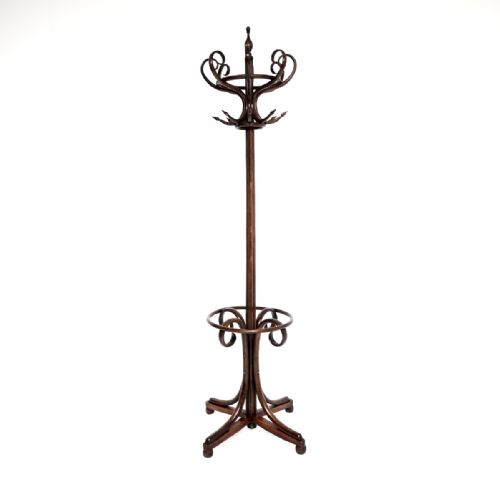
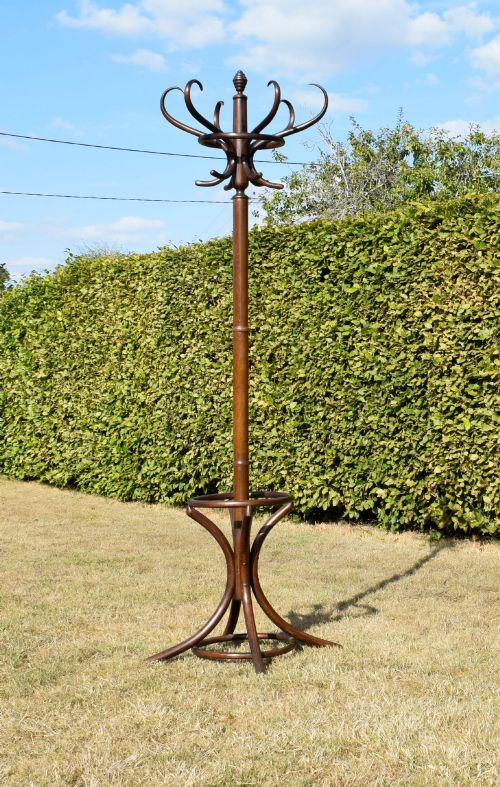
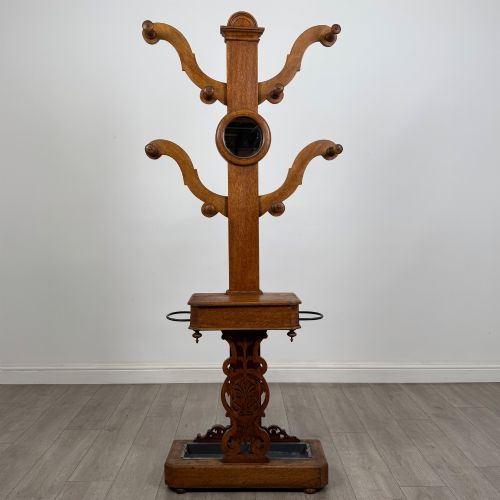
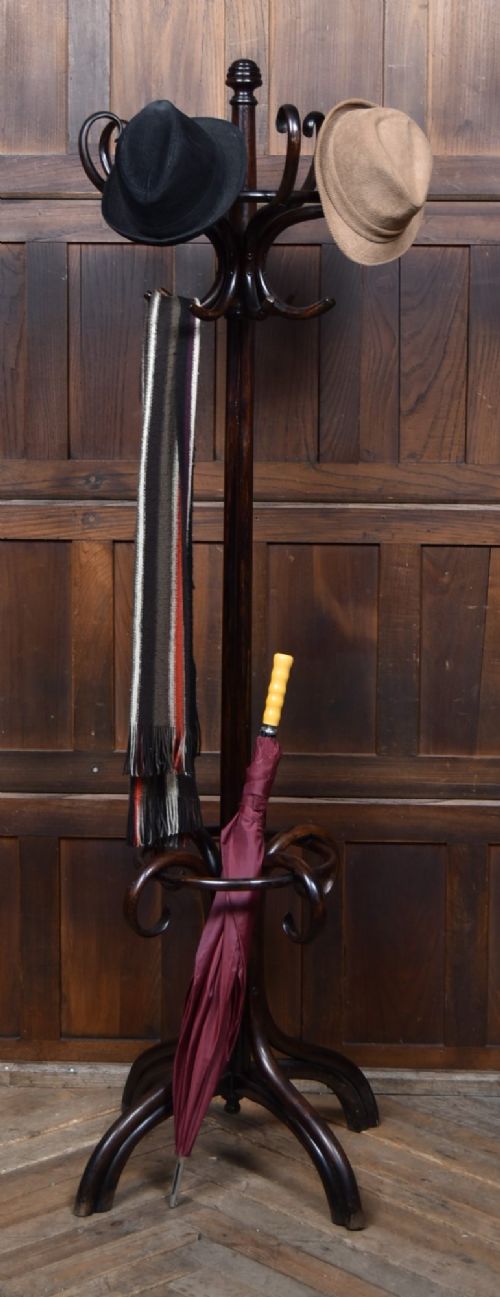
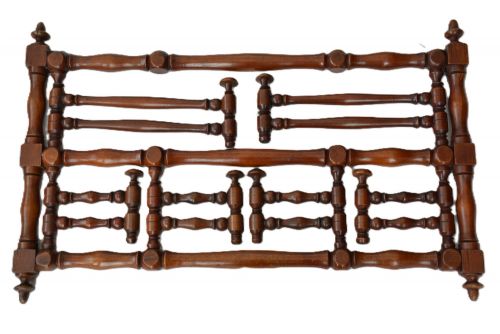
A victorian wooden hat tree typically manifests in the inventory as hall stands, coat stands, and wall-mounted racks designed for domestic entryways. The examples appearing here span the Victorian and Edwardian periods, stretching from the late nineteenth century into the early decades of the twentieth.
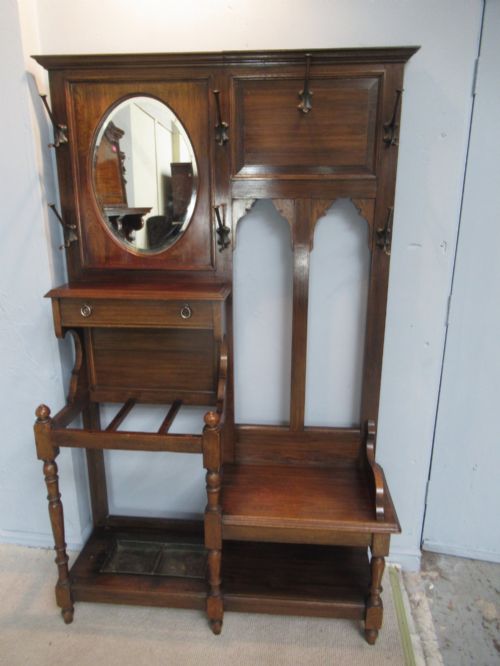
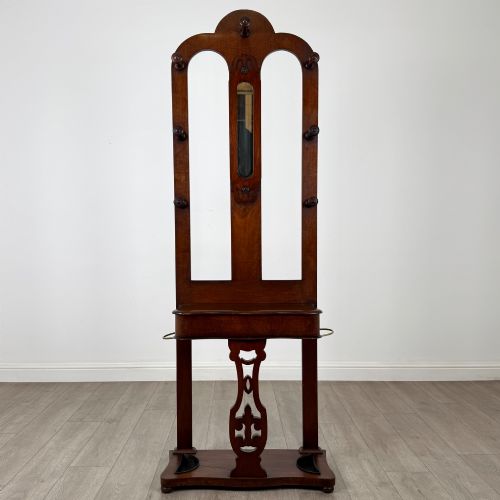
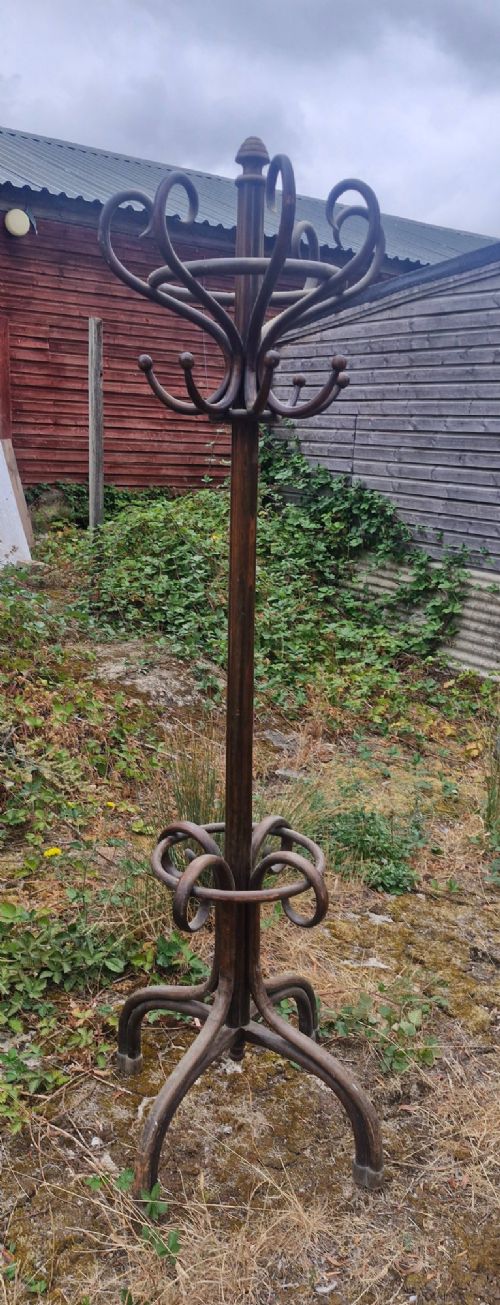
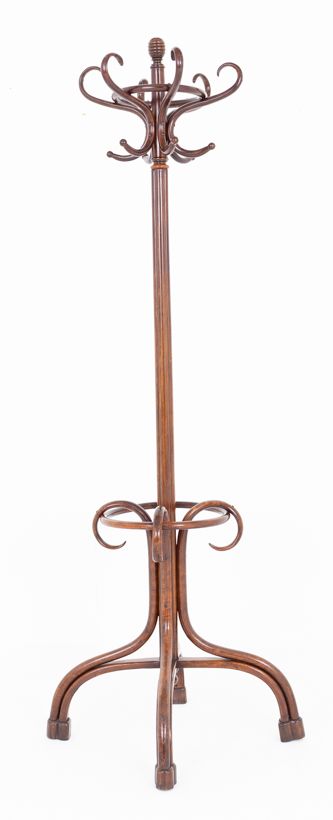
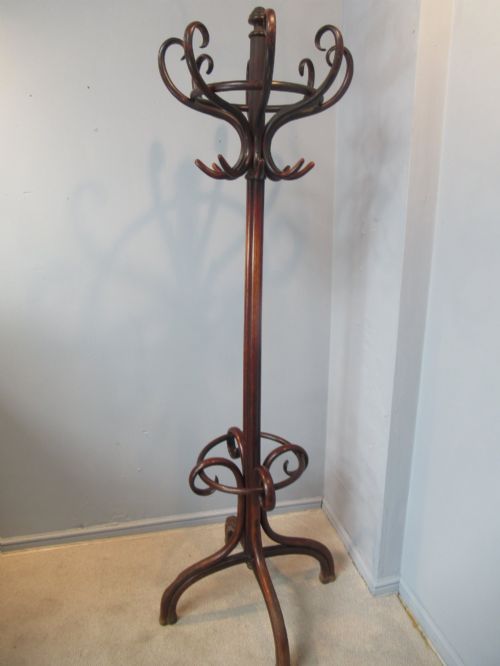
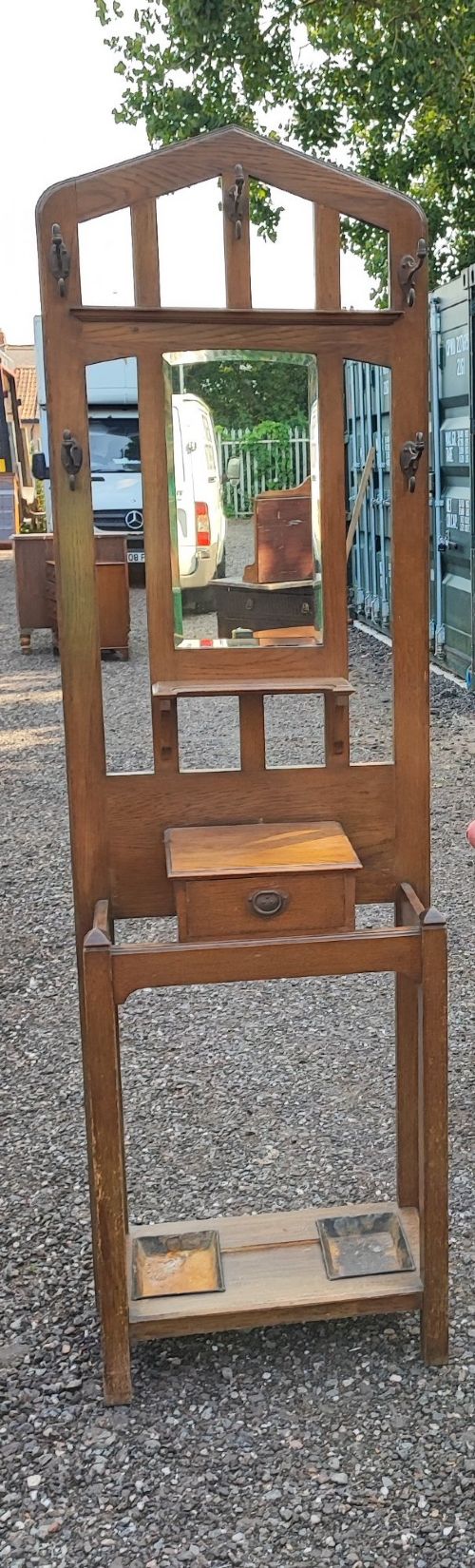
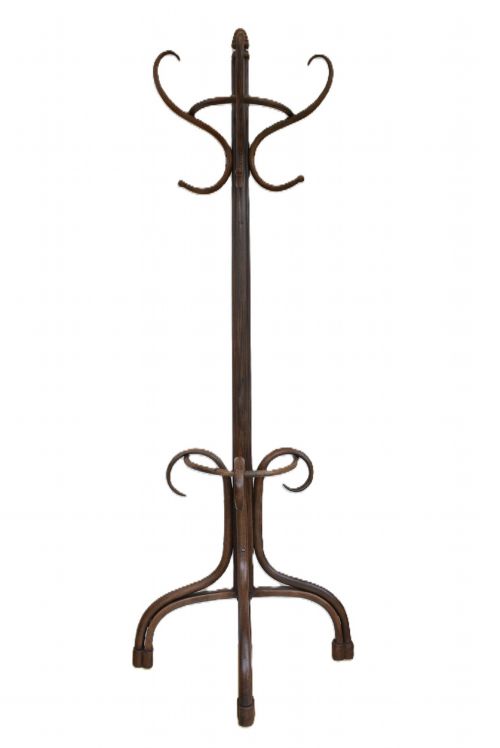
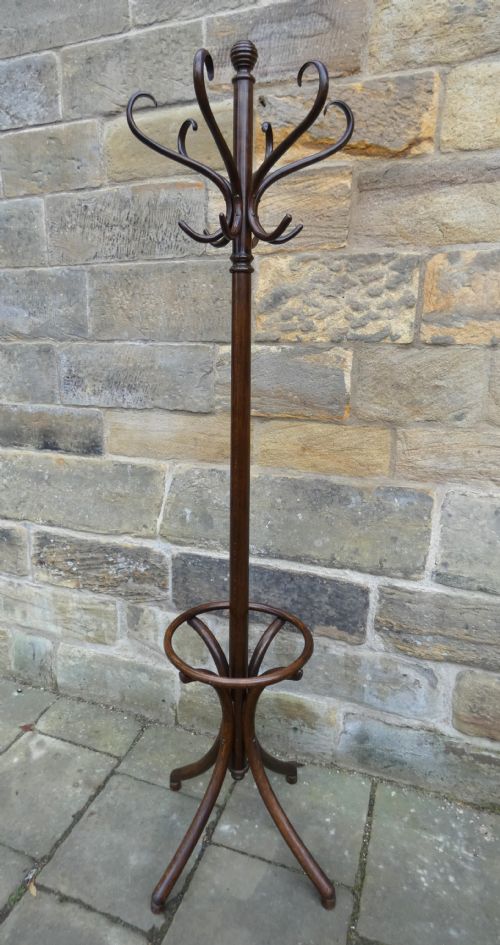
Most pieces encountered on this page take the form of freestanding bentwood hatstands or substantial mahogany, oak, and walnut hall stands. Makers utilised various timbers to construct structures that accommodated hats, coats, and umbrellas in busy entrance halls.
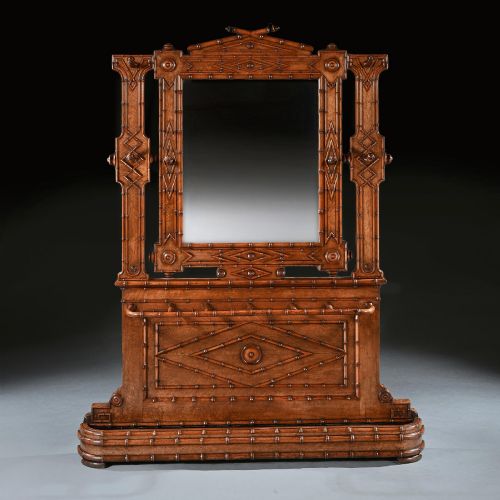
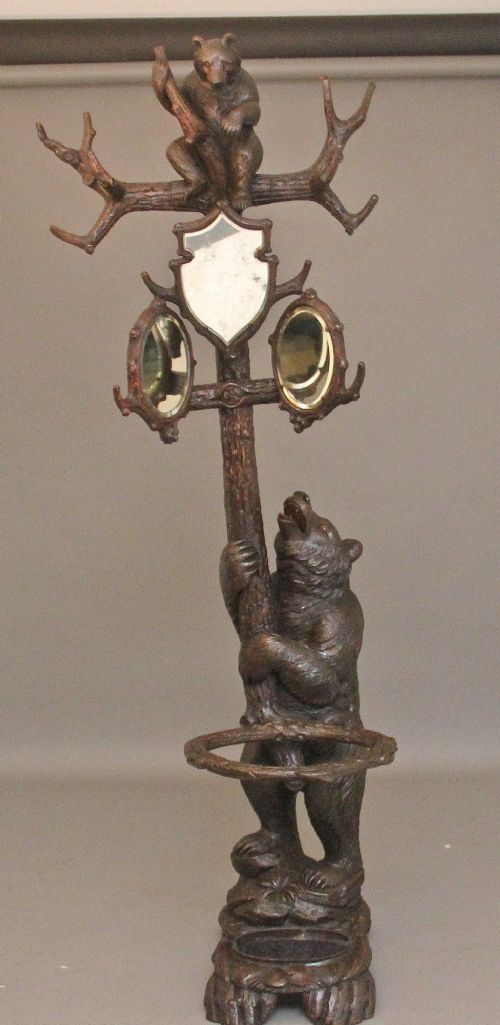
Beyond standard upright timber frames, buyers will find specialised regional variants including Black Forest carved animal figures and Aesthetic Movement faux bamboo designs. These diverse forms reflect the differing interior tastes of the nineteenth and early twentieth centuries.
How they were made
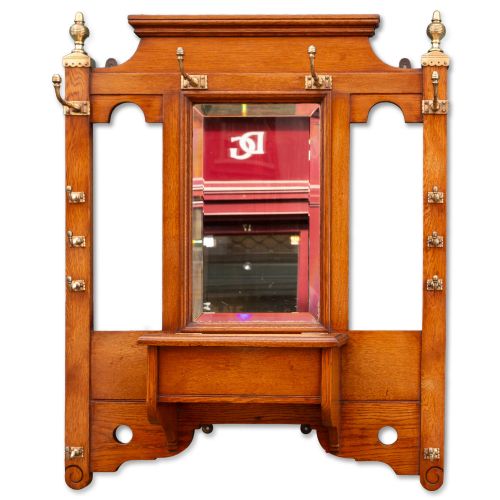
Construction relies heavily on solid hardwoods such as mahogany, oak, walnut, and beech, frequently shaped using steam-bent techniques for curved components. Workshops utilised brass for hooks and incorporated mirrors and glass elements into the larger standing hall furniture.
Carved decoration appears on specific regional pieces, notably in Black Forest animal motifs where detailed wood carving forms bears, foxes, and eagles. Turned wooden uprights and pegged joints provide the structural integrity required to bear the weight of heavy winter garments.
The listings span multiple decades, incorporating Victorian, Edwardian, and early twentieth-century examples constructed from oak, mahogany, beech, and walnut.
What varies in quality
Quality in these items is determined by the selection of timber and the complexity of the timber manipulation, particularly in bentwood framing and carved ornamentation. Substantial weight, solid oak or walnut construction, and original brass hardware separate robust examples from lighter utility pieces.
The refinement of turned spindles, the integration of bevelled mirrors, and the crispness of carved details dictate the standing of individual hall stands. Superior specimens maintain structural stability across tall vertical frames without relying on secondary reinforcement.
Thonet·Jas. Shoolbred
The Victorian Wooden Hat Tree Glossary
- Bentwood
- Wood softened by steam and bent into curved structural forms. This technique created lightweight yet resilient coat stands popular around nineteen hundred.
- Hall Stand
- A large piece of hallway furniture combining coat hooks, hat pegs, a mirror, and an umbrella stand. These items anchored the entrance spaces of period homes.
- Black Forest
- A style of wood carving originating from central Europe, characterised by realistic animal figures. Bears and other wildlife often support hooks on these stands.
- Aesthetic Movement
- A late nineteenth-century design style emphasising visual beauty over narrative content. Pieces in this manner often utilise Japanese-inspired faux bamboo turning.
Victorian Wooden Hat Tree: Frequently Asked Questions
Where did people put a victorian wooden hat tree?
These pieces stood primarily in the entrance hall or vestibule of a home. They provided an immediate drop-off point for outdoor garments upon entering the house.
Larger standing versions positioned themselves against hallway walls, while smaller wall-mounted racks occupied narrow corridors where floor space remained limited.
How do I care for my victorian wooden hat tree?
Maintenance requires regular dusting with a soft cloth to preserve the polished timber surfaces. Avoid placing wooden stands in areas subject to excessive moisture or direct sunlight.
Checking the stability of upright joints and tightening brass fittings gently ensures the tall frame safely bears the weight of garments over time.
What is the difference between bentwood and carved stands?
Bentwood stands utilise steam-curved beech or similar timbers to create light, sinuous vertical structures. They represent industrial mass production methods of the late nineteenth century.
Carved stands rely on solid oak, walnut, or mahogany shaped by hand into figurative or architectural motifs. These pieces typically demand more substantial floor space and display greater mass.
Did all hall stands include mirrors?
Mirrors frequently appeared on larger mahogany and oak hall stands from the Victorian period. They allowed household members a final check of their attire before leaving the house.
Smaller bentwood designs and wall-mounted racks omitted mirrors entirely, focusing solely on functional hooks for hats and coats.