


Victorian Wooden Dressing Box
A victorian wooden dressing box organises the personal treasures of the nineteenth century in timber, brass and velvet.
Victorian Wooden Dressing Box
A victorian wooden dressing box takes several forms across the nineteenth century, including fitted travel cases, gentleman's vanity boxes, and compact table chests designed to secure jewellery and keepsakes. The examples found here date primarily from the Victorian era alongside related nineteenth-century periods.
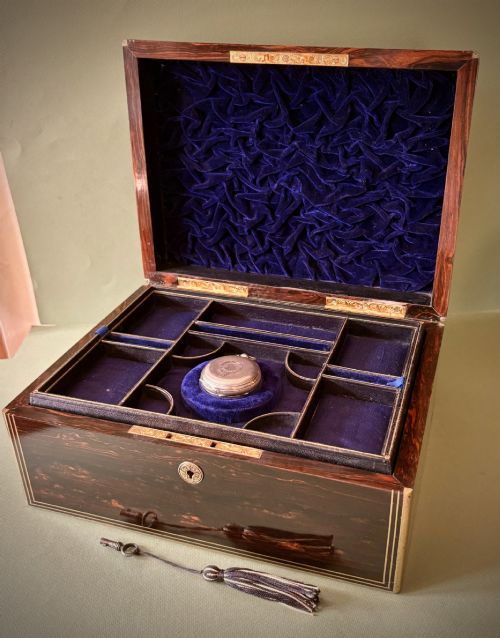
Makers constructed these pieces for travel and domestic use, combining storage trays, secret drawers, and integrated mirrors within timber shells. The selection ranges from simple mahogany and walnut caskets to elaborate combination cases incorporating scent bottles and writing slopes.
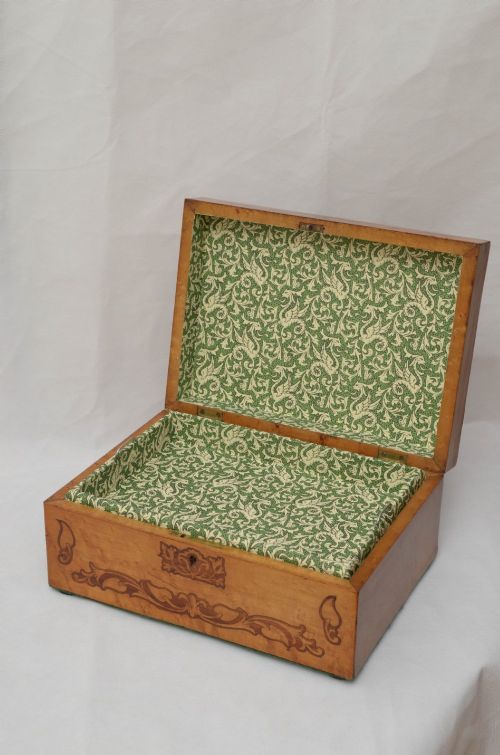
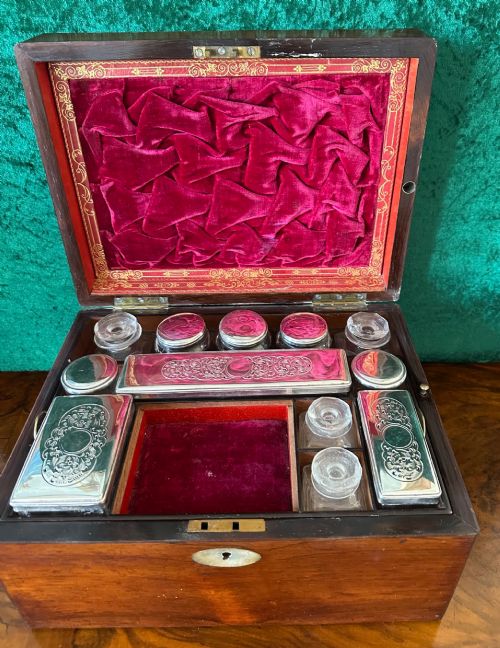
Buyers encounter boxes finished in dark veneers and exotic hardwoods, often fitted with internal trays and velvet linings. These objects served to protect personal possessions during transit or upon a dressing table.
Materials and Construction
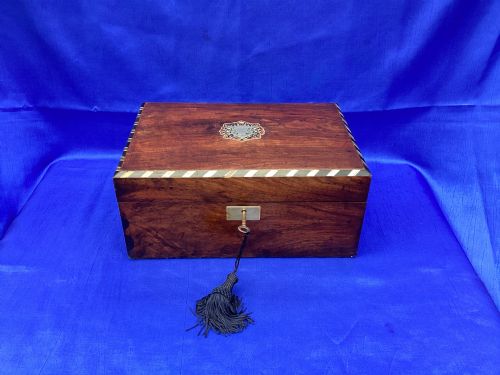
Cabinet makers built these pieces using solid timbers and decorative veneers such as rosewood, walnut, coromandel, and mahogany over foundational woods. They frequently reinforced corners and edges with brass strapping, corner plates, and binding to withstand travel.
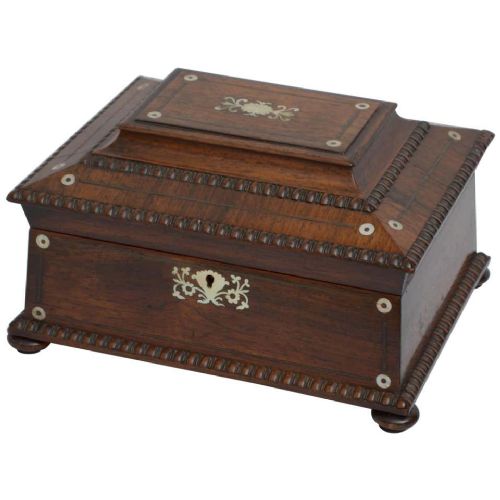
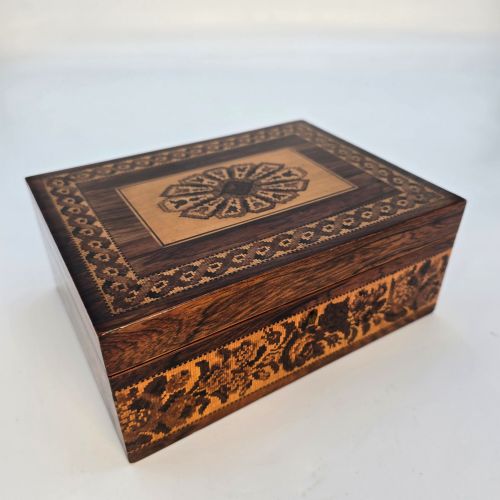
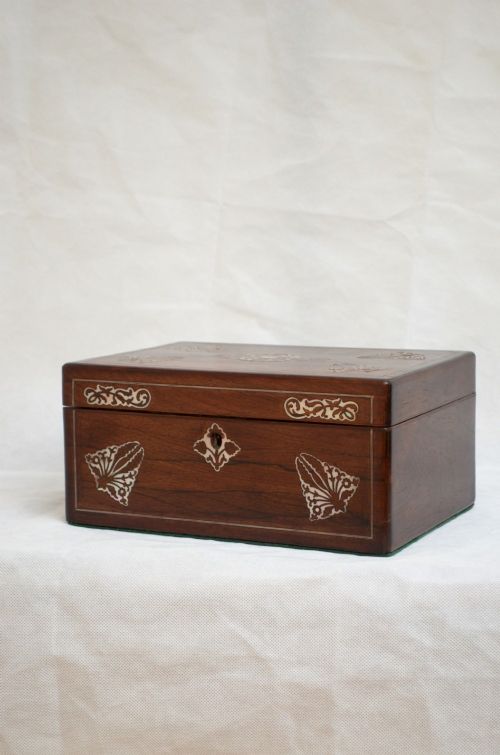
Surface decoration relies on precision inlays, utilising mother-of-pearl, tulipwood, and specialised parquetry techniques like Tunbridge Ware marquetry. Interiors combine fitted wooden compartments with velvet, silk, or leather linings to cushion delicate items.
Listings demonstrate a strong preference for rosewood and walnut across nineteenth-century boxes, alongside exotic coromandel and decorative mother-of-pearl inlay.
Craftsmanship and Execution
The distinction between standard examples and superior pieces rests on the precision of the cabinet work and the ambition of the internal fitments. Finer boxes feature complex secret compartments, fully matched grain patterns in burr timbers, and substantial brass hardware.
The integrity of the internal configuration influences the character of each piece, distinguishing simple storage caskets from elaborate combination dressing cases equipped with original glass bottles and integrated mirrors.
Edmund Nye·H Mitchell
The Victorian Wooden Dressing Box Glossary
- Tunbridge Ware
- A form of decorative woodwork originating from Kent, characterised by intricate mosaic patterns assembled from thousands of tiny dyed wood blocks. This technique creates detailed pictorial or geometric designs on the lids of small boxes.
- Coromandel
- A dense, heavy timber imported from Asia, valued for its rich dark brown colour and striking black grain stripes. Cabinet makers utilised it for high-status nineteenth-century dressing cases.
- Parquetry
- A geometric mosaic of wood pieces used for surface decoration on boxes and furniture. Craftsmen arrange contrasting timbers to form repeating patterns.
- Mother-of-Pearl
- The iridescent inner layer of certain mollusc shells, sliced into thin sections and embedded into wood surfaces as decorative inlay. It catches the light with silvery and pastel tones.
Victorian Wooden Dressing Box: Frequently Asked Questions
What is a dressing box?
A dressing box is a portable timber chest designed to hold grooming implements, cosmetics, and jewellery during the nineteenth century. They include internal compartments tailored for specific personal items.
Many examples feature folding lids that reveal integrated mirrors and lift-out trays for smaller accessories.
How do I use one today?
These boxes function well on modern dressing tables or sideboards for storing contemporary jewellery, watches, and small keepsakes. The internal divisions help keep rings and necklaces organised.
Their secure locks and solid construction also make them practical for safeguarding valuables out of sight.
What woods were used?
Victorian craftsmen favoured dense exotic hardwoods like rosewood, coromandel, and walnut, alongside native timbers such as mahogany and maple. Burr figure variations provided striking natural patterns for luxury pieces.
Inlays of contrasting light woods and mother-of-pearl frequently highlighted the exterior surfaces.
Are keys usually included?
Some nineteenth-century boxes retain their original working keys, while others do not due to loss over the decades. Locks were typically brass mortise mechanisms inset into the timber frame.
Replacement keys can often be fitted by a specialist if the original mechanism remains functional.