



Victorian Wood Mosaic
Victorian wood mosaic spans intricate Tunbridge Ware and geometric inlay, bringing micro-mosaic precision into daily use through decorative boxes and small furnishings.
Victorian Wood Mosaic
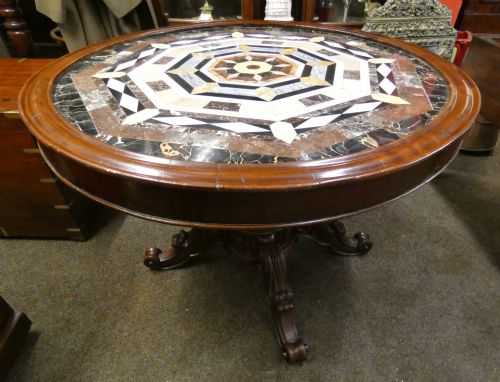
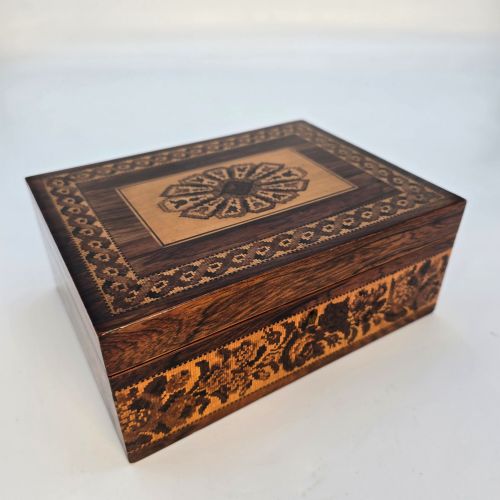
Victorian wood mosaic encompasses decorative items created through meticulous assembly of small wooden elements, often grouped under the distinct banner of Victorian wood mosaic pieces. These objects range from stationery boxes and tea caddies to book slides and wall plaques, serving functional and decorative roles in nineteenth-century interiors. The most common forms met here are rosewood and walnut boxes adorned with elaborate geometric or pictorial surface patterns.
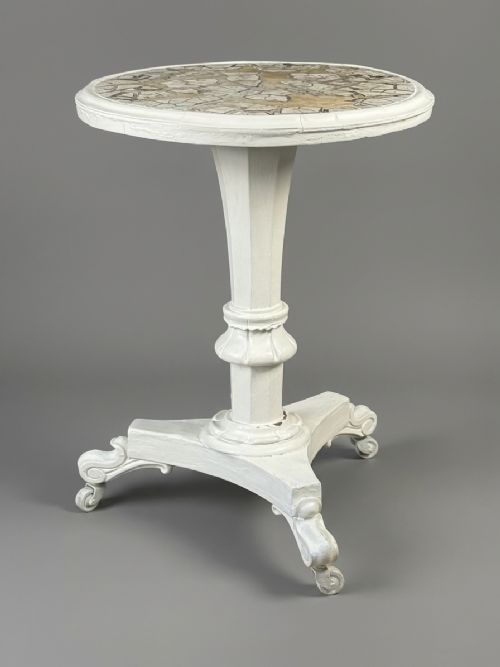
The aesthetic bridges domestic utility with miniature craftsmanship, drawing heavily on regional British traditions alongside Anglo-Indian and Mediterranean influences. Makers utilised diverse natural timbers to construct pictorial panels depicting butterflies, castles, and floral arrangements without relying on surface paint. Pieces vary from small trinket boxes to substantial games tables, each displaying the characteristic multi-toned mosaic surface typical of the era.
Factors of distinction
Quality rests upon the density of the mosaic tesserae and the precision with which individual wooden elements fit together. Finer examples display microscopic tile work that creates convincing pictorial depth, whereas simpler items rely on larger, repetitive geometric blocks. The choice of primary timber also marks distinction, with dense rosewood and elaborate marquetry panels commanding greater technical achievement.
The integrity of the original lining and the complexity of the internal fittings separate standard production from exceptional pieces. Boxes featuring fitted compartments, original paper labels, and intact mosaic borders maintain higher visual and structural completeness. Preservation of the multifaceted surface mosaic without extensive timber shrinkage indicates superior early handling and storage.
Victorian Wood Mosaic Retail Price Guide 2026
Typical asking prices for victorian wood mosaic among the pieces listed under this phrase on Sellingantiques today, from the lower quarter to the upper quarter. They describe what is for sale here now, not the wider market.
Makers hid miniature wooden butterflies inside box lids so delicate they appear ready to flutter off the surface.
Edmund Nye·Henry Hollamby
The Victorian Wood Mosaic Glossary
- Tunbridge Ware
- A specialised form of woodwork originating from Kent, featuring mosaic designs built from thousands of tiny wood blocks to form pictures.
- Marquetry
- The art of applying pieces of veneer to a structure to form decorative patterns, frequently utilised across box lids and panel surfaces.
- Parquetry
- Geometric mosaic woodwork used for floors and small decorative boxes, constructed from angular veneer segments.
- Tesserae
- The individual small blocks of wood or stone used to compose the mosaic pattern.
- Stringing
- Thin lines of contrasting wood inlay used to frame panels and define edges on boxes and furniture.
Victorian Wood Mosaic: Frequently Asked Questions
What are these wooden mosaic pieces?
These items are nineteenth-century decorative objects surfaced with intricate geometric or pictorial arrangements of small wood tiles.
They primarily take the form of tea caddies, stationery boxes, and small wall plaques created using diverse natural timbers.
How were these mosaic boxes used?
Victorian households utilised these boxes to store stationery, tea leaves, jewellery, and writing accessories in drawing rooms and studies.
Items like book slides and cribbage boxes combined functional utility with ornamental display on desks and tables.
How do I care for wood mosaic?
Keep these items away from direct sunlight and extreme temperature fluctuations to prevent the small wooden tiles from shrinking and lifting.
Maintain stable indoor humidity and dust gently with a dry, soft cloth without applying heavy polishes or moisture.
How do I identify Tunbridge Ware?
Tunbridge Ware is identified by its signature mosaic panels depicting architectural sites, flora, or geometric patterns assembled from dyed and natural woods.
Many pieces also feature distinctive mosaic key borders framing the central lid design.