





Victorian Wood Inlay Box
These Victorian wood inlay box examples combine practical desk storage with intricate marquetry, offering tangible history for your home.
Victorian Wood Inlay Box
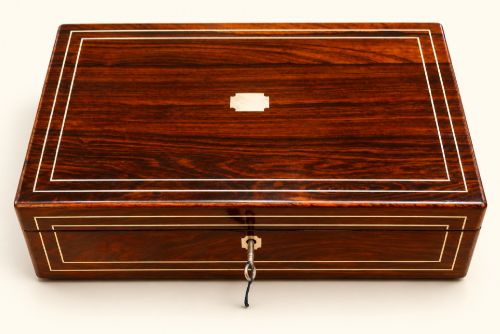
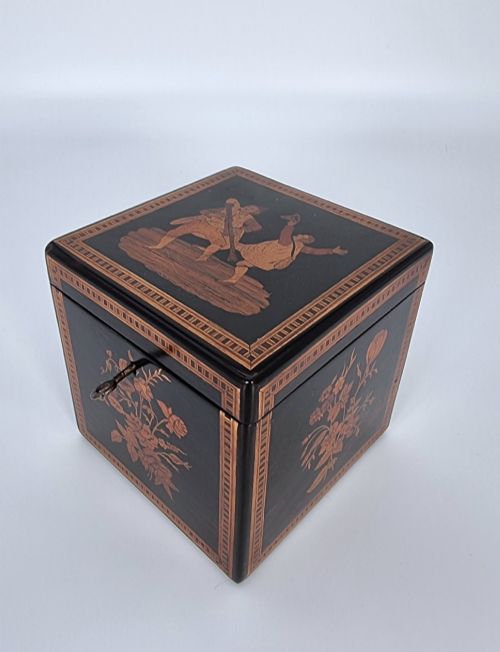
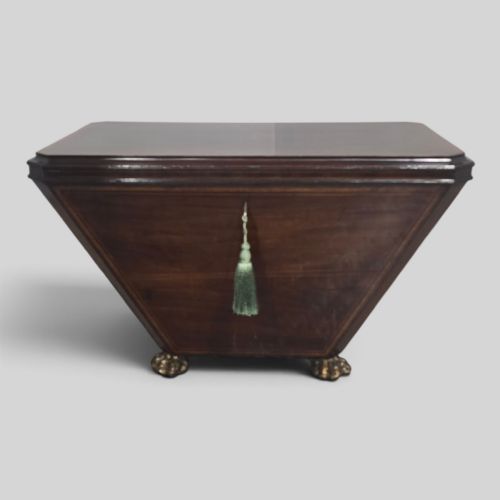
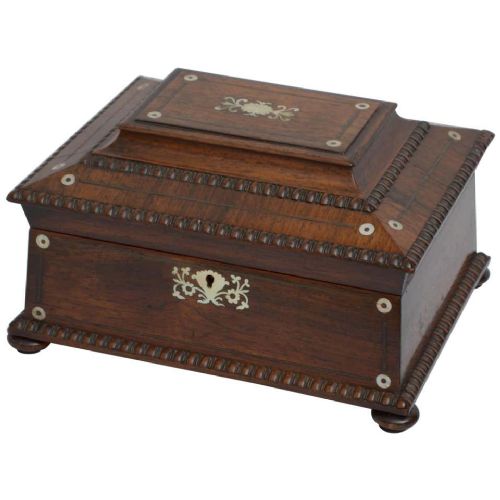
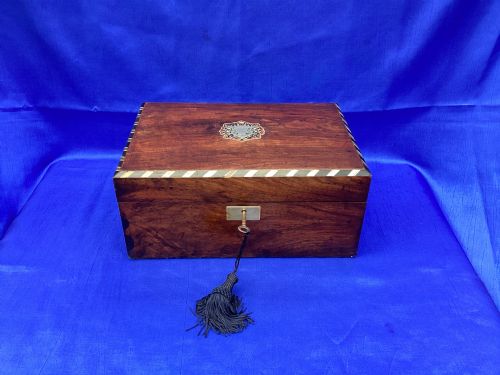
A victorian wood inlay box encompasses a wide variety of personal receptacles designed for keeping letters, jewellery, writing implements and small keepsakes. The pieces found here span the nineteenth century, including Georgian and William IV items alongside Victorian productions, showcasing diverse regional craft traditions such as Tunbridge Ware and Italian Sorrento marquetry.
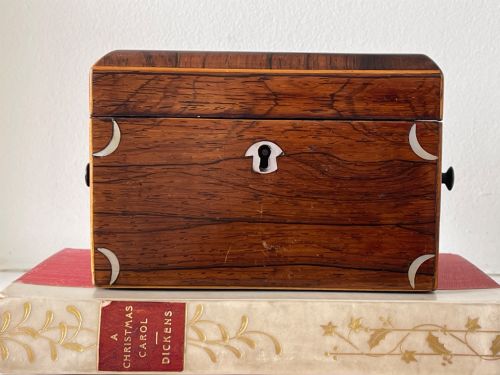
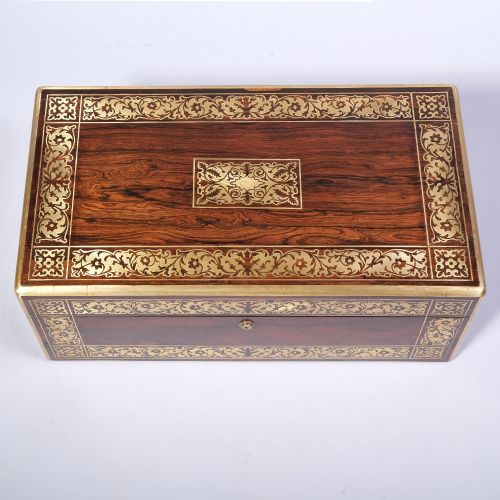
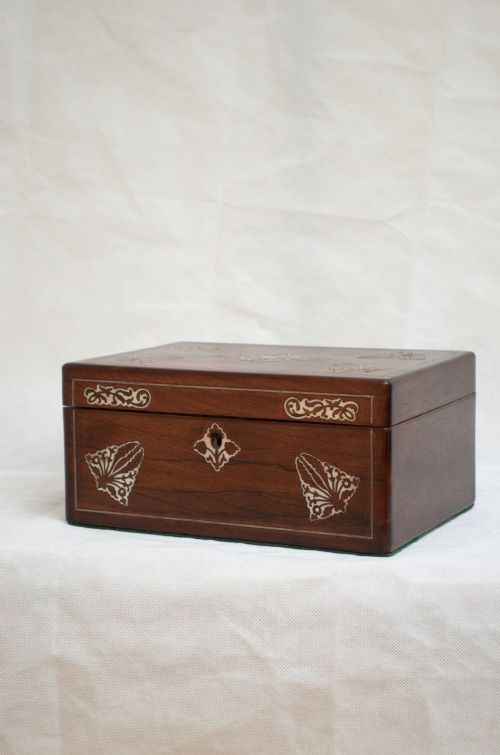
Rosewood, walnut, and mahogany form the primary carcases for these containers, frequently embellished with contrasting timber veneers, brass stringing, and mother-of-pearl accents. Collectors encounter specific utilitarian forms ranging from fitted writing slopes and document boxes to dedicated stationery cabinets and small trinket chests.
Materials and Construction
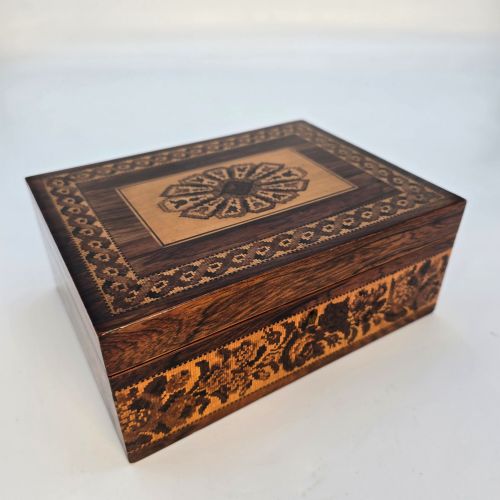
Cabinet makers utilised dense exotic hardwoods like rosewood, coromandel, and burr walnut as the structural foundation, applying thin decorative veneers to achieve striking grain patterns. Tunbridge Ware examples demonstrate the meticulous assembly of thousands of tiny tinted wood blocks to create microscopic mosaic pictures.
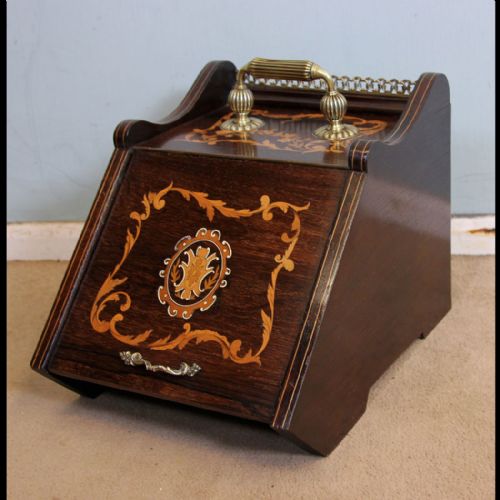
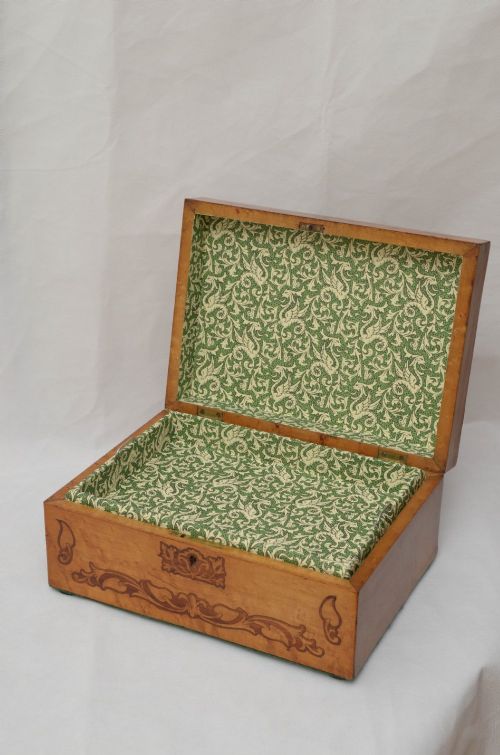
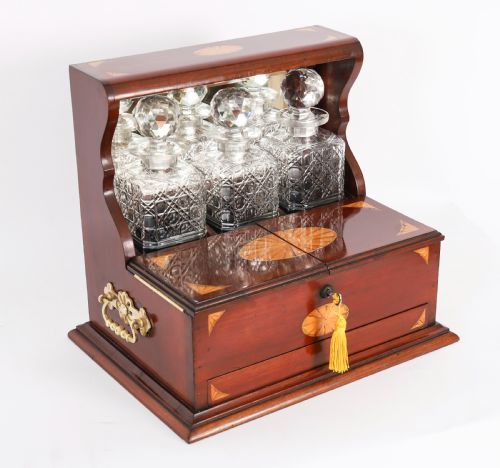
Marquetry and parquetry techniques involved cutting precise geometric or pictorial motifs from boxwood, tulipwood, and satinwood, which were then set flush into the main body. Interiors often featured fitted compartments lined in velvet or silk, alongside secret drawers concealed behind false panels.
Victorian Wood Inlay Box Retail Price Guide 2026
Typical asking prices for victorian wood inlay box among the pieces listed under this phrase on Sellingantiques today, from the lower quarter to the upper quarter. They describe what is for sale here now, not the wider market.
Craftsmanship and Execution
Superior examples display absolute precision in the cutting and fitting of individual veneer pieces, where joints remain tight and patterns align seamlessly across corners and hinges. The complexity of the internal fittings, such as velvet-lined removable trays and working brass locks with original keys, separates standard containers from elite items.
The choice of secondary timbers and the crispness of micro-mosaic work or hand-carved bone details indicate the workshop standard. Well-preserved surface finishes that retain a warm, natural lustre without heavy modern intervention point towards superior preservation and original manufacture.
Edwards and Roberts·Edmund Nye·Henry Hollamby·H Mitchell·Langdorff and Fils
The Victorian Wood Inlay Box Glossary
- Marquetry
- A decorative technique where thin veneers of wood, metal, or shell are arranged in intricate pictorial designs and glued to a wooden carcase. This method creates elaborate floral or architectural scenes across the lid of a box.
- Tunbridge Ware
- A specialised form of nineteenth-century wood mosaic originating from Kent, featuring microscopic tiles arranged to form geometric patterns or naturalistic views. Makers cut long rods of multi-coloured wood into thousands of tiny cross-sections.
- Writing Slope
- A portable desk featuring a hinged, sloping lid that opens to reveal a slanted writing surface, inkwells, and pen trays. These boxes often incorporate secret compartments operated by hidden spring mechanisms.
- Parquetry
- The geometric arrangement of wood veneer pieces to create repeating patterns such as cubes, stripes, or chequers. Unlike marquetry, parquetry relies strictly on angular, symmetrical shapes.
- Coromandel
- A heavy, dense Asian timber featuring dark brown hues with dramatic black streaks, highly prized for luxury nineteenth-century dressing boxes and desks. Cabinet makers reserved this costly material for high-end commissions.
Victorian Wood Inlay Box: Frequently Asked Questions
What is a Victorian wood inlay box used for?
These containers served specific domestic functions in the nineteenth century, holding correspondence, writing instruments, postage stamps, and valuable personal trinkets.
Today, modern owners utilise them to organise contemporary desk accessories, jewellery, or keepsakes while displaying historical craftsmanship on tables and shelves.
How do I identify Tunbridge Ware?
Tunbridge Ware pieces are immediately recognisable by their distinctive mosaic surfaces, which depict flat, pixel-like pictures or geometric patterns assembled from thousands of tiny wood blocks.
This meticulous technique was practiced primarily in Kent during the nineteenth century, often incorporating a small maker's label inside the lid.
What are writing slopes?
Writing slopes are portable writing desks featuring a hinged lid that folds down to provide an angled surface for writing letters before the era of fountain pens.
Inside, they contain fitted compartments for stationery, inkwells, and concealed secret drawers designed to secure private documents.
How do I care for antique wood boxes?
These items require stable environmental conditions away from direct sunlight and sudden temperature shifts, which can cause delicate veneers and boxwood stringing to lift or crack.
Applying a gentle microcrystalline wax occasionally helps nourish the historic wood finish without building up heavy chemical residues.