




Victorian Wildlife Art
Victorian wildlife art brings the untamed natural world into interior spaces through detailed paintings, etchings, and carvings.
Victorian Wildlife Art
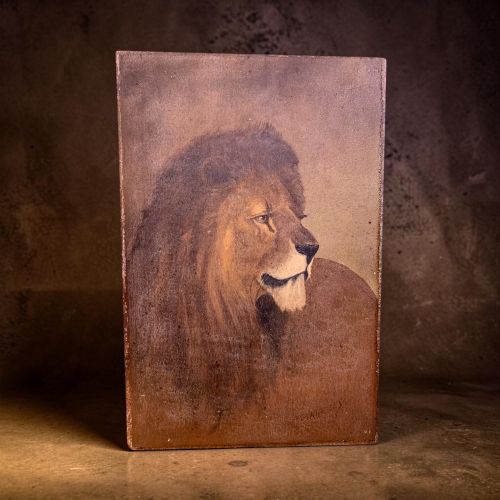
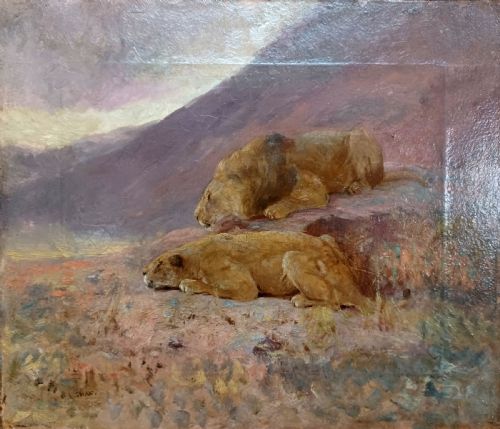
When exploring victorian wildlife art, collectors encounter a diverse range of depictions focusing on animals, birds, and natural landscapes across the nineteenth century. These works capture creatures ranging from domestic game birds and red squirrels to big cats and bears in dramatic encounters.
The objects span multiple mediums, featuring oil paintings on canvas, delicate watercolours on paper, framed prints, and dimensional carved wood sculptures. Such pieces reflect the period's intense fascination with natural history, sporting pursuits, and the observation of wildlife in untamed habitats.
Materials and methods
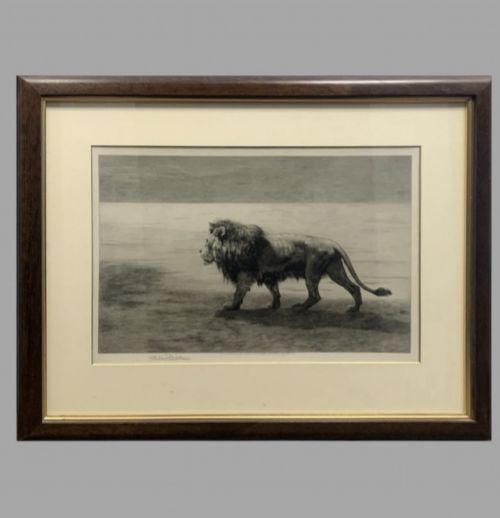
Painters utilised oil paint and watercolour on canvas and paper, capturing feather textures, fur details, and atmospheric light through layered brushwork. Etchings on vellum and paper offered a precise graphic method for reproducing animal subjects with sharp linear definition.
Carvers shaped wood to create sculptural forms such as wall mirrors adorned with birds of prey or freestanding figures of antelopes and panthers. Gilt framing and glass protected these fragile works, while pastel and gouache added rich colour saturation to expansive landscape compositions.
Listings feature works spanning from the nineteenth century into the early twentieth century, utilising canvas, paper, wood, and glass.
Distinctions in craftsmanship
The distinction between standard works and exceptional examples lies in the anatomical accuracy and expressive vitality of the animal subjects rendered by the artist. Master makers achieved convincing movement and depth, whereas lesser pieces display rigid posture and flat backgrounds.
Herbert Dicksee·George Armfield·Cuthbert Edmund Swan·Thomas Blinks·Arthur Wardle·John Macallan Swan·James Malcolm Stewart
The Victorian Wildlife Art Glossary
- Etching
- A printmaking process where lines are bitten into a metal plate with acid before ink is applied. This technique allows for fine, intricate details in wildlife prints.
- Vellum
- A fine parchment prepared from the skin of a calf or other animal. Artists used this smooth surface for highly detailed print impressions.
- Animalier
- A nineteenth-century artistic genre dedicated primarily to the faithful representation of animals. Practitioners focused heavily on anatomical study and dynamic poses.
- Gouache
- An opaque water-based paint that provides solid, matte colour application. It often appears alongside watercolour in mixed media animal studies.
- Black Forest
- A regional style of wood carving originating in Germany, known for realistic animal subjects integrated into functional objects. Pieces often depict bears, birds, and forest game.
Victorian Wildlife Art: Frequently Asked Questions
What defines Victorian wildlife art?
These pieces comprise paintings, prints, and sculptures depicting animals and birds created during the nineteenth century. They reflect the era's deep interest in natural history and field sports.
Subjects range from native British game birds to exotic big cats rendered in oils, watercolours, or carved wood.
How were these artworks displayed?
Most paintings and etchings were housed in substantial gilt frames to suit nineteenth-century domestic interiors. Carved wood mirrors and sculptures functioned as decorative focal points in libraries, halls, and studies.
Display choices depended on the medium, with works on paper requiring protection behind glass from direct sunlight.
How do I identify the period?
Dating relies on stylistic markers, artist signatures, framing materials, and recorded working dates of the creators. Nineteenth-century pieces typically exhibit specific approaches to naturalism and anatomy.
Paper supports, canvas types, and inscriptions on the reverse often provide additional chronological clues.
Are these pieces originals?
The selection includes unique hand-painted oils and watercolours alongside limited edition signed artist proof etchings. Each medium represents a distinct form of period production.
Signatures, stamps, and studio markings help verify the origin and authenticity of individual works.