





Victorian Whisky Barware
Victorian whisky barware comprises functional vessels and receptacles designed for serving and securing spirits during the nineteenth century.
Victorian Whisky Barware
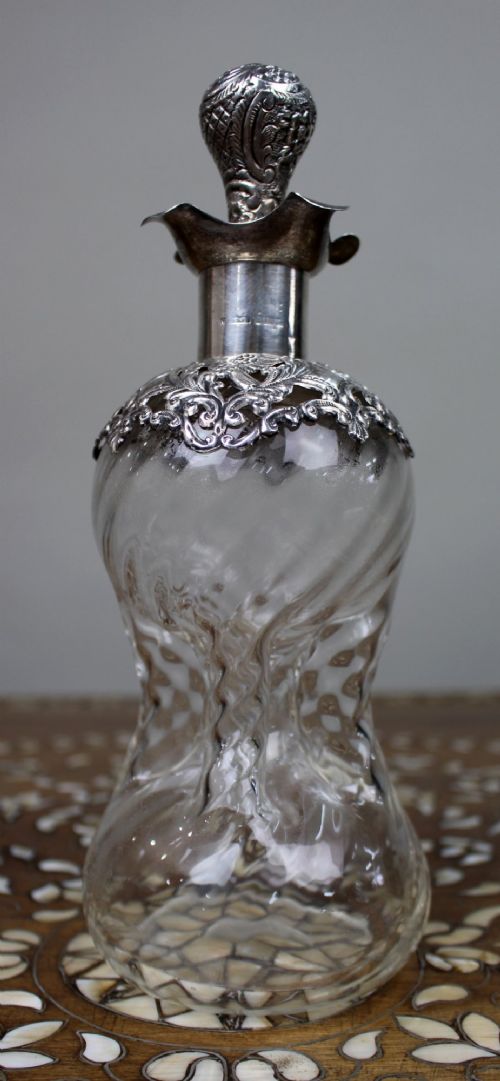
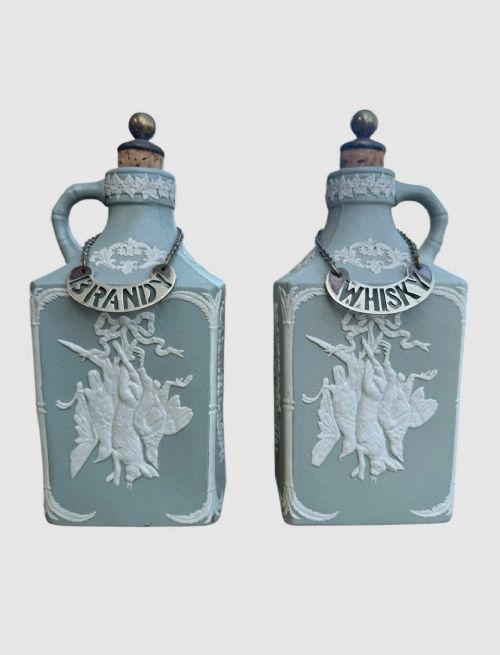
Victorian whisky barware encompasses decanters, tantalus frames, hip flasks and spirit barrels intended for domestic entertaining and private use. Buyers exploring this category encounter cut crystal decanters housed in locking frames alongside pocket-sized silver and glass flasks.
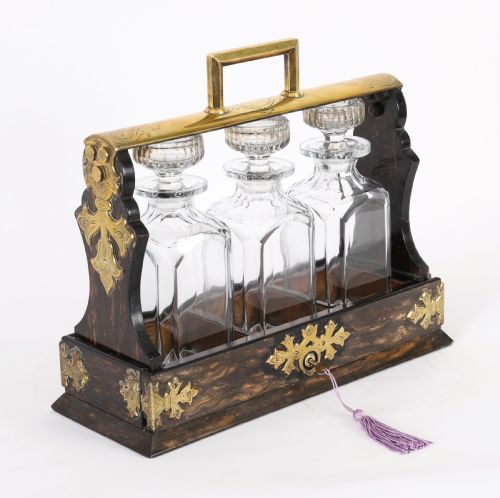
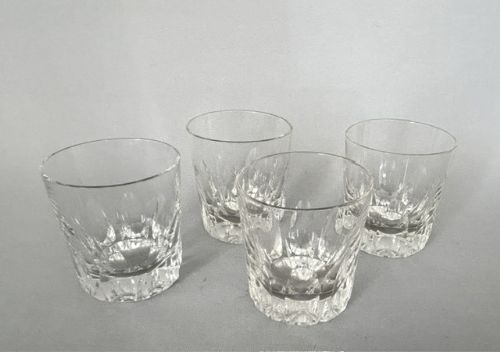
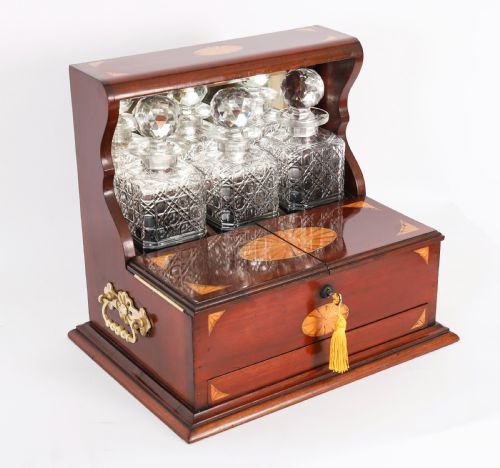
Decanters appear as single vessels or paired sets resting upon silver plated trays, whilst multi-bottle tantalus units incorporate oak, walnut, coromandel and satinwood cabinetry. Tumblers and spirit flagons complete the drinking vessels utilised during the period.
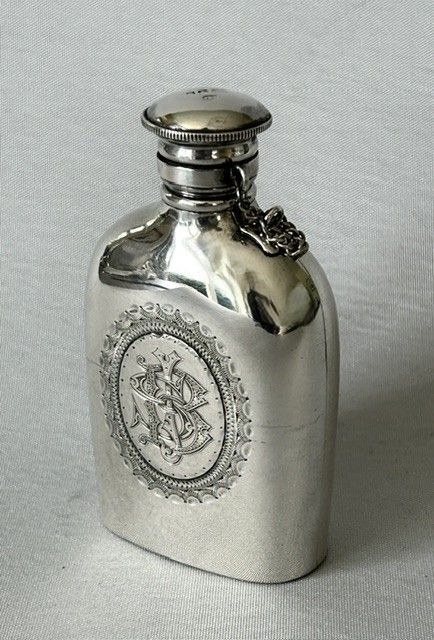
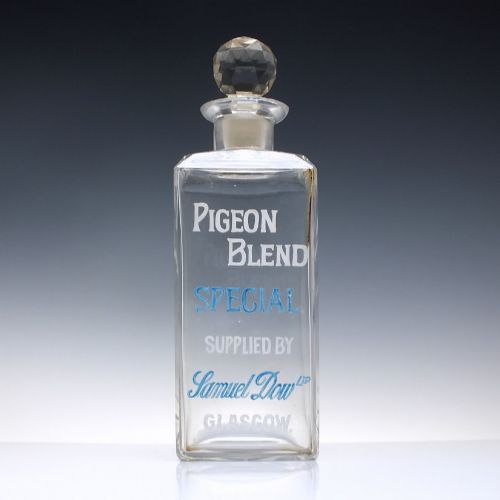
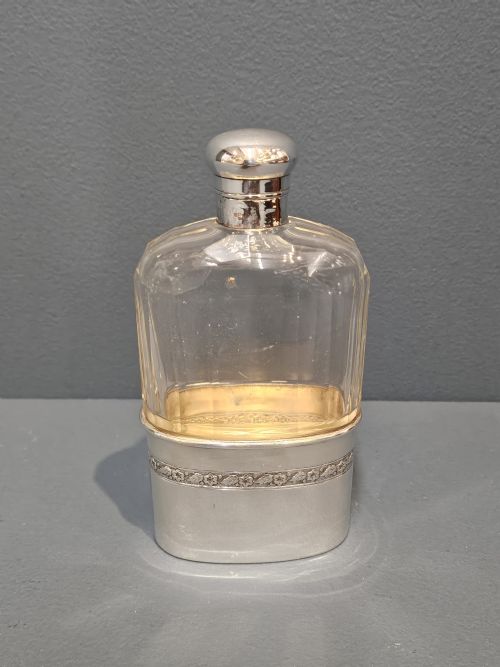
Scottish regional decanters feature enamelled lettering denoting specific blend names alongside glass bar dispensers created for commercial and domestic settings. Pocket flasks utilise curved glass bodies protected by sterling silver mounts, crocodile leather and removable drinking cups.
Materials and construction
Makers utilised lead crystal and heavy cut glass for decanters and tumblers, achieving deep prismatic facets through wheel-cutting techniques. Mounts, hinges and locking mechanisms combine sterling silver and silver plate, often bearing maker marks such as those by J Dixon or Betjemann Brothers.
Cabinetmakers constructed tantalus frames from dense timbers including oak, satinwood and walnut, frequently incorporating inlaid veneers and functional games compartments. Flask construction integrates blown glass with stitched crocodile leather or hammered sterling silver elements.
Some Victorian flasks double as Scottish thistles, allowing you to sip whisky directly from a prickly silver flower.
Assessing quality in barware
Quality reveals itself in the crispness of glass cutting, the weight of the crystal and the integrity of the locking mechanisms fitted to tantalus frames. Superior examples display precise silver hallmarking, robust cabinetry joinery and unblemished enamelling on regional decanters.
The sophistication of secondary materials, such as genuine crocodile leather casing or substantial cast silver mounts, separates standard production items from elite pieces intended for affluent Victorian households.
J Dixon·Asprey London·Betjemann Brothers
The Victorian Whisky Barware Glossary
- Tantalus
- A locking wooden frame designed to secure spirit decanters away from unauthorized drinkers whilst displaying the contents through open slats.
- Spirit Barrel
- A cylindrical vessel mounted on a stand, utilised for storing and dispensing whisky directly at the table or sideboard.
- Hip Flask
- A curved pocket receptacle with a captive or removable screw cap, engineered in glass and silver for personal transportation of spirits.
- Decanter Set
- A matched collection of glass bottles resting upon a dedicated tray, typically silver plated, for organised serving.
- Lead Crystal
- Glass manufactured with a high lead content, providing enhanced clarity, refractive brilliance and weight compared to standard soda glass.
Victorian Whisky Barware: Frequently Asked Questions
What is a Victorian tantalus?
A tantalus is a locking wooden stand holding two or three decanters securely behind a metal bar. The mechanism prevents guests or servants from accessing the whisky without a key.
Cabinetmakers utilised oak, walnut and exotic veneers to house these heavy glass bottles. The design leaves the stoppers locked in place, hence the name derived from the mythological figure.
How do I identify a period hip flask?
Period hip flasks feature heavy glass bodies encased partially in leather or fitted with substantial sterling silver cups at the base. Hallmarks stamped onto the silver mounts provide exact assay office dates.
Lower sections often pull downward to function as drinking vessels. Screw caps frequently incorporate cork seals designed to prevent leakage while carried in a pocket.
Were decanters always sold in sets?
Decanters appear both as individual vessels and as matched sets housed within wooden frames or upon silver plated trays. Single decanters served specific single malts or blended spirits.
Sets of two or three allowed hosts to offer different ages or styles of whisky simultaneously. Fitted trays kept the service organised on sideboards during Victorian dinners.
What distinguishes Scottish whisky decanters?
Scottish examples frequently feature fired enamel inscriptions naming specific distilleries or regional blending houses like Glasgow or Aberdeen. These bottles served commercial establishments as well as private homes.
The glass often exhibits characteristic nineteenth-century green or clear tones with hand-applied lettering. Such pieces record the early marketing of named regional Scotch blends.