





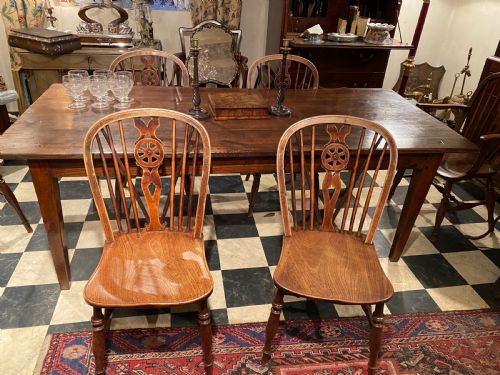
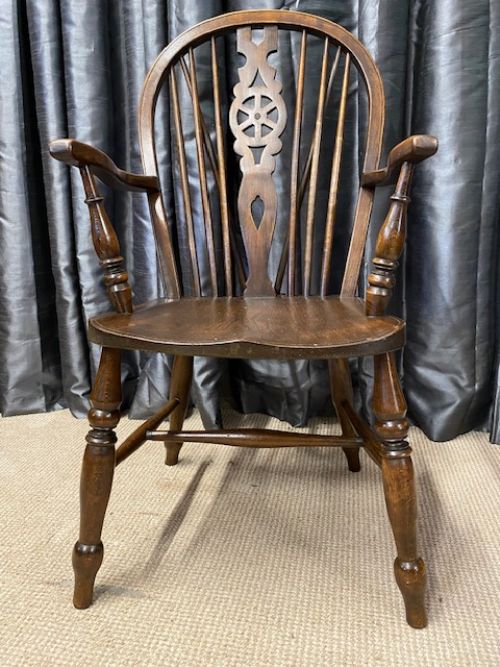
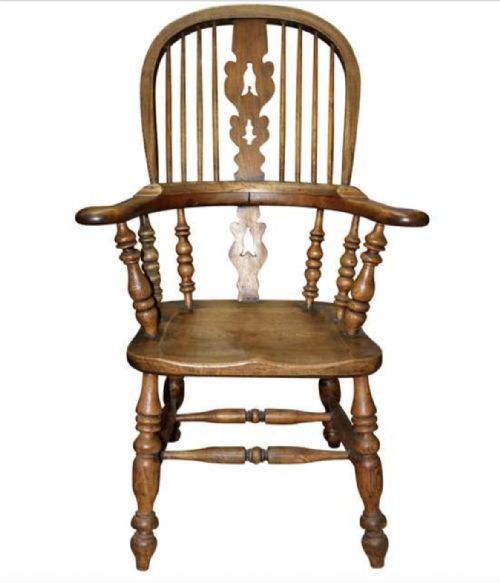
Victorian Wheelback Chair
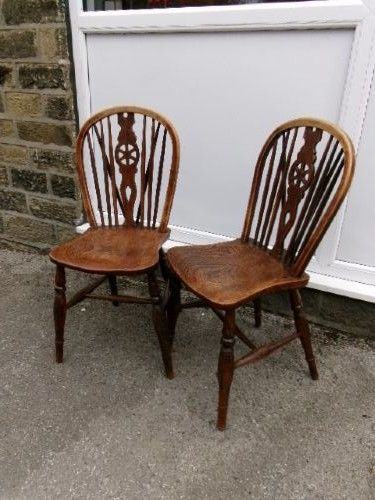
A victorian wheelback chair brings sturdy country craftsmanship and pierced central splats into domestic spaces.
Victorian Wheelback Chair
A victorian wheelback chair is a traditional wooden seating form combining vernacular country utility with characteristic spindle-backed construction. Buyers searching this phrase encounter robust kitchen chairs, dining sets, armchairs, and occasional desk seating originating primarily through the nineteenth century.
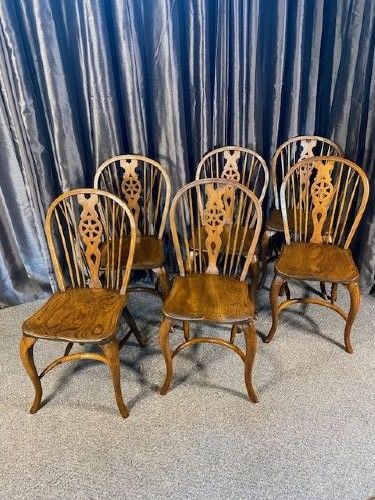
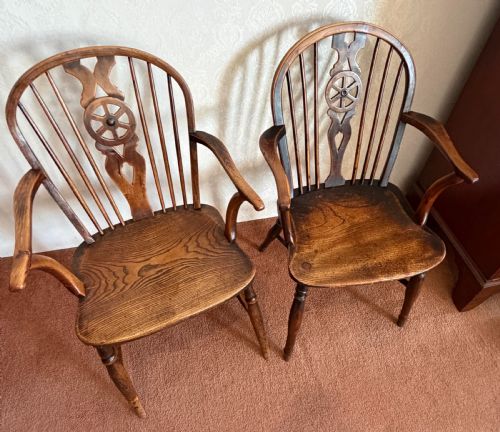
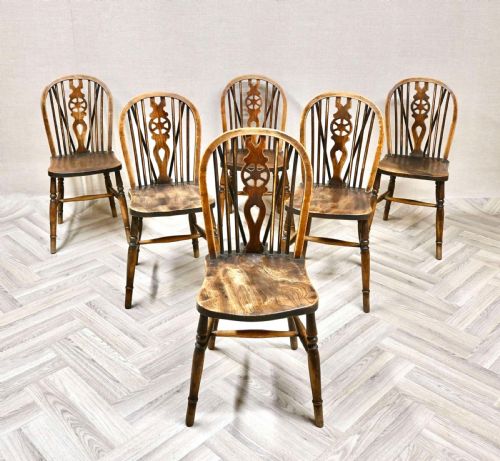
The most common variants on this page pair elm seats with beech, ash, or painted wood framing. These pieces span single armchairs, pairs, and larger matched or harlequin sets suited for daily domestic use.
How they were made
Maker-joiners constructed these seats by wedging turned spindles and legs directly into thick, saddled solid timber seats made predominantly of elm. Steam-bent rails formed the curved armrests and crestings that supported the characteristic pierced wheel motif.
Workshops utilised native timbers including beech, ash, and yew, turning structural components on lathes before securing them with wedge-peened tenons. Surfaces were often left bare to acquire a natural patina or finished with historic painted coatings.
Listings feature nineteen-century periods alongside earlier Georgian and Regency pieces constructed in elm, beech, ash, oak, and yew.
What varies in quality
The distinction between standard utility seating and finer examples rests in the selection of timbers and the crispness of the central wheel carving. Grain figure within the elm seat slab and the balanced turning of the spindles indicate the maker's skill.
Structural integrity depends on original wedged joints remaining tight and the underlying timber retaining its density without excessive dryness or historic woodworm damage.
The Victorian Wheelback Chair Glossary
- Wheelback
- A Windsor chair variation featuring a pierced circular splat resembling a spoked wheel carved or cut into the backrest. This decorative motif defines the regional kitchen and dining chair styles seen here.
- Windsor chair
- A chair built with a solid wooden seat into which the legs, back spindles, and bow are all directly fastened. This construction method provides durability without requiring a traditional frame.
- Saddled seat
- A wooden seat base carved into a concave, contoured shape resembling a saddle for comfort. Makers hollowed out thick elm slabs to achieve this ergonomic profile.
- Harlequin set
- A collection of chairs that are closely related in style and period but not originally manufactured as a single matching group. These sets are assembled over time from individual pieces sharing similar wheelback forms.
Victorian Wheelback Chair: Frequently Asked Questions
Are wheelback chairs comfortable for daily dining?
The contoured wooden seats and supportive curved backrests provide surprisingly good ergonomics for everyday meals.
Adding loose squab cushions can increase comfort during longer sitting periods around a dining table.
How do I identify a genuine nineteenth century piece?
Examine the construction under the seat to check for hand-turned spindles, wedge-peened leg tenons, and authentic timber shrinkage. Historic tool marks and natural surface wear indicate age rather than modern reproduction.
Matching the wood species, such as elm seats paired with ash or beech frames, helps confirm period authenticity.
Can I mix different wood tones together?
Mixing beech, elm, and ash chairs creates an authentic country house aesthetic that embraces natural timber variations.
Harlequin sets naturally display diverse wood grains and patinas accumulated from different workshops.
How should I care for historic chair wood?
Maintain the timber by applying traditional beeswax periodically to nourish the dry surface and preserve the historic patina.
Avoid placing chairs near direct heat sources to prevent the elm seats and turned joints from splitting.