


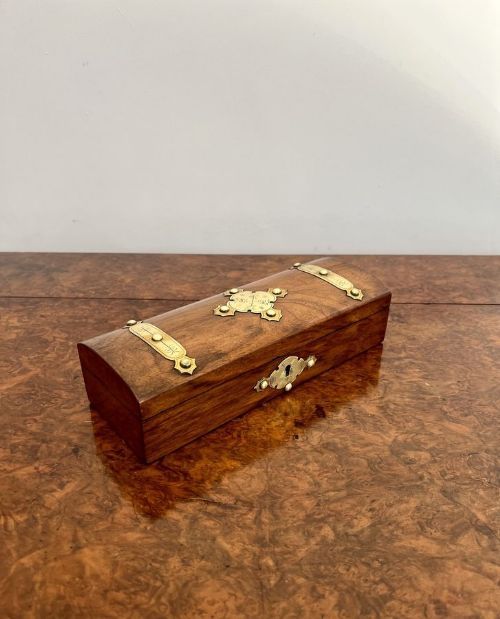


Victorian Walnut Trinket Box
A victorian walnut trinket box is a compact timber container designed for personal valuables, prized for rich grain patterns and period craftsmanship.
Victorian Walnut Trinket Box
A victorian walnut trinket box is a small lidded container built to hold personal treasures, jewellery, or keepsakes upon a dressing table or desk. These pieces emerge primarily from the nineteenth century, spanning decades from eighteen-fifty to nineteen hundred.
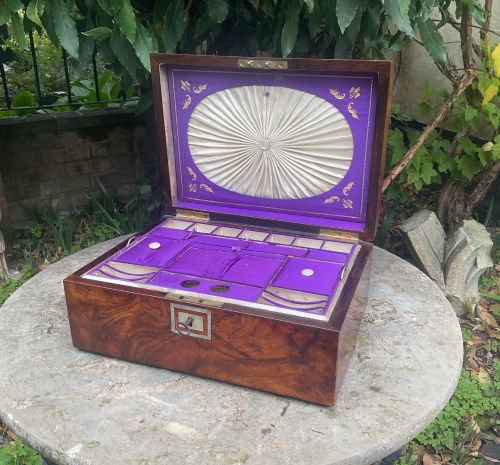
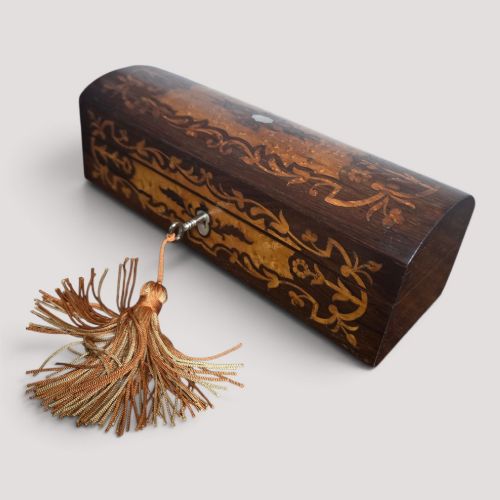
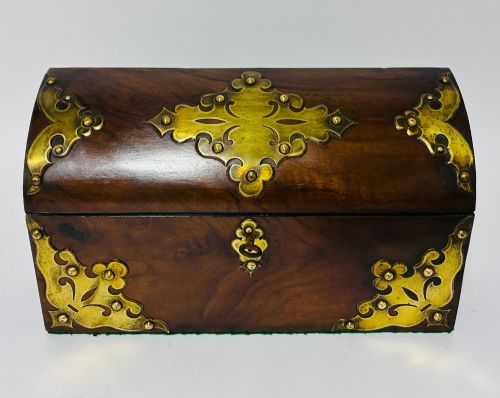
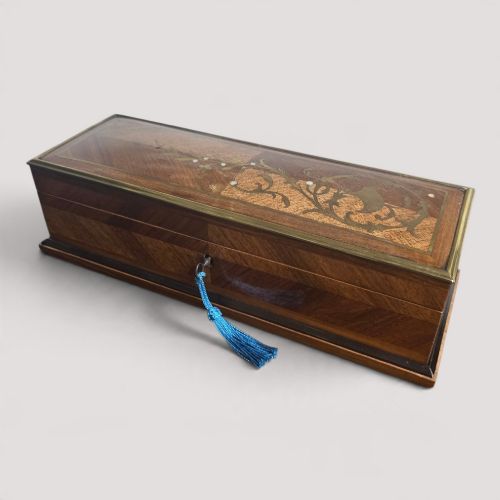
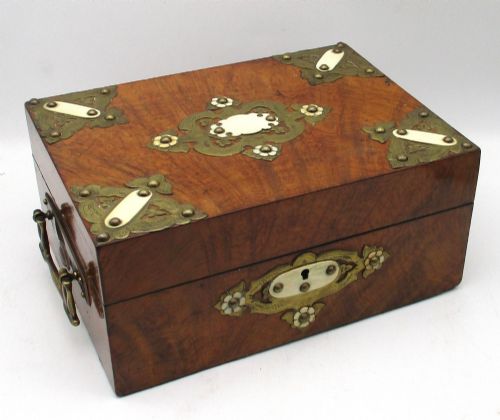
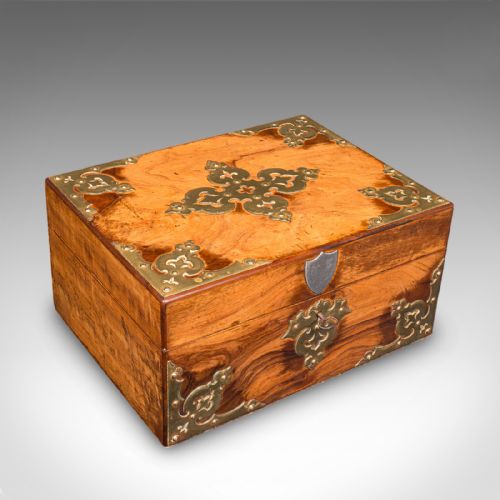
The version most commonly met on this page is constructed from figured walnut or burr walnut, frequently ornamented with brass mounts, parquetry, or marquetry inlay. Makers also utilised boxwood, rosewood, and mother-of-pearl to accentuate the timber surfaces.
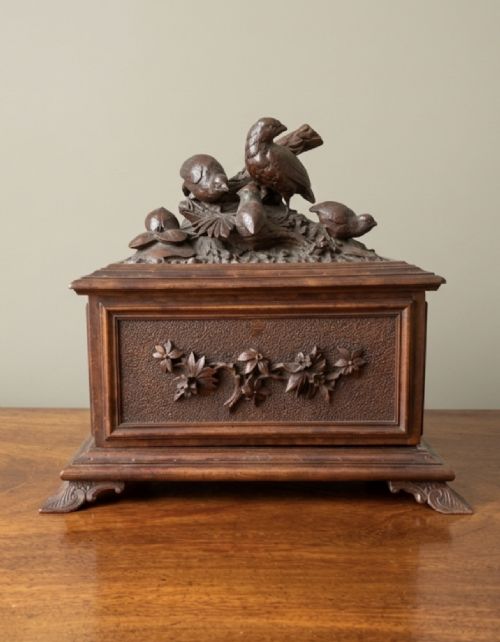
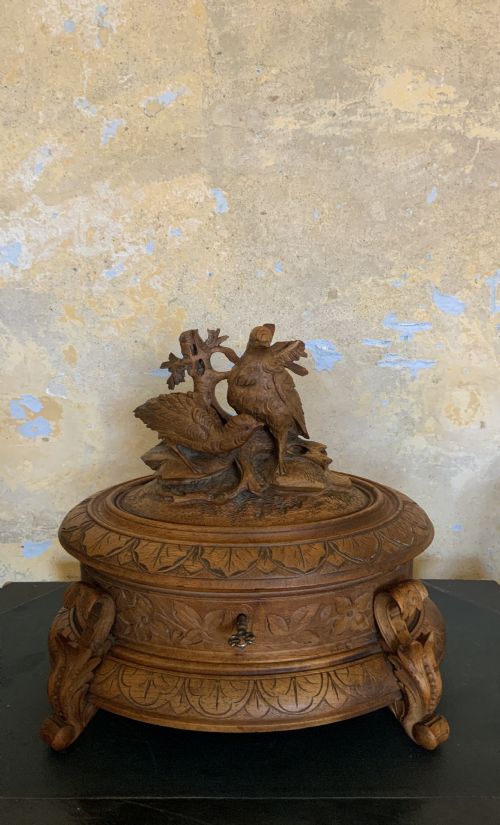
Beyond standard trinket containers, the selection encompasses related forms such as glove boxes, tea caddies, sewing cases, and musical caskets. Black Forest carvings and Tunbridge ware micro-mosaic panels represent distinct regional interpretations within the broader category.
How They Were Made
Cabinetmakers selected walnut and burr walnut for their dramatic grain patterns, applying thin veneers over solid secondary timbers to create patterned lids and panels. Boxwood stringing and geometric parquetry were meticulously inlaid into the primary surfaces.
Structural reinforcement relied upon brass banding, inset campaign handles, and corner mounts secured with small pins. Interiors frequently incorporated fitted trays, velvet or silk linings, and occasionally small mirrors inset into the lids.
Specialised techniques varied by style, ranging from the deep relief carving of Black Forest workshops to the precise mosaic wood-block compositions of Tunbridge Wells makers.
Victorian Walnut Trinket Box Retail Price Guide 2026
Typical asking prices for victorian walnut trinket box among the pieces listed under this phrase on Sellingantiques today, from the lower quarter to the upper quarter. They describe what is for sale here now, not the wider market.
Listings demonstrate diverse regional styles, spanning English burr walnut caskets, Swiss Black Forest carvings, and Italian Sorrento marquetry.
What Varies in Quality
The calibre of a victorian walnut trinket box rests heavily upon the selection of the burr walnut veneer and the symmetry of its grain matching across the lid. Superior examples display dense, swirling patterns that have been carefully balanced by the artisan.
Execution of decorative details separates standard production from exceptional work, particularly in the precision of brass banding, the crispness of marquetry inlay, and the depth of hand-carved motifs. Fitted velvet interiors and original working locks with matching keys add considerable merit.
Samson Mordan·Parkins & Grotto·Trussell Brighton
The Victorian Walnut Trinket Box Glossary
- Burr walnut
- A prized timber harvested from walnut tree growths, yielding intricate swirling patterns and knots that create highly decorative veneer surfaces.
- Marquetry
- The art of applying pieces of veneer to a structure to form decorative patterns, pictorial scenes, or geometric designs.
- Tunbridge ware
- A meticulous form of woodwork originating in Kent, utilising thousands of tiny tinted wood blocks to create detailed mosaic imagery.
- Parquetry
- Geometric mosaic woodwork used for floors and box lids, formed by fitting small wooden tiles together in repeating patterns.
- Tea caddy
- A lidded container originally built for storing dry tea leaves securely, often featuring internal compartments and a locking lid.
Victorian Walnut Trinket Box: Frequently Asked Questions
What were victorian walnut trinket boxes used for?
These containers served to secure valuable personal items such as rings, brooches, letters, and small keepsakes on domestic dressing tables.
Their sturdy construction and locking mechanisms protected delicate possessions from dust and casual handling in nineteenth-century households.
How do I identify burr walnut timber?
Burr walnut exhibits a distinctive swirling, mottled grain pattern filled with small knot clusters, differing significantly from straight-grained timber.
Cabinetmakers prized this decorative growth formation for lid panels, ensuring the striking natural figure formed the visual focal point of the box.
Are original keys commonly found with these boxes?
Original working keys remain relatively scarce because small brass keys were easily misplaced over successive generations of domestic use.
Many surviving pieces retain their functional brass locks even when the original key has been lost to time.
What is the difference between Tunbridge ware and parquetry?
Tunbridge ware utilises thousands of microscopic coloured wood segments arranged by hand to depict specific floral or architectural scenes.
Parquetry relies instead on larger geometric wooden tiles arranged in repeating abstract patterns across the surface of the box.