


Victorian Walnut Slope
A victorian walnut slope brings tactile warmth and clever internal engineering to any writing desk, offering portable or fitted writing surfaces favoured by collectors.
Victorian Walnut Slope
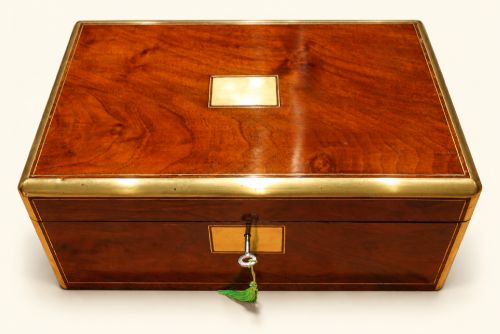
When searching for a victorian walnut slope, a buyer encounters a diverse group of writing furniture spanning writing boxes, davenports, and desks. These pieces originate from the nineteenth century, with specific examples appearing from decades such as eighteen sixty and eighteen eighty.
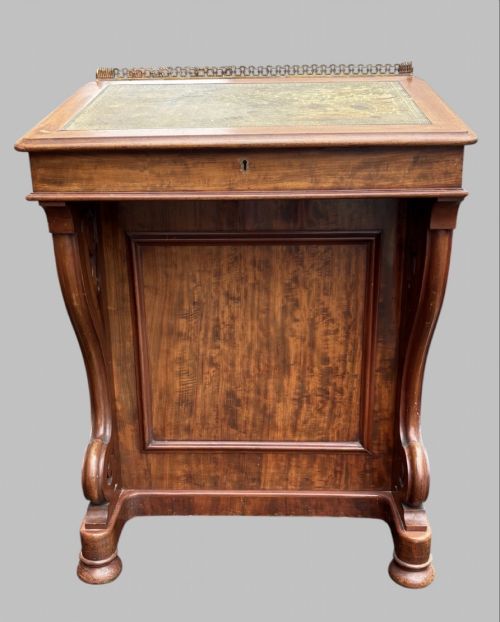
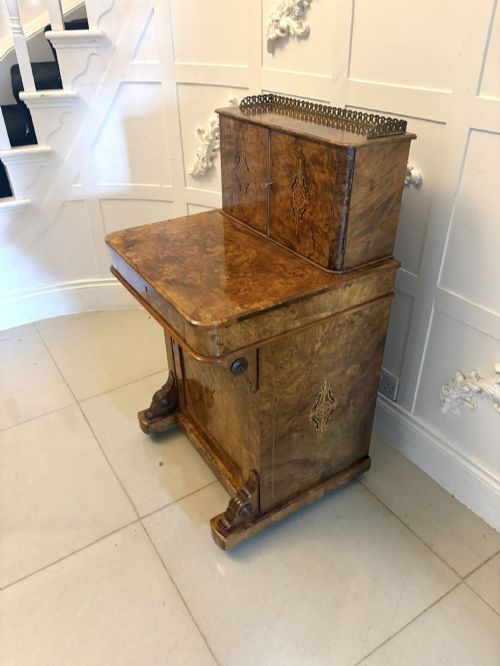
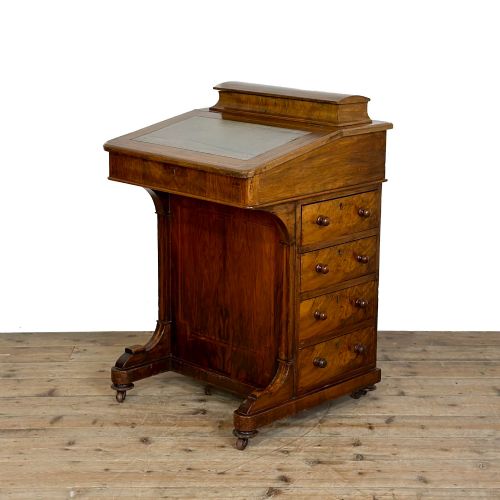
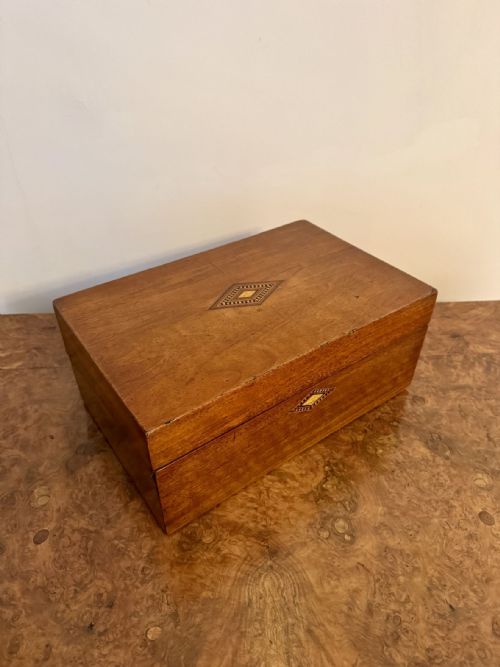
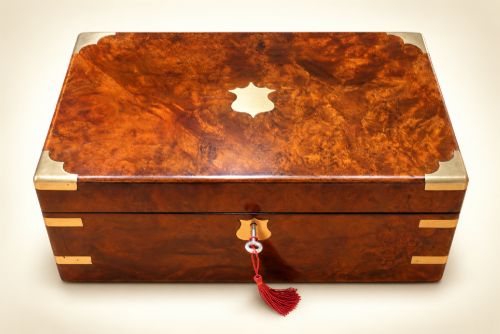
The most common form met on this page is the compact davenport desk or the portable writing slope box. They combine folding or sloping writing surfaces with fitted interiors, secret drawers, and stationery compartments.
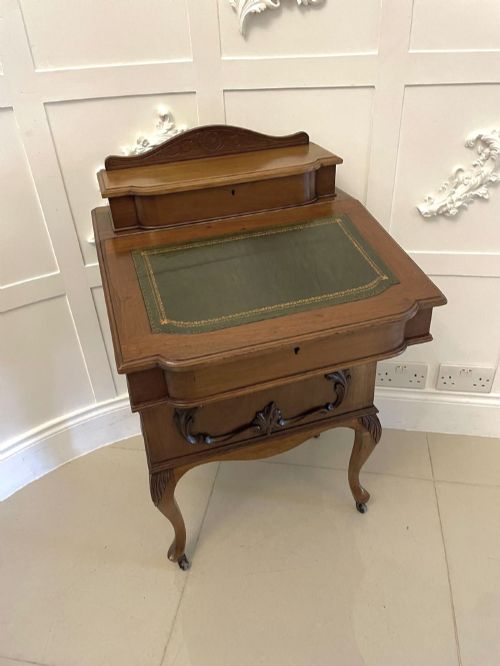
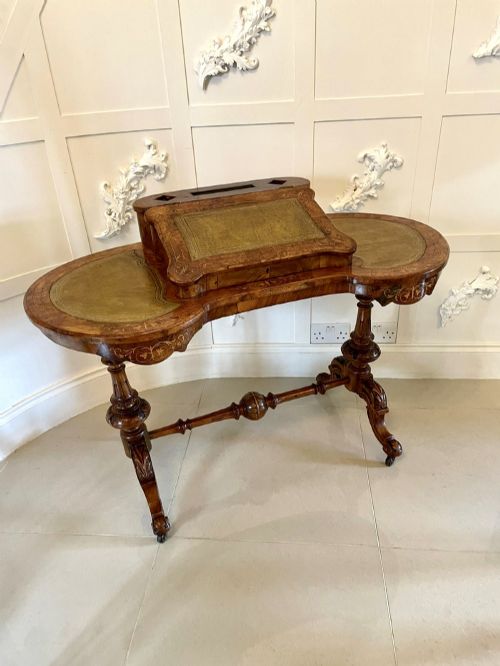
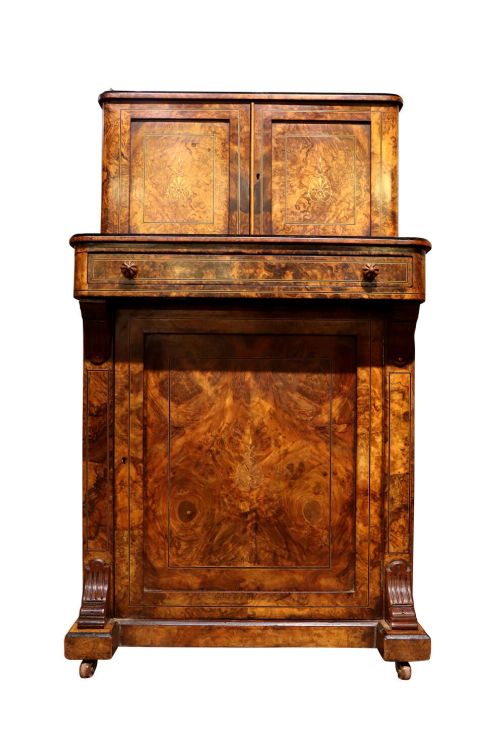
Makers utilised rich timbers and structural variations, producing freestanding davenports, bureau de dame forms, and piano top desks. Such variety ensures a suitable writing desk exists for different room sizes and functional requirements.
Materials and Construction
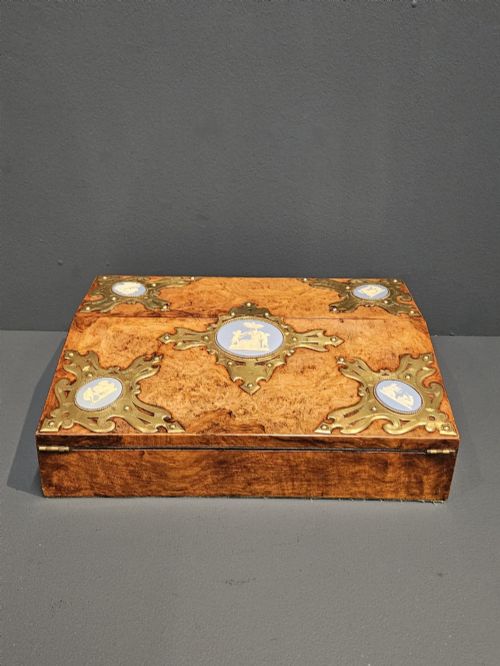
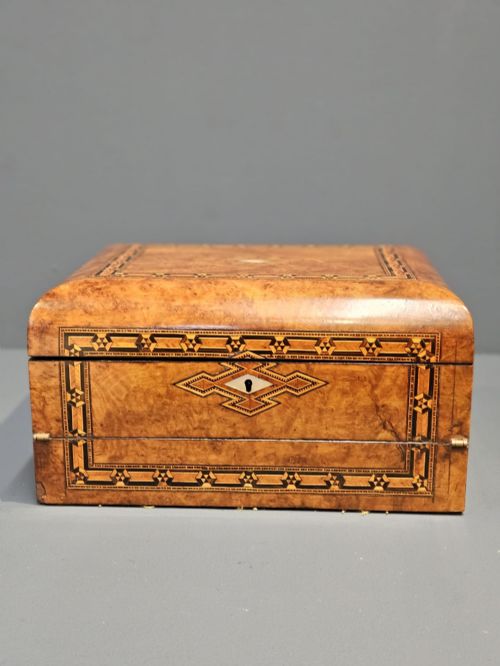
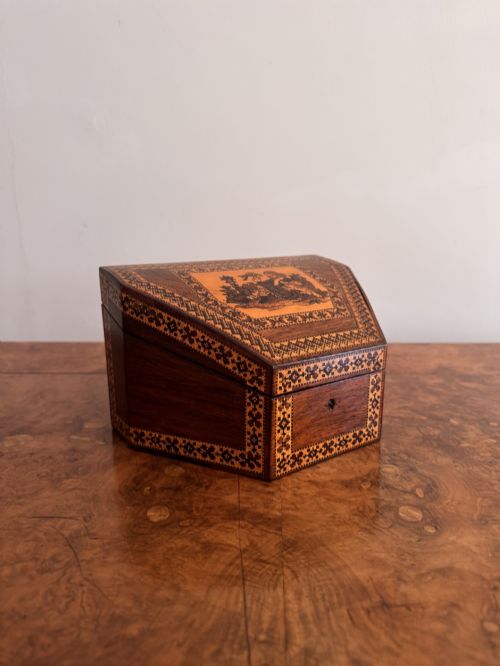
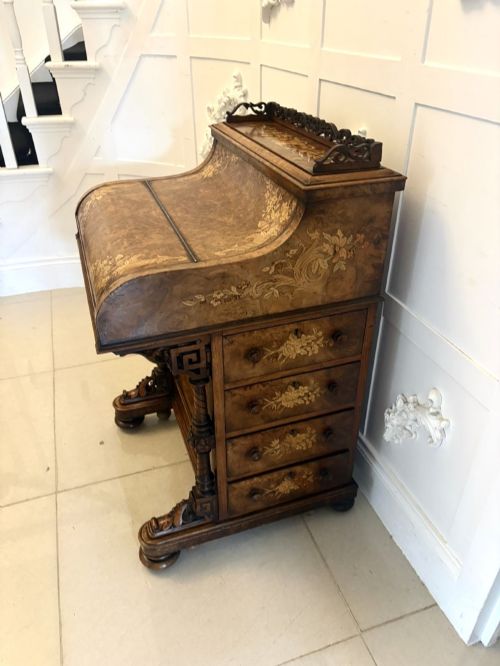
Craftsmen selected solid walnut and burr walnut veneers for their striking grain patterns, often applying marquetry inlay, wood inlay, or Tunbridge ware decoration. These wooden surfaces were frequently paired with contrasting ebonised wood or satinwood interior elements.
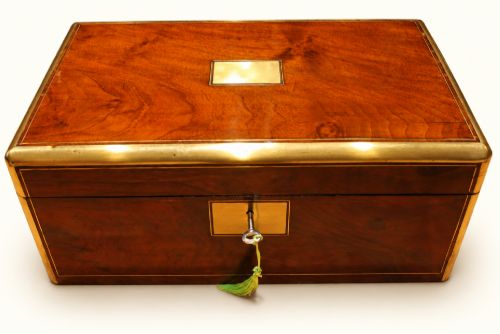
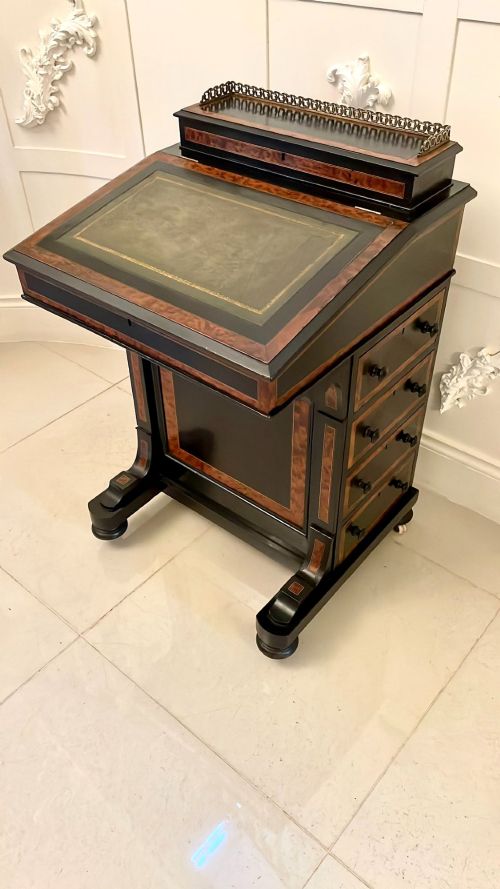
Metalwork played a structural and decorative role, featuring brass binding, mounts, and ormolu details that reinforced corners and secured fitted components. Writing surfaces typically incorporated panels of leather to provide a durable platform for handwriting.
Victorian Walnut Slope Retail Price Guide 2026
Typical asking prices for victorian walnut slope among the pieces listed under this phrase on Sellingantiques today, from the lower quarter to the upper quarter. They describe what is for sale here now, not the wider market.
Listings feature nineteenth-century forms ranging from portable writing slopes to freestanding davenports, constructed in burr walnut, ebonised wood, and solid walnut.
Distinguishing Quality
The hierarchy of these writing pieces rests upon the selection of timber veneers and the precision of internal joinery. Finer examples display highly figured burr walnut across every visible surface rather than plain grain.
Superior execution shows in the complexity of secret drawers, smooth pop-up mechanisms, and crispness of marquetry or brass inlay. Original mounts, keys, and fully fitted satinwood interiors elevate a piece above standard utilitarian versions.
Gillow and Co·Maple and Co
The Victorian Walnut Slope Glossary
- Burr walnut
- A prized timber harvested from the irregular growth knots of the walnut tree, yielding swirling, highly decorative grain patterns. It was extensively sliced into veneers for nineteenth-century cabinet work.
- Davenport desk
- A compact Victorian writing desk featuring a sloping lid that lifts to reveal a storage compartment, with drawers opening to the side. Many examples stand on small casters and include interior stationery wells.
- Secret drawers
- Concealed compartments built into writing slopes and davenports behind false panels or removable partitions. They were designed to secure private documents and correspondence.
- Tunbridge ware
- A meticulous type of wood mosaic woodwork produced in Kent, featuring tiny coloured wood blocks assembled into geometric or pictorial motifs. It frequently decorates the lids of nineteenth-century boxes and slopes.
- Crossbanded
- A border technique where thin strips of veneer are laid around the perimeter of a furniture top or drawer front so that the grain runs at right angles to the central panel.
Victorian Walnut Slope: Frequently Asked Questions
What is a davenport desk?
A davenport desk is a compact nineteenth-century form combining a sloping writing surface with a set of drawers accessed from the side. The top section often houses stationary compartments and pen trays.
These pieces were originally designed for drawing rooms or boudoirs where space was limited. They provide a dedicated writing station without occupying the footprint of a large library table.
How do I find secret drawers?
Secret drawers are typically hidden behind movable interior partitions, false drawer bottoms, or sliding panels inside writing slopes. Finding them often requires removing small pen trays or releasing hidden spring catches.
Cabinetmakers incorporated these concealed spaces to allow owners to store valuables and private letters securely. Testing removable wooden stops inside the stationery well usually reveals the mechanism.
What is a pop-up davenport?
A pop-up davenport is an unusual nineteenth-century variant featuring an internal superstructure that rises when the main lid is opened. This mechanism brings hidden stationery compartments up to eye level.
Such engineering displays the ingenuity of Victorian cabinetmakers who sought to maximise storage in small furniture. These pieces require careful handling to ensure the internal spring or rackwork operates smoothly.
How do I care for burr walnut?
Burr walnut furniture requires protection from direct sunlight and dramatic humidity changes to prevent veneer splitting. Maintaining a stable indoor environment preserves the delicate grain patterns.
Occasional application of appropriate wax polish helps nourish the timber and maintain a soft lustre. Avoid excessive moisture and abrasive cleaners on antique polished surfaces.