


Victorian Walnut Nightstands
These victorian walnut nightstands bring rich timber grain and enclosed storage to the bedside, spanning from simple cupboards to marble-topped French revival pieces.
Victorian Walnut Nightstands
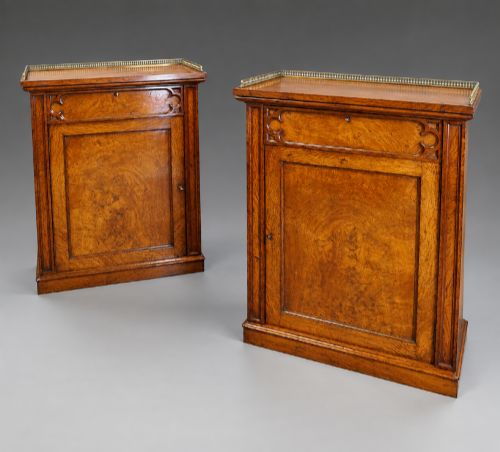
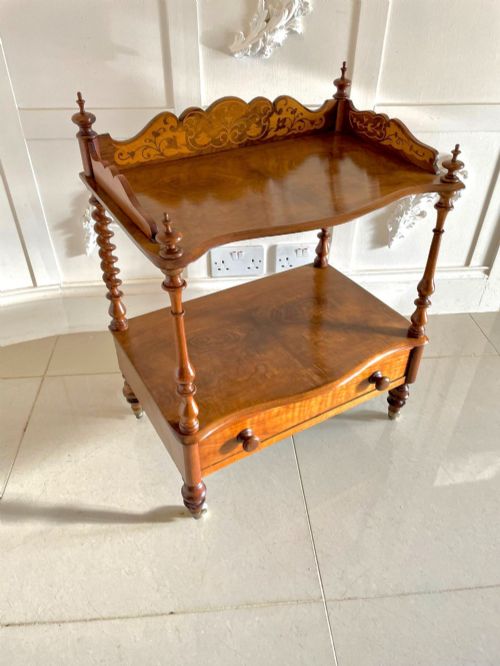
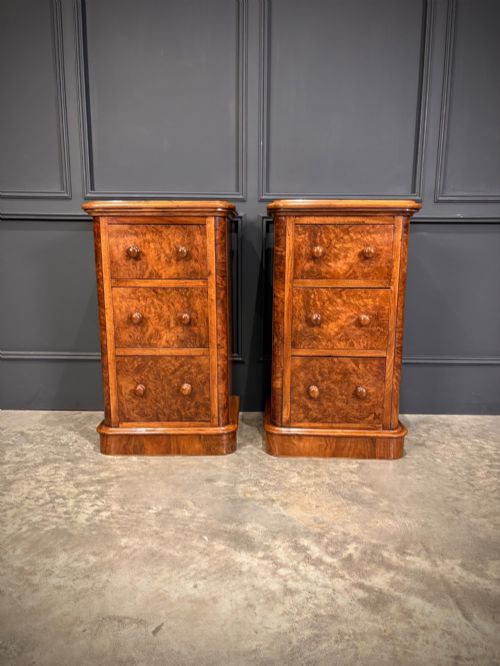
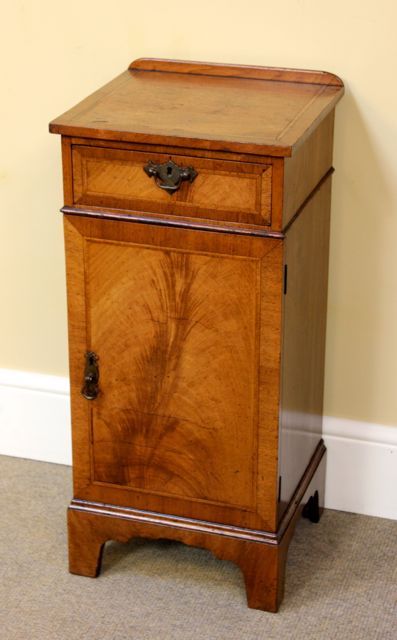
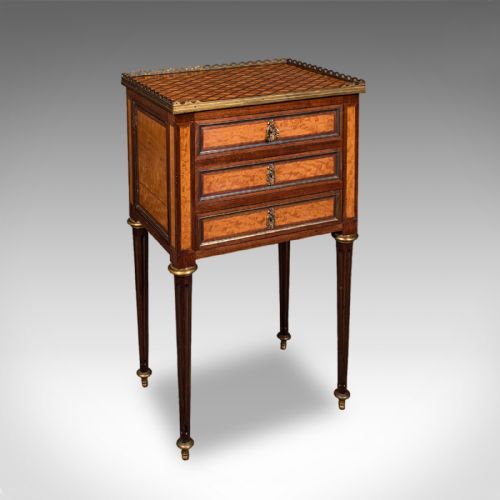
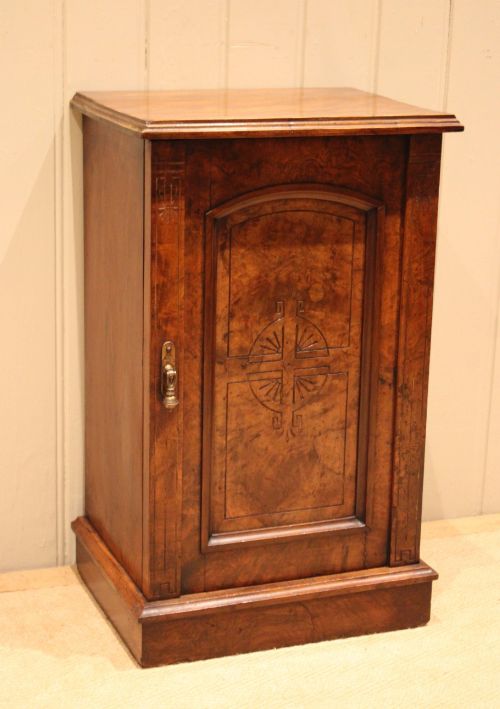
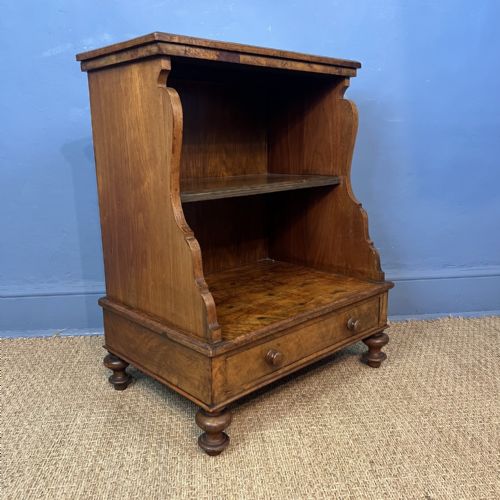
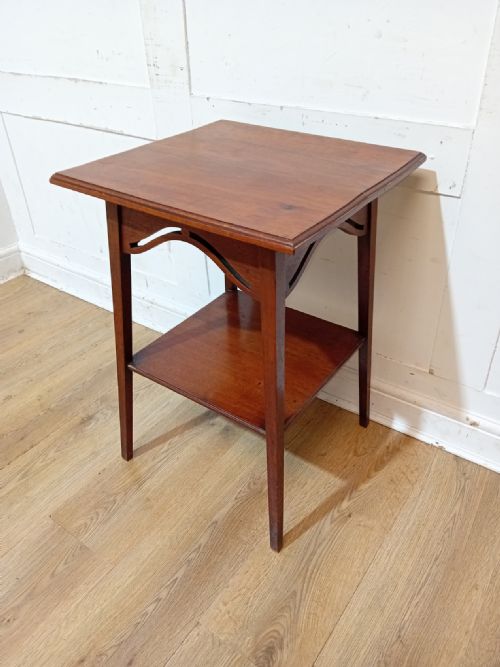
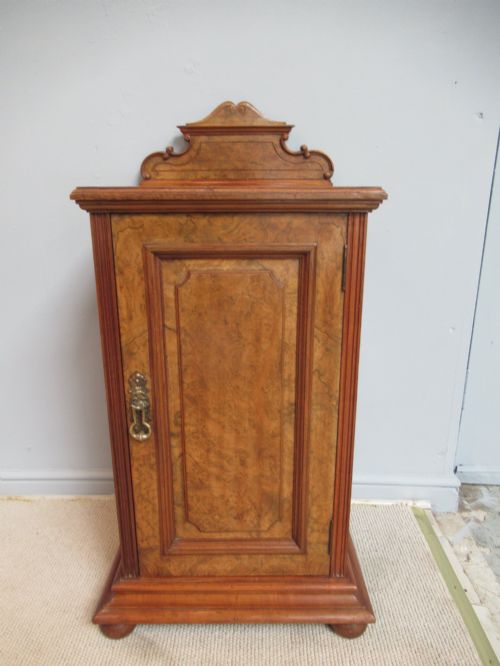
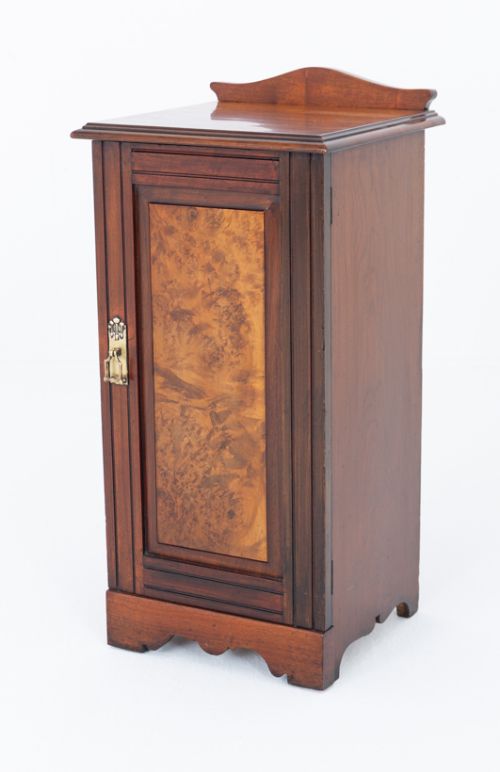
When searching for victorian walnut nightstands, you encounter a variety of forms designed to hold chamber utensils or books beside a bed. The most frequent versions on this page are upright bedside cabinets and pot cupboards, alongside low open bookcases and small chests of drawers.
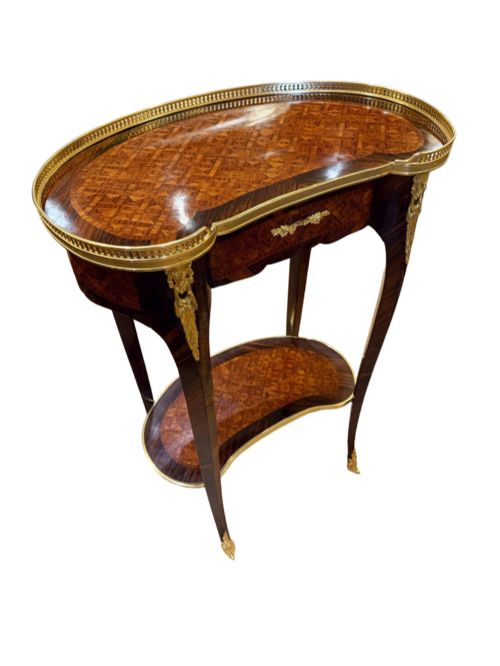
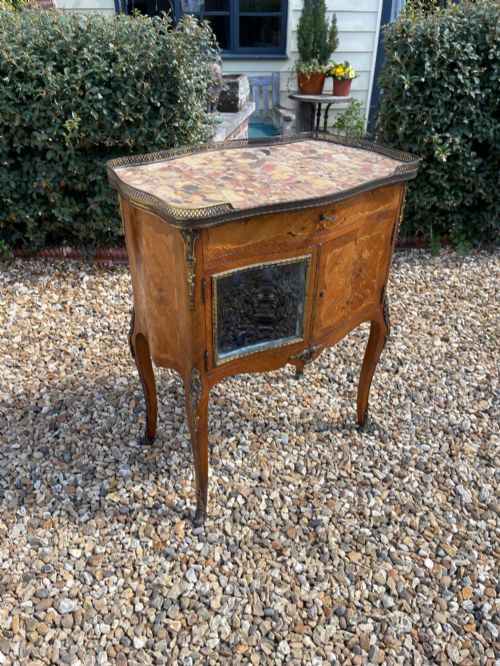
Production spans the nineteenth century into the Edwardian era, incorporating periods marked around 1860, 1870, 1880, 1890, and 1900. Alongside standard English forms, French revival styles such as Louis XVI and Louis XV appear frequently.
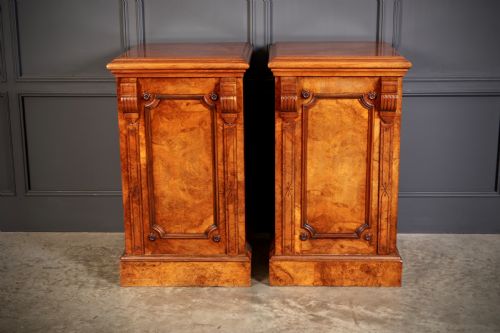
The selection ranges from single units to matched pairs, some tall in stature and others low. Alongside enclosed cupboards, related side tables and lamp stands serve the same domestic function.
Materials and construction
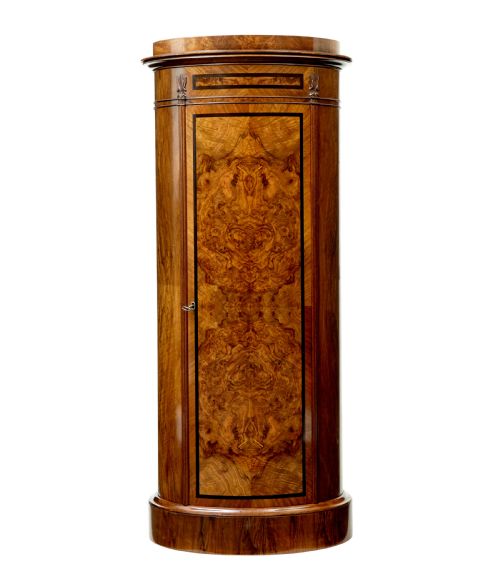
Cabinet makers utilised solid timber alongside decorative veneers, favouring plain walnut, burr walnut, figured walnut, and Hungarian walnut for rich surface patterning. Secondary timbers such as pine provide internal structure for drawers and carcases.
Many cabinets incorporate inset marble tops, alongside brass mounts, ormolu details, and parquetry or floral marquetry inlay. Campaign washstands introduce functional brass hardware, while carved decoration adorns specific French revival examples.
Several diminutive nightstands hide tiny chambers once tasked with guarding the midnight candle and the morning water jug.
Evaluating quality
Quality rests in the selection of the timber veneer and the precision of the inlay, where burr walnut figures and floral marquetry display greater artisan skill. The integration of inset marble tops and cast brass or ormolu mounts elevates the finish of French revival pieces.
Structural execution dictates durability, seen in the clean closure of bedside drawers and the stability of pedestal cupboards and lockers. Matched pairs demonstrate a higher level of original commissioning than single cabinets.
Liberty of London
The Victorian Walnut Nightstands Glossary
- Burr walnut
- A timber harvested from the warted growths of walnut trees, producing highly swirling and decorative grain patterns used for cabinet veneers.
- Pot cupboard
- A traditional bedside cabinet originally designed to house a chamber pot behind a single door, also known as a pot board.
- Marquetry
- Decorative patterns formed by fitting together thin slices of wood veneer and other materials onto a structural surface.
- Parquetry
- Geometric mosaic woodwork used for ornamenting floors, table tops, and cabinet panels.
- Ormolu
- Gilded bronze ornamentation applied to the mounts, handles, and feet of nineteenth-century furniture.
Victorian Walnut Nightstands: Frequently Asked Questions
What is a pot cupboard?
A pot cupboard is a small enclosed bedside cabinet designed in the nineteenth century to conceal a chamber pot.
Over time, these versatile pieces transitioned into general bedside storage for books and personal items.
How do I identify French revival styles?
French revival pieces often display marble tops, Ormolu mounts, and lighter proportions inspired by Louis periods.
They contrast with sturdy English pedestal cupboards through curved lines and decorative marquetry.
Are marble top nightstands original?
Many Victorian bedside cabinets were manufactured with fitted inset marble tops to provide a durable, wipe-clean surface.
This feature appears frequently across both English designs and French revival pieces.
How do I care for walnut veneer?
Walnut benefits from polished maintenance using traditional beeswaxes rather than modern silicone sprays.
Keep wooden cabinets away from direct heat sources to prevent timber movement and veneer cracking.