
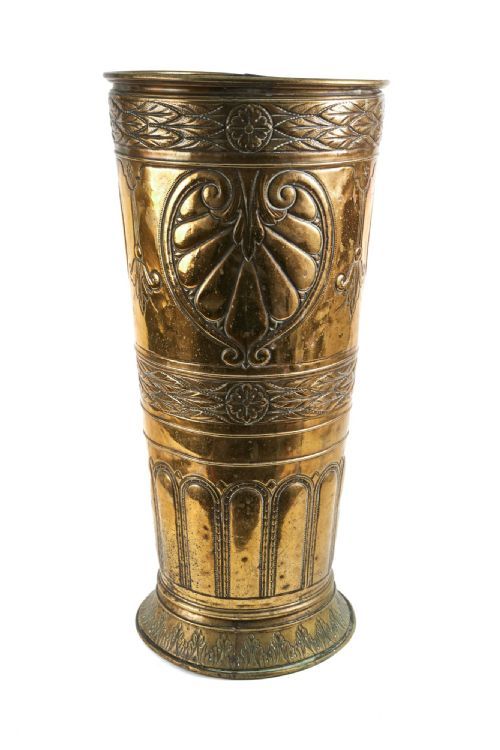
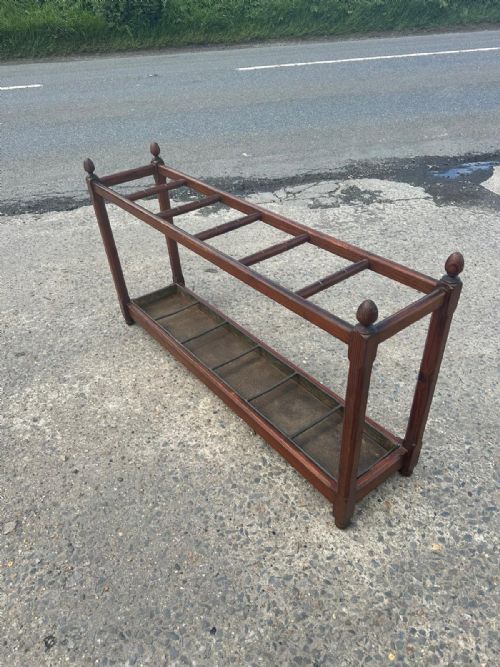


Victorian Walking Stick Stand
A victorian walking stick stand anchors a hallway with practical utility and distinct period character, offering a structured place for canes and umbrellas.
Victorian Walking Stick Stand
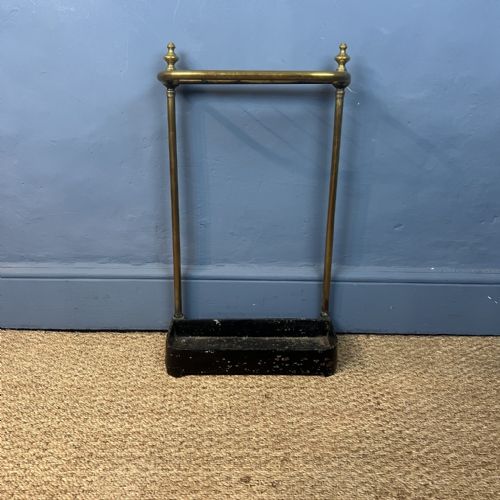
A victorian walking stick stand serves as a hall furniture piece designed to hold canes, walking sticks and umbrellas in domestic entrances. These items appear primarily in Victorian and Edwardian variations, reflecting the period focus on organised country house and townhouse hallways.
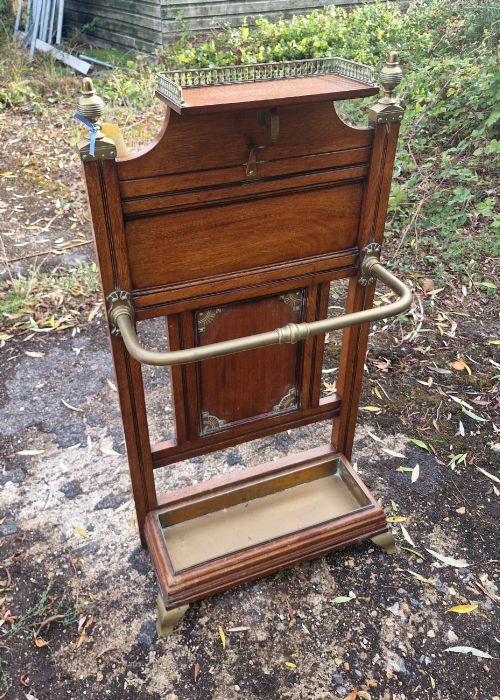
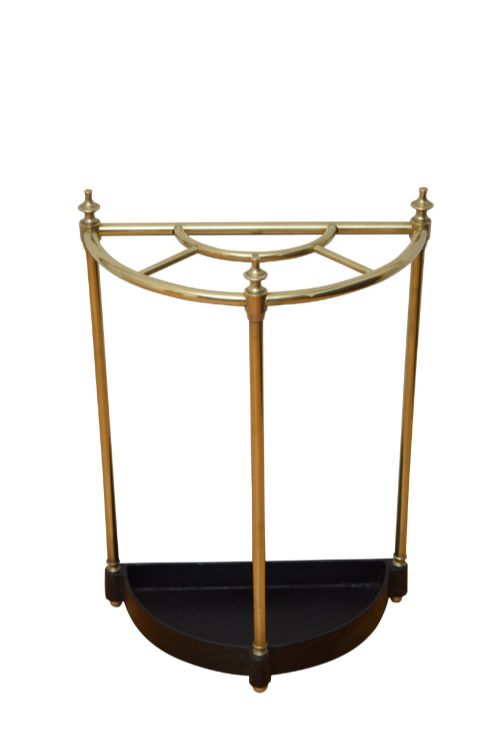
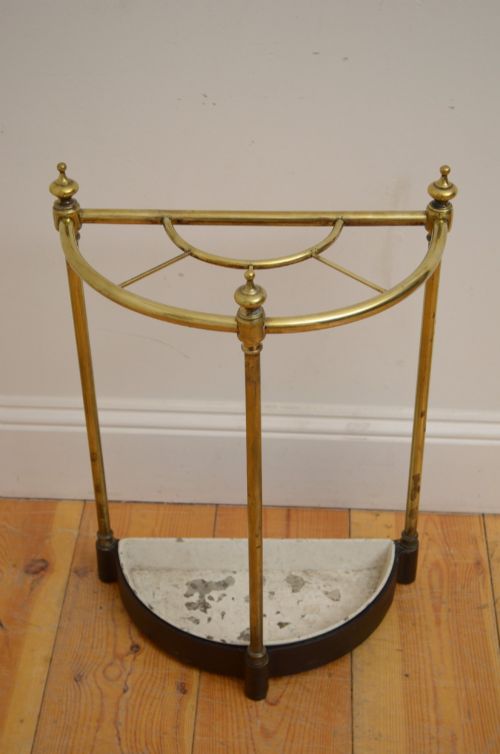
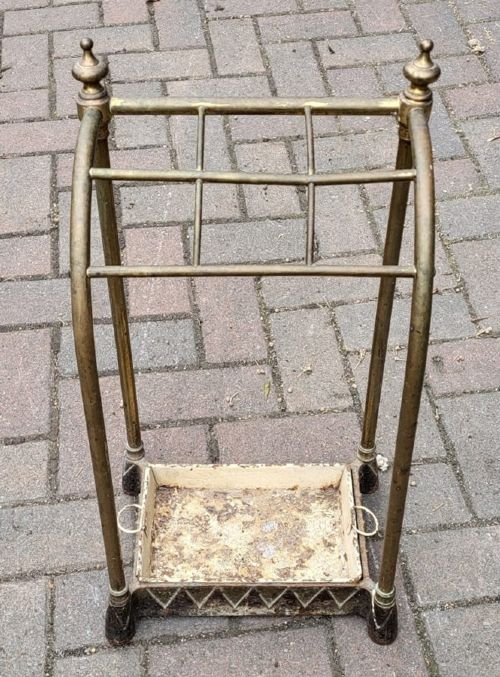
The selections span demi-lune, corner and freestanding rectangular formats constructed to fit narrow corridors or spacious vestibules. Many examples combine stick storage with built-in drip trays to protect wooden floorboards from wet weather.
Makers utilised various configurations, from small narrow formats for tight spaces to large multi-division racks meant for country estates. The surviving items demonstrate how utilitarian hall furniture evolved to meet the lifestyle demands of the nineteenth century.
How they were made
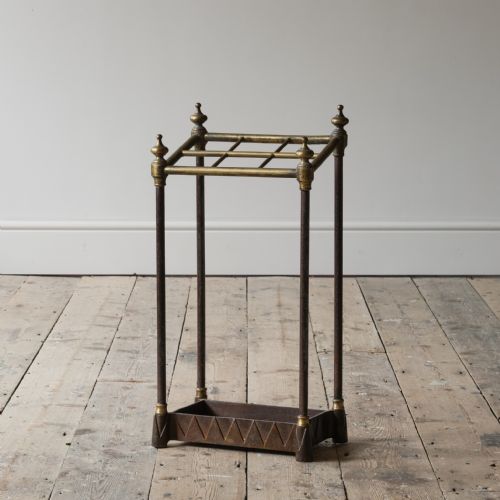
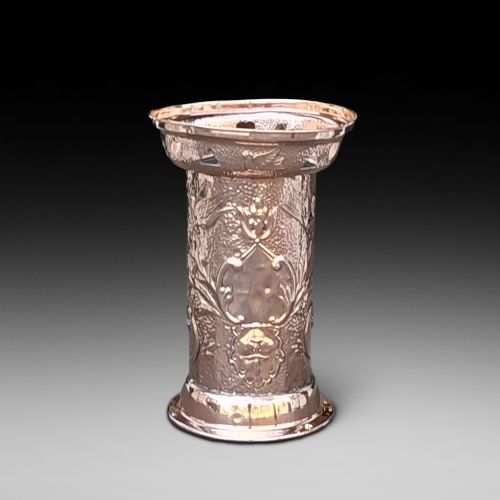
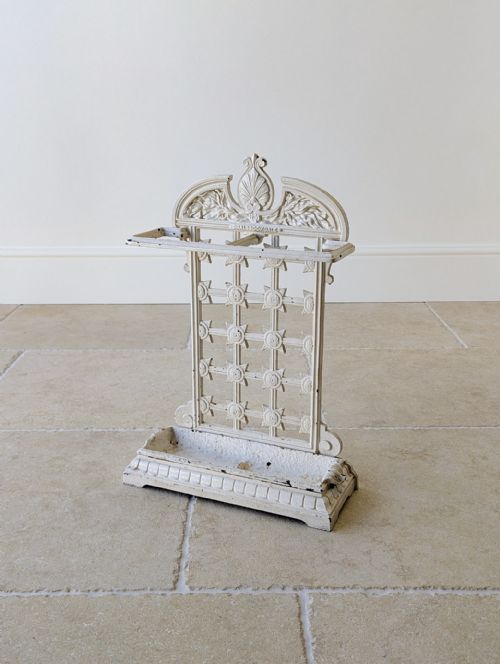
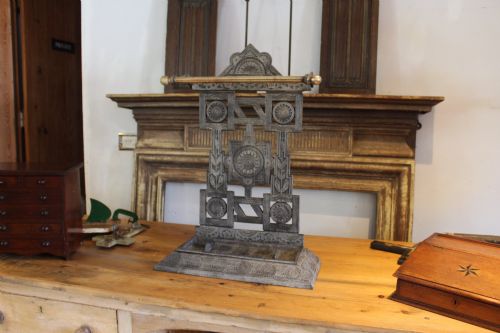
Foundry workers cast iron and brass into intricate frames, often pairing heavy metal bases with sheet brass or copper panels. Cast iron examples frequently incorporate openwork scroll patterns or figural motifs, while brass components provide bright metallic contrast.
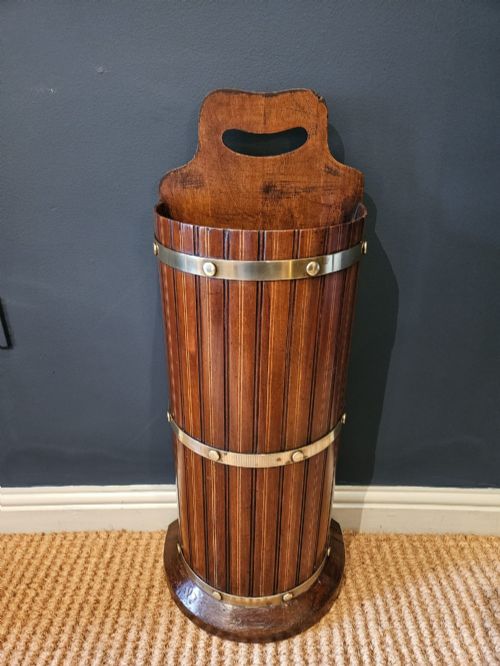
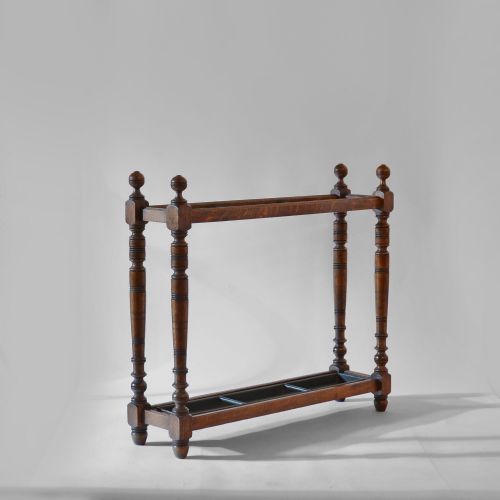
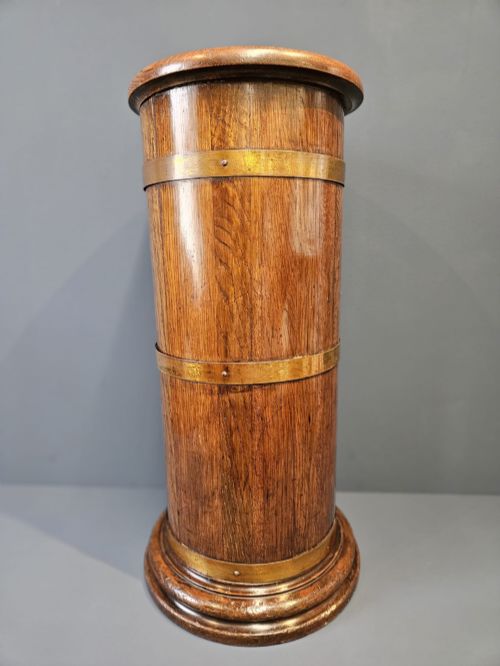
Cabinetmakers constructed wooden versions using oak, mahogany and pitch pine, frequently employing coopered stave techniques to build barrel-shaped receptacles. Metal bands and brass bindings secure these wooden frames, adding structural stability and decorative accent to the natural timber.
Periods represented span the nineteenth century through the Edwardian era and into the early twentieth century.
What varies in quality
Design complexity and foundry execution differentiate standard production items from distinguished workshop creations. Pieces attributed to recognised makers or specific aesthetic movements display sharper casting definition and more thoughtful integration of mixed materials like copper and brass.
The integrity of secondary elements, such as original metal drip pans and structural framing, dictates the overall coherence of a piece. Robust timber selection in coopered oak stands and heavy, stable cast iron bases separate superior examples from lighter utility items.
Coalbrookdale·Thomas Jeckyll·Falkirk Ironworks
The Victorian Walking Stick Stand Glossary
- Demi-lune
- A half-moon shape designed to sit flat against a hallway wall.
- Coopered
- Wood construction formed from vertical staves bound by metal hoops, similar to barrel-making.
- Drip tray
- A removable metal basin positioned at the base to catch water from wet umbrellas.
- Cast iron
- Molten iron poured into a mould to create rigid, decorative structural frames.
- Pitch pine
- A resinous North American pine used frequently in nineteenth-century joinery.
Victorian Walking Stick Stand: Frequently Asked Questions
Where did these stands go in a house?
These pieces traditionally stood in the entrance hall or vestibule of a Victorian home.
They welcomed visitors and provided an immediate drop point for wet outerwear and walking aids upon entering from the street.
How do I stop water damaging the floor?
Most antique stands feature an integrated or removable metal drip tray situated at the base.
This tray catches moisture running off wet umbrellas, protecting wooden floorboards or carpets from water damage.
Are wooden and metal stands from the same period?
Both timber and cast metal versions were produced concurrently throughout the nineteenth century.
Cabinetmakers built oak and mahogany pieces for country houses, while foundries cast iron and brass stands for urban townhouses.
What is a demi-lune stand?
A demi-lune stand is built with a flat back and a curved front shaped like a half-circle.
This specific geometry allows the stand to hug narrow hallway walls without protruding too far into walking space.