



Victorian Upholstered Throne
These victorian upholstered throne chairs combine commanding presence with deep seating, offering an imposing seat for any grand interior.
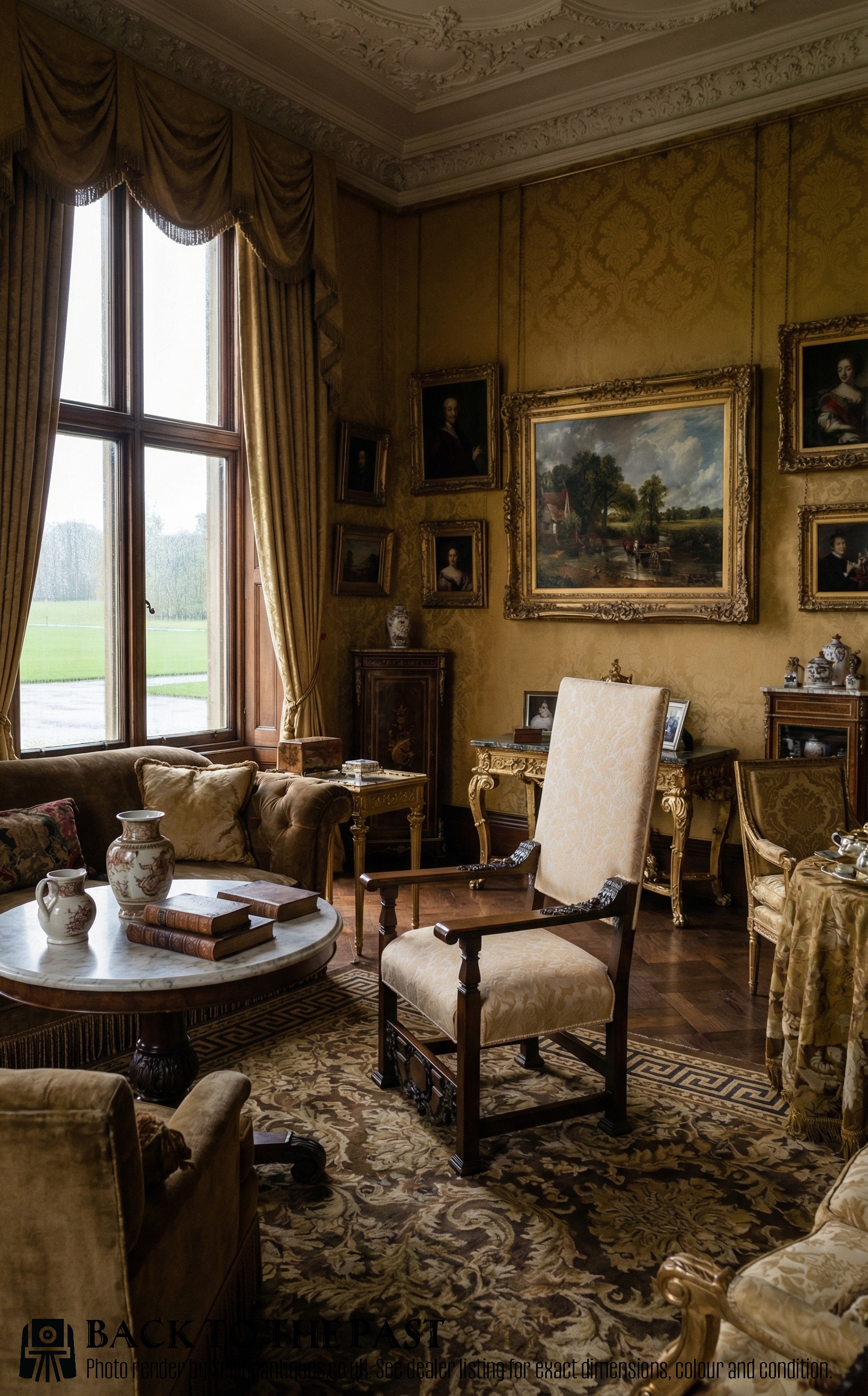
Victorian Upholstered Throne
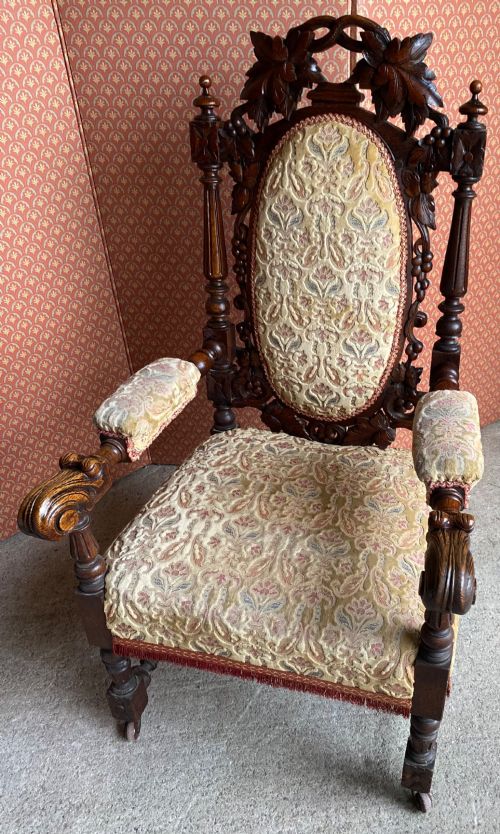
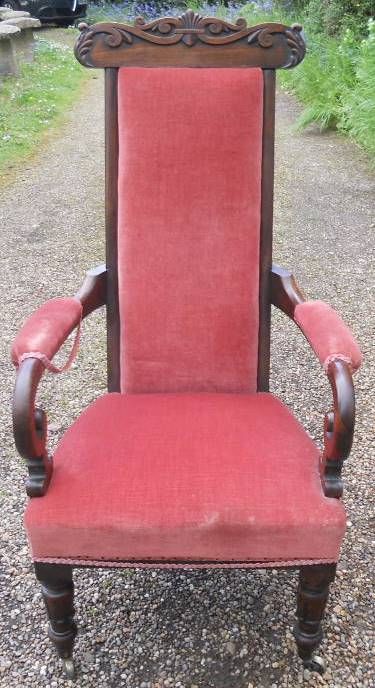
A victorian upholstered throne provides a commanding seat, often distinguished by a tall back and substantial wooden framing. These large armchairs reflect the revival styles popular during the nineteenth century, drawing heavily on Gothic, Baroque, and Renaissance motifs.
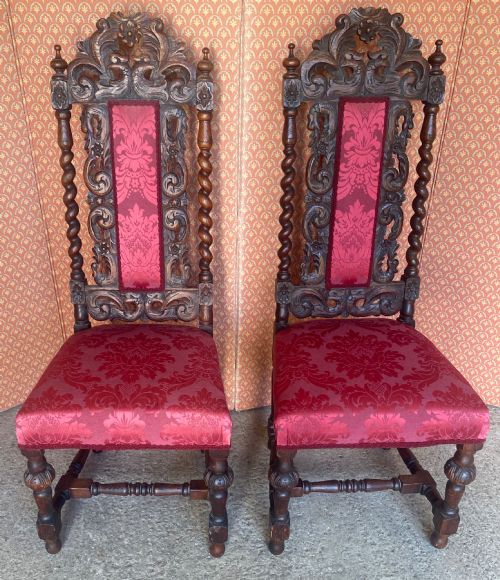
Buyers will most frequently encounter oak and walnut versions on this page, often featuring elaborate carving, turned legs, or barley twist supports. Many examples incorporate fabric, leather, or tapestry upholstery alongside the exposed timber frames.
Materials and construction
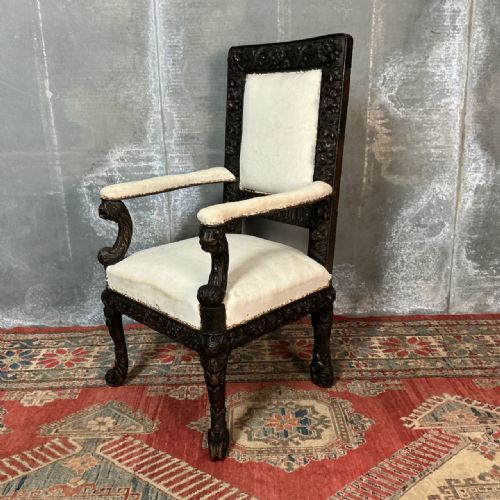
Makers utilised solid timbers such as oak, walnut, mahogany, and pitch pine to build the heavy frames required for a throne chair. These woods were frequently carved with deep relief ornamentation, depicting foliage, armorial crests, or grotesque masks.
Upholstery techniques involved durable textiles, leather, and tapestry secured to the frames, sometimes accented with brass detailing. Structural support was often reinforced through turned legs, barley twists, or stretcher bases.
Victorian Upholstered Throne Retail Price Guide 2026
Typical asking prices for victorian upholstered throne among the pieces listed under this phrase on Sellingantiques today, from the lower quarter to the upper quarter. They describe what is for sale here now, not the wider market.
Listings demonstrate a strong preference for oak and walnut frames, frequently accompanied by nineteenth-century Gothic and Renaissance revival stylistic influences.
What separates the fine examples
The distinction between standard seating and a superior victorian upholstered throne lies in the ambition of the timber carving and the integrity of the frame. Crisp relief work on the crest and arms indicates skilled joinery, whereas softer detailing suggests mass production.
Proportion and scale also dictate the hierarchy of these chairs. Pieces with exceptionally tall backs, balanced arm proportions, and substantial framing command greater visual weight and structural presence.
The Victorian Upholstered Throne Glossary
- Gothic Revival
- An architectural and decorative style inspired by medieval forms, featuring pointed arches and heavy timber construction. It dominated much nineteenth-century ecclesiastical and domestic seating design.
- Baroque Revival
- A theatrical design movement characterised by opulent scrolling ornamentation, heavy carving, and dynamic forms. It brought grand continental aesthetics into Victorian reception rooms.
- Barley twist
- A type of turning shaped like a spiral rope, frequently found on the legs and arm supports of nineteenth-century chairs. This technique adds vertical rhythm to heavy wooden frames.
- Fauteuil
- An open-armed French armchair with upholstered back and seat, occasionally adapted within nineteenth-century English interiors. The wooden frame remains partially exposed around the padded elements.
- Green Man
- A decorative motif representing a human face entwined with leaves, branches, or vines. It appears frequently as a carved detail on nineteenth-century oak furniture.
Victorian Upholstered Throne: Frequently Asked Questions
Where should I place a throne chair?
These imposing seats suit large reception rooms, libraries, or wide hallways where their scale can be fully appreciated. They function well as statement pieces away from ordinary dining furniture.
Ensure the room has sufficient ceiling height and floor space so the tall back does not overwhelm smaller domestic environments.
Are these chairs comfortable for daily sitting?
Most examples provide an upright, supportive posture rather than a deep, slouching lounge experience. The high backs and sturdy armrests are designed for formal repose.
Upholstery padding varies depending on whether the piece retains its original stuffing or has undergone later restoration.
How do I identify Gothic Revival chairs?
Gothic Revival pieces typically display architectural motifs such as pointed arches, quatrefoils, and heavy structural timber. Pitch pine and dark oak are common woods for this specific aesthetic.
The carving often mimics medieval stonework or ecclesiastical woodwork rather than classical classical forms.
What woods were used for these chairs?
Makers relied heavily on native and imported hardwoods, primarily oak, walnut, and mahogany. Pitch pine also appears in specific regional or Gothic-inspired pieces.
The choice of timber usually dictated the depth of the carving and the overall weight of the chair.