




Victorian Trumpet Worktable
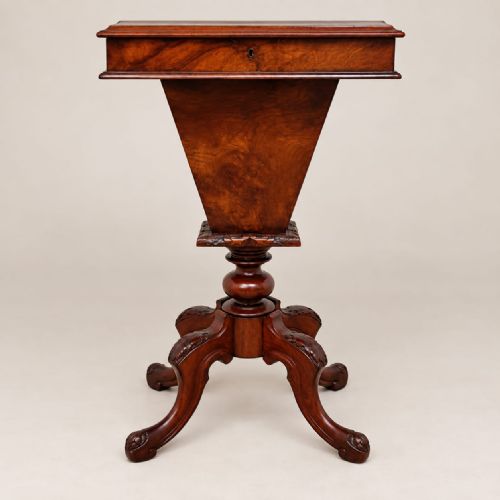
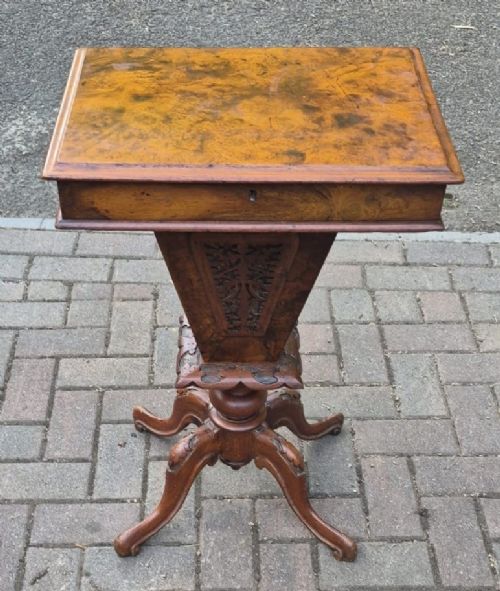
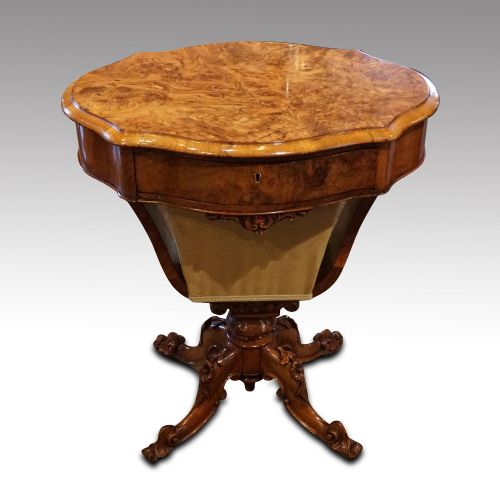
A Victorian trumpet worktable combines domestic utility with ingenious storage, offering a flared octagonal body ideal for holding needlework and sewing supplies.
Victorian Trumpet Worktable
When you search for a Victorian trumpet worktable, you encounter practical nineteenth-century sewing tables designed with distinctive cone-shaped or trumpet bodies resting on pillar and tripod bases. These pieces typically incorporate fitted interiors beneath their hinged lids to organise threads, needles, and small crafting tools.
The versions most commonly met on this page span the mid to late nineteenth century, predominantly fashioned in walnut or burr walnut with occasional examples in mahogany and rosewood. Their forms vary from octagonal workboxes to dual-purpose game and work tables featuring inlaid tops.
How they were made
Cabinet makers utilised choice timbers such as burr walnut, mahogany, and rosewood, often applying intricate wood inlay and marquetry to the hinged lids. The distinctive flared body was constructed from individual vertical staves joined neatly together, echoing traditional cooperage techniques scaled down for fine furniture.
Interior compartments were meticulously lined with fabric and fitted with small wooden boxes and lidded partitions for sewing accessories. These bodies were then mounted on carved pillar supports above shaped tripod legs, frequently finished with delicate scroll or cabriole feet.
The listings on this site show the trumpet worktable spanning from eighteen-fifty to eighteen-ninety, executed primarily in walnut, burr walnut, and mahogany.
What varies in quality
The distinction between ordinary and exceptional pieces rests primarily on the choice of timber figure and the precision of the marquetry inlay. Highly figured burr walnut and crisp, detailed wood inlay elevate a table above standard mahogany or plain walnut constructions.
Interior preservation and craftsmanship also dictate quality, particularly the complexity of the fitted compartments beneath the lid and the integrity of the original fabric linings. Furthermore, the sculptural grace of the carved pillar and the stability of the tripod base demonstrate the maker's original skill.
The Victorian Trumpet Worktable Glossary
- Trumpet worktable
- A nineteenth-century sewing table featuring a flared, cone-shaped body resembling a musical instrument. This distinctive shape provides generous depth for wools and larger sewing projects.
- Burr walnut
- A prized timber veneer showing swirling knot formations and rich grain patterns. Cabinet makers selected this decorative wood for the most prominent exterior surfaces.
- Marquetry inlay
- Decorative patterns formed by fitting contrasting veneers into a prepared surface. Floral and geometric designs are typical of this painstaking decorative technique.
- Tripod base
- A support structure comprising three legs radiating from a central pillar. This arrangement ensures stability on uneven domestic floorboards.
Victorian Trumpet Worktable: Frequently Asked Questions
What was a trumpet worktable used for?
These tables served as dedicated workstations for nineteenth-century needlework, embroidery, and mending. The interior compartments kept threads and tools orderly while the deep lower section stored fabrics.
Beyond sewing, some variations included chessboard tops for leisure, making them versatile pieces for the Victorian parlour.
How do I date a Victorian worktable?
Dating relies on observing timber choices, decorative styles, and construction markers recorded across the period. Mid-century examples often favour rosewood and mahogany, while burr walnut gains prominence toward the later decades.
Inlay styles and the specific carving on the pillar and tripod base also help narrow the decade of manufacture.
How do I care for antique walnut?
Keep the wood away from direct sunlight and strong heat sources to prevent the delicate veneers from drying and cracking. Regular dusting with a soft, dry cloth maintains the surface.
Applying a traditional beeswax polish occasionally helps nourish the timber and preserves the natural lustre of the grain.
Are these tables sturdy enough for daily use?
The tripod base provides a stable footprint for everyday placement in a modern room. However, the internal fittings and hinged lids are designed for light domestic crafting rather than heavy storage.
Treating the mechanism with care ensures the delicate joints and original interior components remain intact.