


Victorian Triform Table
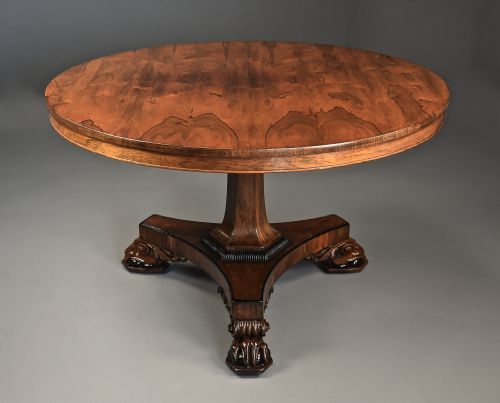
A victorian triform table brings clever three-sided geometry and rich rosewood or mahogany into a room as an occasional or breakfast centrepiece.
Victorian Triform Table
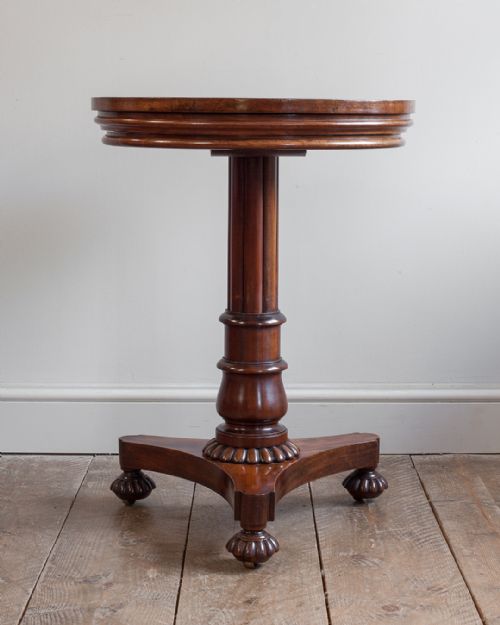
A victorian triform table is built upon a distinct three-sided base or pedestal, creating a stable and balanced footprint for dining or display. These pieces frequently appear in the evidence as breakfast tables, centre tables, and occasional tables dating through the nineteenth century.
The most common versions met on this page are fashioned from dense timbers like mahogany and rosewood, often featuring circular or shaped tops supported by pillar and tripod structures. Makers of the period utilised this three-sided arrangement to maximise legroom while maintaining sturdy architectural proportions.
Beyond standard occasional uses, the evidence shows examples configured as tilt-top breakfast tables, sewing tables, and miniature furniture. They bridge the gap between practical domestic utility and refined decorative arts from the Victorian and William IV eras.
How they were made
Cabinet makers constructed these tables primarily using solid and veneered timbers, selecting richly grained rosewood and mahogany for their durability and visual depth. Tops were frequently built as circular panels mounted on tilting mechanisms or central columns, requiring precise joinery to prevent warping.
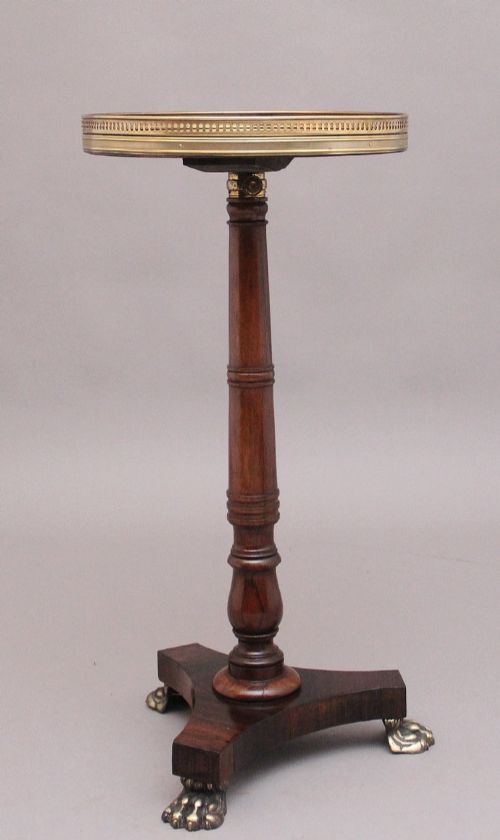
The characteristic three-sided or triform bases incorporate carved pedestals, parcel gilt details, or sculptural supports such as swan motifs. Brass fittings and marble inserts occasionally supplement the timber framework, adding weight and textural contrast to the design.
Miniature tables appear among the full-sized dining furniture, suggesting Victorian craftsmen occasionally enjoyed making tiny versions of their grandest designs.
What varies in quality
The distinction between ordinary and superior examples lies in the selection of timber veneers and the crispness of the carved details on the triform pedestal. Finer tables display symmetrical radial veneers and deeply undercut woodwork rather than flat, machine-cut decoration.
Structural integrity of the tilt-top mechanism and the central pillar attachment dictates the daily usability of the table. High-grade specimens retain original hardware and stable joints that support heavy specimen marble or thick mahogany tops without wobble.
James Winter of Wardour Street in London
The Victorian Triform Table Glossary
- Triform
- Having a three-sided base or pedestal configuration. This design provides both stability and a distinctive geometric silhouette.
- Tilt top
- A tabletop hinged to the central pillar so it can pivot vertically when not in use. This allowed tables to be stored flat against walls in smaller Victorian rooms.
- Specimen marble
- A decorative top composed of various coloured marbles fitted together in geometric patterns. It demonstrates high craftsmanship and material wealth.
- Metamorphic
- Describing furniture that transforms into another form or serves multiple functions. These pieces often adapt between tiers or table heights.
- Pedestal
- A central vertical support holding the tabletop aloft above a spreading base. Triform versions split this base into three distinct feet.
Victorian Triform Table: Frequently Asked Questions
What is a triform table?
A triform table is a piece of furniture defined by its three-sided base, which typically supports a central column and a circular top. This design offers a compact footprint while ensuring firm stability.
Such tables served various roles in nineteenth-century interiors, functioning as breakfast dining tables, lamp stands, or decorative centrepieces in grand rooms.
How were they used?
These tables accommodated everyday domestic tasks, from serving morning breakfast to holding sewing boxes and oil lamps. Tilt-top versions allowed households to clear floor space quickly.
Their versatile sizing meant they could sit comfortably in the centre of a room or tuck against a wall when fitted with a pivoting mechanism.
Which woods are most common?
Mahogany and rosewood dominate the surviving examples, prized for their deep natural colours and ability to take a high polish. Cabinet makers frequently used them as solid timbers or sliced them into decorative veneers.
Other materials like marble, brass, and parcel gilt occasionally appear on the top surfaces or support structures to add visual contrast.
How do I date a Victorian table?
Dating relies on observing stylistic markers, construction techniques, and materials recorded across the nineteenth century. Pieces showing William IV or Regency influences often feature heavier carved rosewood, while later Victorian items might incorporate lighter mahogany or specimen marble.
Matching the object type and secondary woods against documented cabinet-making periods helps narrow down the decade of production.