


Victorian Transferware China
Victorian transferware china comprises nineteenth-century earthenware and ironstone decorated with printed scenes, prized for table use and display.
Victorian Transferware China
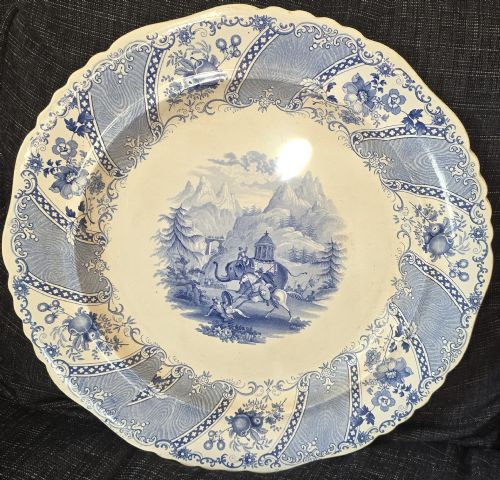
Victorian transferware china encompasses functional and decorative domestic ceramics produced during the nineteenth century, including large serving platters, dinner services, and smaller child's tea sets. Buyers seek these pieces for their rich blue and white patterns depicting architectural views, landscapes, and traditional motifs.
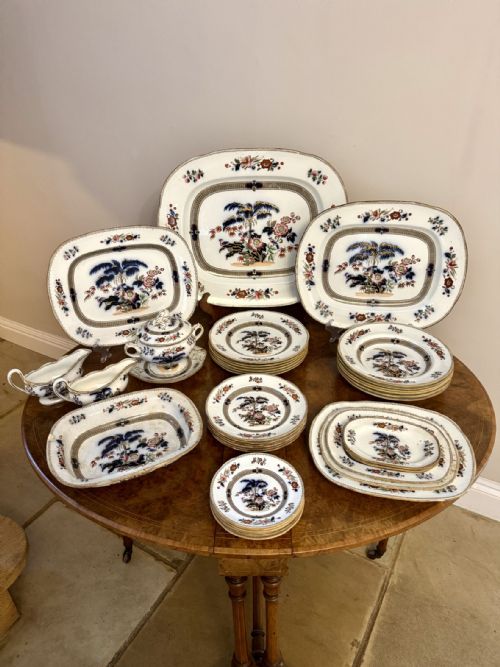
The selections on this page are dominated by meat platters, dinner plates, and complete services originating from Staffordshire potteries and major English makers. Early Victorian and mid-nineteenth-century examples frequently employ deep cobalt designs transferred onto earthenware, ironstone, or creamware bodies.
Forms range from large serving trays and vegetable tureens to specialised items such as custard sets and cheese dishes. Pieces vary from utilitarian tableware intended for daily dining to decorative plates and nursery mugs featuring alphabet designs or figurative subjects.
Materials and production methods
Potters produced these ceramics using earthenware, ironstone, creamware, and porcelain bodies, applying designs through a copperplate printing method onto tissue paper before transferring the pigment to the ceramic surface. A transparent glaze was then applied over the print prior to high-temperature kiln firing.
The transfer printing technique allowed factories to achieve intricate botanical, Chinoiserie, and scenic patterns with consistent precision across large dinner services and multi-piece toilet sets. Ironstone and improved stone china provided a denser, more durable body suitable for heavy domestic use.
Victorian nursery plates often featured alphabet borders alongside domestic animals, teaching children their letters while they finished their porridge.
Distinctions in quality
Quality depends upon the crispness of the transfer print and the clarity of the underlying ceramic glaze, with superior pieces showing sharp lines without smudging or pooling of pigment. The complexity and artistic merit of the printed pattern also elevate the standing of individual items.
The reputation of the producing pottery, such as Minton, Wedgwood, or Doulton Burslem, influences the desirability of a service or platter. Heavier, well-potted ironstone bodies and matched multi-piece sets command greater interest than isolated domestic plates.
Wedgwood·Minton·Doulton Burslem·James Wallace and Co·Elkin and Newbon·Copeland and Garrett·Mason
The Victorian Transferware China Glossary
- Transferware
- Pottery decorated by transferring a printed design from an engraved copper plate onto the ceramic body via tissue paper. This technique enabled mass production of detailed pictorial scenes.
- Ironstone
- A dense, durable type of earthenware patented in the nineteenth century to imitate Chinese porcelain. It resists chipping and forms the sturdy base for many large serving platters.
- Flow blue
- A style of transferware where cobalt oxide bled intentionally into the surrounding glaze during firing, creating a soft, misty outline. It originated in Staffordshire during the mid-nineteenth century.
- Creamware
- A refined earthenware possessing a pale yellowish cream colour, perfected during the eighteenth century and continued into the Victorian era. It provides a smooth surface for printed decoration.
- Tureen
- A deep covered vessel used for serving soups, vegetables, or sauces at the dining table. Victorian examples often feature matching stands and intricate handle moulding.
Victorian Transferware China: Frequently Asked Questions
How do I clean Victorian transferware safely?
Wash these ceramics by hand using warm water and a mild detergent, avoiding harsh scouring pads or modern dishwashers that can damage the antique glaze.
Dry the pieces thoroughly with a soft cloth to protect the underlying earthenware and any delicate gilt highlights.
Can I use these plates for daily dining?
While sturdy ironstone and earthenware plates were built for heavy domestic service, centuries of wear make antique ceramics sensitive to thermal shock and modern cutlery scratching.
Many collectors prefer to use them for special occasions or display them on walls and dressers to preserve their condition.
What does flow blue mean?
Flow blue describes a distinct aesthetic where the cobalt printing ink was exposed to volatile chloride vapours inside the kiln, causing the pigment to blur softly into the white glaze.
This chemical reaction produced a rich, hazy effect that collectors prize for its depth and painterly appearance.
How can I date my transferware piece?
Examine the base for impressed maker marks, registration diamonds, or printed factory stamps that indicate the exact year or batch of production.
Stylistic clues such as the depth of the blue hue, the density of the ceramic body, and the complexity of the border pattern also help narrow the decade.