

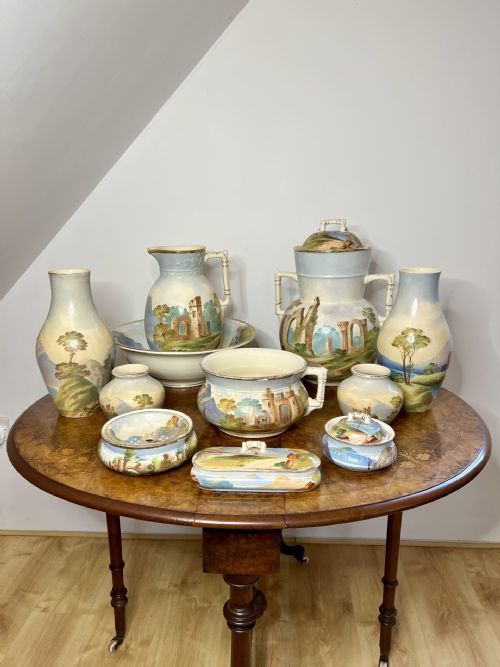


Victorian Toilet Set
These pieces for a victorian toilet set bring together ceramic wash basins, glass bottles and fitted boxes made for the dressing table.
Victorian Toilet Set
A victorian toilet set encompasses several distinct forms for personal grooming and washstand use, including large ceramic jug and bowl sets alongside portable ladies travelling sets and fitted vanity boxes. These items serve the bedroom and boudoir, spanning everyday washstand ensembles to luxury fitted cases lined in velvet or leather.
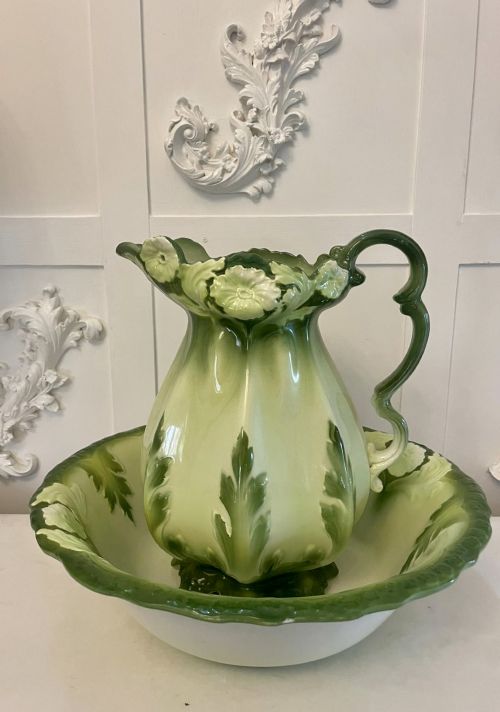
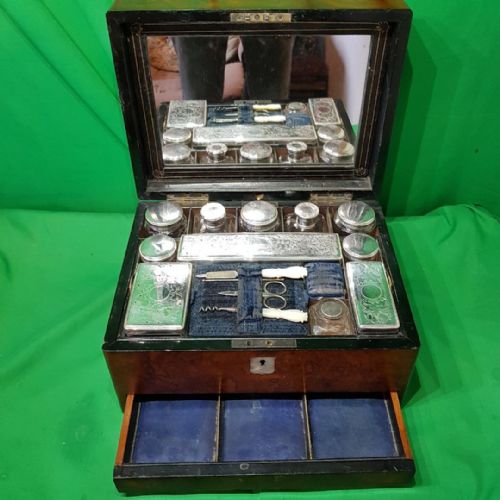
Buyers will most frequently meet ceramic wash sets featuring basins and matching ewers, alongside wooden dressing boxes fitted with silver-gilt and crystal glass bottles. The material vocabulary stretches from earthenware and ironstone to solid walnut, rosewood, and coromandel timbers.
Dating ranges from the mid-nineteenth century through the Edwardian era, incorporating Victorian, Art Nouveau, and Aesthetic Movement design sensibilities. The grouping reflects both fixed washstand arrangements and portable toilet cases designed for travel.
Materials and Technique
Ceramic wash sets utilise earthenware and ironstone bodies finished with decorative glazes, while jug and basin combinations often bear maker marks from potteries such as Doulton Burslem. Glass elements rely on cut crystal for bottles and jars, paired with sterling silver or silver plate mounts.
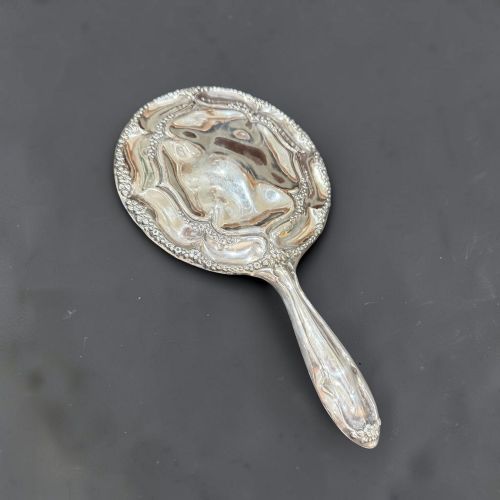
Wooden vanity cases and travelling sets employ dense hardwoods including burr walnut, flame mahogany, rosewood, and coromandel, shaped and polished to highlight natural grain patterns. Metalwork incorporates cast brass hardware, carved wooden supports, and detailed silver work on hand mirrors and jar lids.
Victorian Toilet Set Retail Price Guide 2026
Typical asking prices for victorian toilet set among the pieces listed under this phrase on Sellingantiques today, from the lower quarter to the upper quarter. They describe what is for sale here now, not the wider market.
Assessing Quality
Quality rests upon the execution of materials, from the depth of cut crystal bottles to the selection of burr walnut and flame mahogany veneers on fitted boxes. Superior ceramic sets display crisp transfer printing or hand-painted details on earthenware and ironstone bodies.
Internal fittings dictate the grade of travelling boxes, where complete sets of matching silver-gilt lids, glass jars, and intact velvet or leather linings separate standard items from top-tier examples. The robustness of structural elements, such as carved walnut supports and dovetailed drawer bases, underpins enduring craftsmanship.
mark Jones & Sons·Doulton Burslem·Asprey
The Victorian Toilet Set Glossary
- Ewers
- A large pitcher or jug designed for holding water, paired with a matching basin in a wash set.
- Coromandel
- A dense, heavily variegated timber imported from Asia, prized for its dark grain and used in luxury Victorian vanity cases.
- Sterling Silver Gilt
- Silver that has been coated with a thin layer of gold, frequently found on the interior lids and mounts of gent's travelling sets.
- Ironstone
- A heavy, durable type of ceramic developed in the nineteenth century as a robust alternative to porcelain for heavy-use items like basins.
- Flame Mahogany
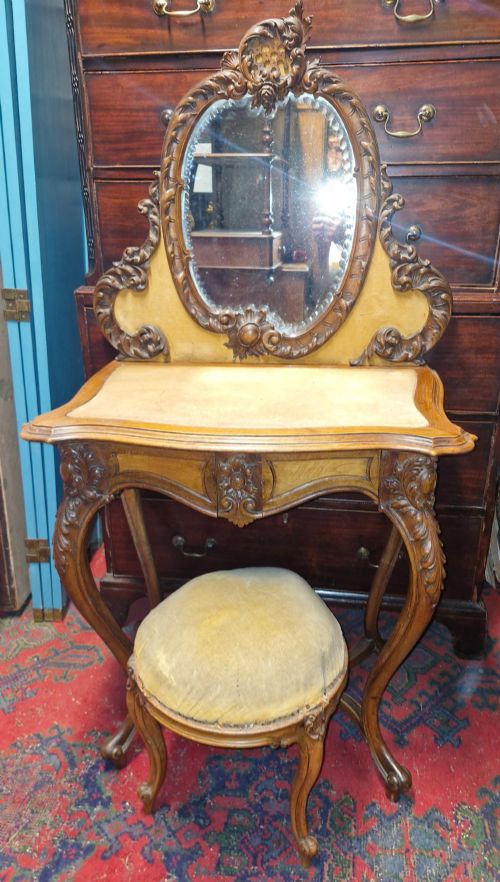
- Mahogany timber cut to reveal a distinctive undulating flame pattern, commonly utilised on nineteenth-century dressing table mirrors.
Victorian Toilet Set: Frequently Asked Questions
What is included in a wash set?
A wash set typically comprises a large ceramic water jug, known as a ewer, alongside a matching basin for personal washing at a washstand.
Additional matching accessories such as soap dishes or chamber pots often accompany these sets depending on the specific ensemble.
How do I use a dressing box?
A dressing box functions as a portable container for personal grooming items, featuring fitted compartments for glass bottles, jars, and mirrors.
Opening the lid reveals internal trays and velvet-lined spaces designed to secure valuables and cosmetics during travel or for daily dressing table use.
What materials are typical for these sets?
Materials vary between ceramic pieces made from earthenware and ironstone, and portable cases constructed from dense hardwoods like walnut, rosewood, and mahogany.
Glass, cut crystal, sterling silver, and brass provide the components for the interior bottles, mirrors, and hardware mounts.
How do I date a Victorian toilet set?
Dating relies on stylistic clues such as Rococo Revival curves, Aesthetic Movement motifs, or later Art Nouveau lines, alongside maker marks stamped on ceramics.
The choice of timber, silver hallmarks on bottle caps, and the complexity of internal box fittings also indicate the specific period of manufacture.