


Victorian Tiered Server Table
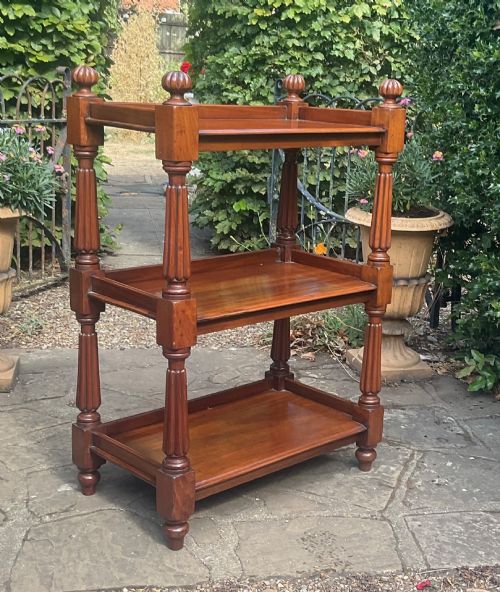
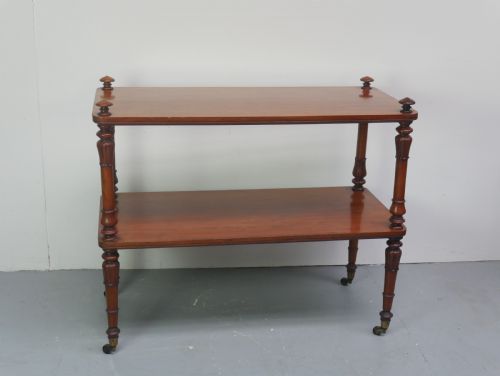
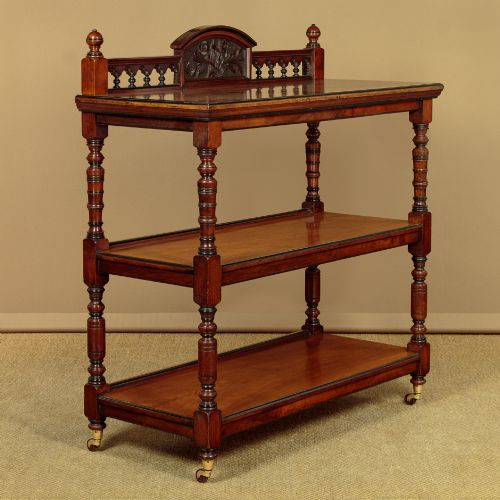
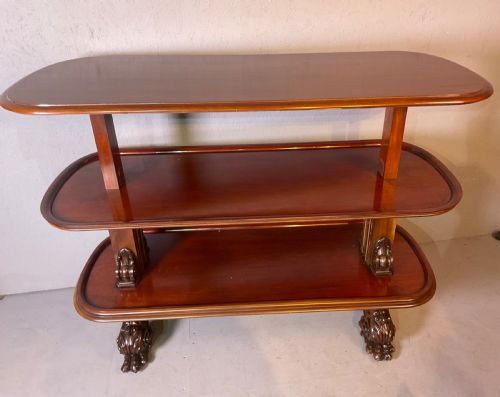
A victorian tiered server table brings multi-level dining practicality and deep timber warmth to a room.
Victorian Tiered Server Table
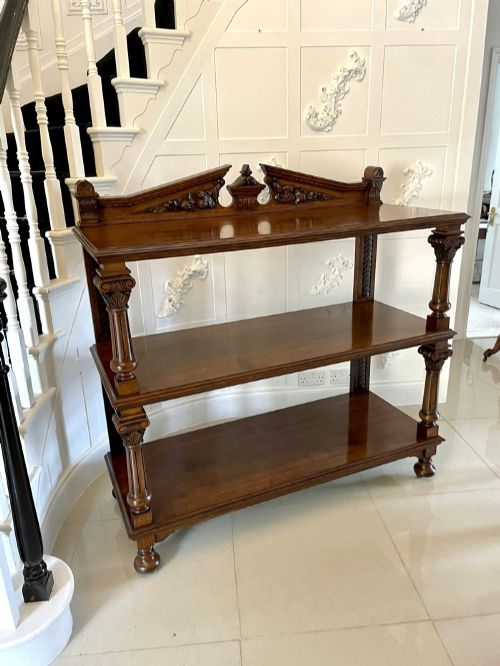
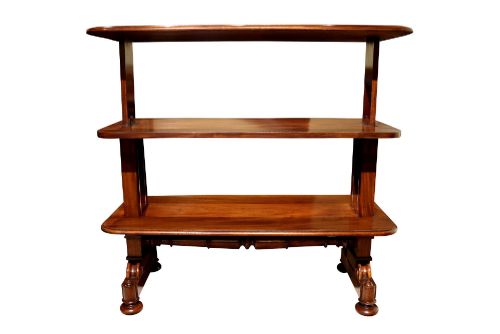
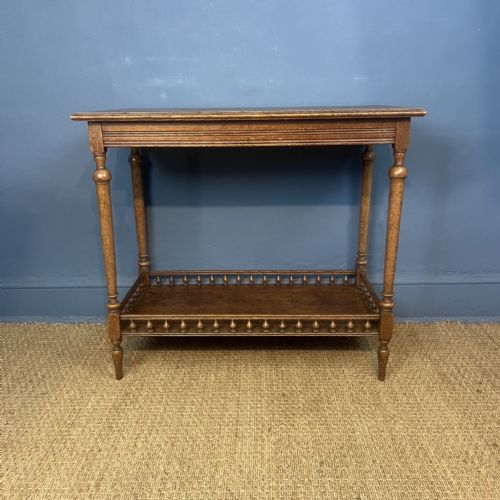
A victorian tiered server table encompasses multiple horizontal stages designed for holding dishes, serving items, and display pieces during dining. These forms appear under various historical labels such as dumb waiters, buffets, etageres, and serving tables.
The pieces listed here span the nineteenth century, including Georgian and Regency precursors as well as later Edwardian examples. Oak, mahogany, and walnut dominate the selection, often taking the form of two or three tiers.
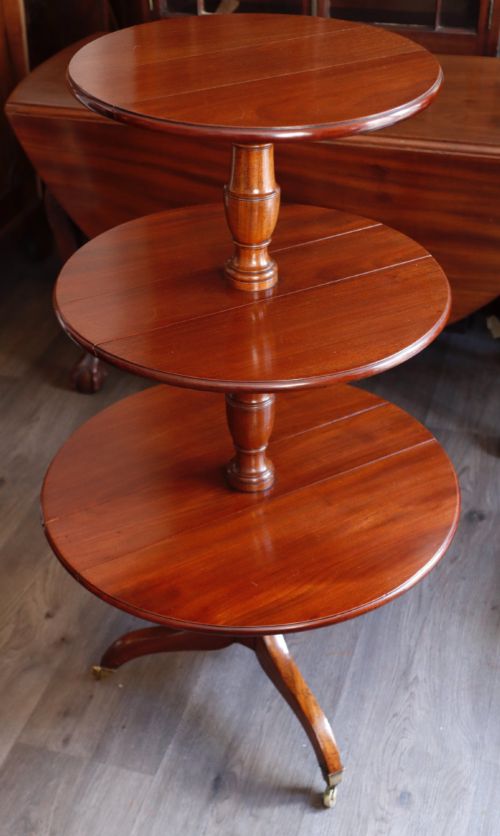
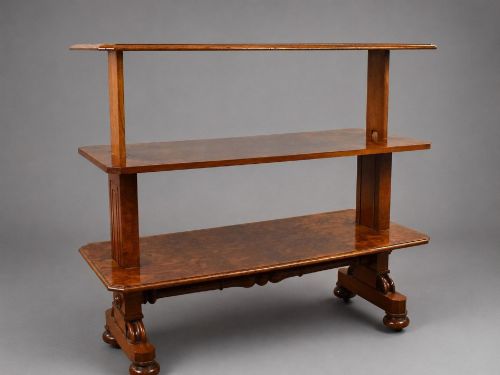
Many variants feature mechanical ingenuity, such as revolving shelves, rise and fall mechanisms, telescopic movement, and metamorphic designs. Buyers typically encounter upright rectangular profiles or tripod-based revolving stands.
How they were made
Cabinetmakers utilised dense timbers like mahogany, walnut, and oak, frequently employing burr walnut or pollard oak veneers for striking grain patterns. Ebonised wood and padauk also appear, shaped through traditional joinery and detailed carving.
Functional hardware played a structural role, incorporating brass components, castors for mobility, and mechanical risers. Surfaces received hand-finished polishes to highlight the natural figures of the wood.
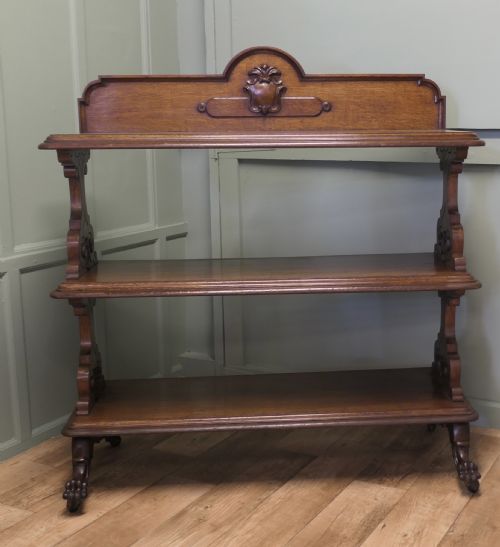
Carved oak Green Man masks peer out from nineteenth-century woodwork, watching over dining rooms from their tiered perches.
What varies in quality
The sophistication of the timber selection dictates much of the standing, with figured burr walnut and pollard oak commanding attention above plain varieties. Carved detail ranges from restrained mouldings to profuse ornamentation, including Green Man motifs and Gothic Revival elements.
Mechanical complexity separates standard tiered boards from superior pieces, particularly smoothly operating rise and fall mechanisms, telescopic shafts, and stable revolving tiers.
The Victorian Tiered Server Table Glossary
- Dumbwaiter
- A multi-tiered serving table used for holding food and tableware without servant assistance. These often feature revolving shelves or stacked tiers.
- Buffet
- A sideboard or serving piece designed for dining rooms, frequently built with multiple tiers or cupboards. They accommodate serving dishes and display objects.
- Etagere
- A piece of furniture consisting of a set of open shelves for displaying small objects. These tiered structures provide vertical storage.
- Metamorphic
- Furniture engineered to transform from one form or height into another. These clever pieces utilise mechanical adjustments.
- Rise and fall
- A mechanism allowing tiers to be adjusted vertically on a central column. This engineering permits variable spacing between shelves.
Victorian Tiered Server Table: Frequently Asked Questions
What is a dumb waiter table?
A dumb waiter table is a tiered serving stand designed to hold food and utensils during meals. They provide extra surface space within dining rooms.
These pieces feature stacked shelves supported by columns or tripod bases, sometimes incorporating revolving mechanisms for easy access.
How do you use a tiered server?
A tiered server functions as a practical station for holding serving dishes, glassware, and decorative items. Multiple levels maximise floor space.
In modern rooms, they serve as display surfaces for plants, books, or collections alongside traditional dining use.
What woods were used for these tables?
Cabinetmakers primarily worked with mahogany, oak, and walnut throughout the nineteenth century. Figured varieties such as burr walnut and pollard oak added decorative appeal.
Ebonised wood and exotic timbers like padauk also appear among the listed items.
What is a metamorphic table?
A metamorphic table incorporates mechanical parts that allow the furniture to alter its shape or height. These clever designs provide adjustable functionality.
Examples include tables with rise and fall actions or telescopic columns that modify the distance between shelves.