




Victorian Three Seater Sofa
A Victorian three seater sofa grounds a large room with deep buttoned leather or patterned fabric built for long sittings.
Victorian Three Seater Sofa
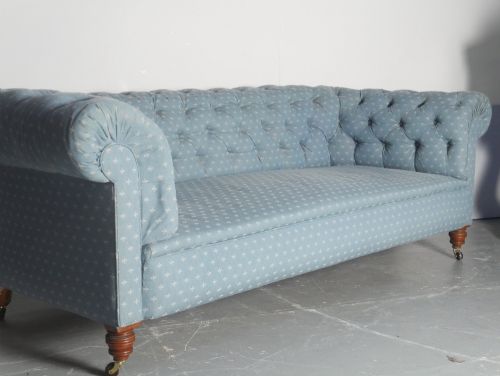
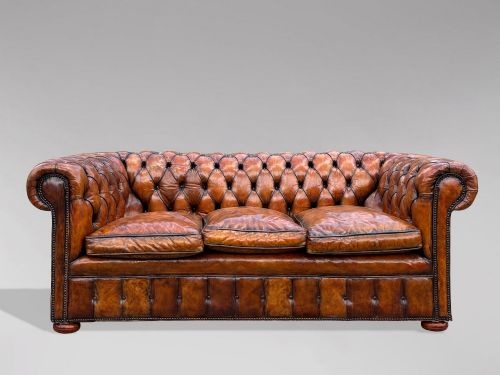
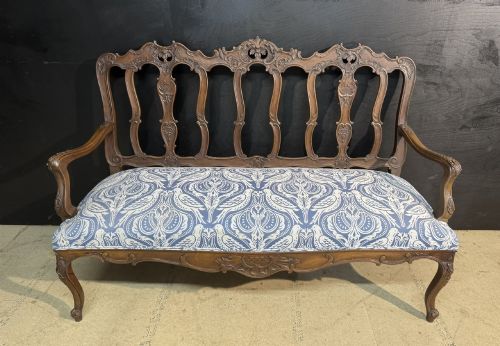
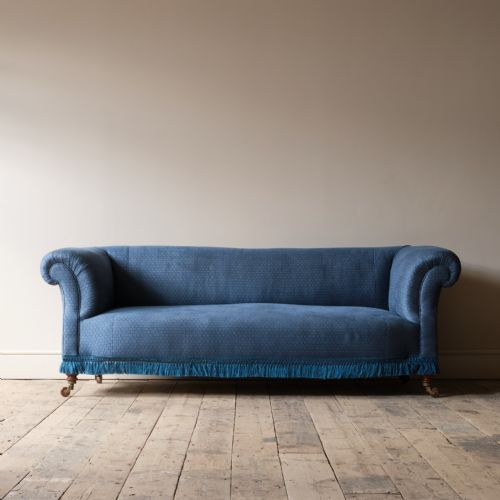
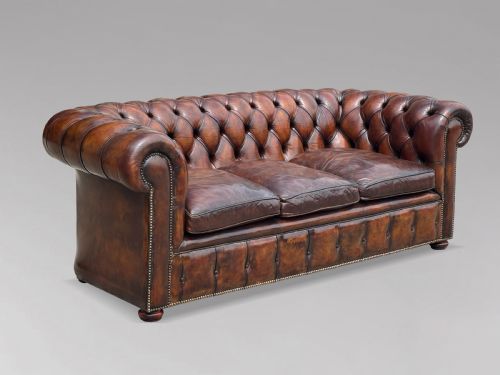
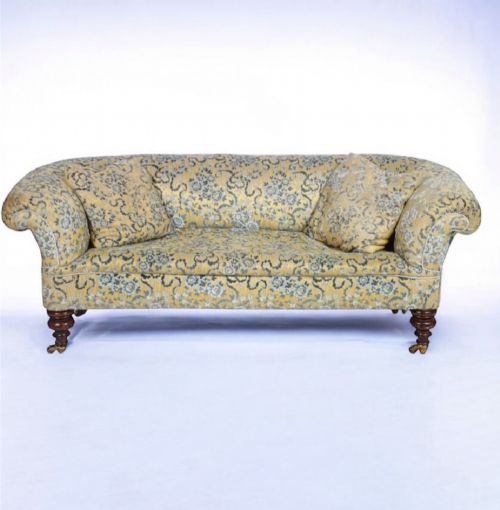
A victorian three seater sofa brings substantial proportions and generous seating capacity to nineteenth-century and traditional English interiors. You will most frequently encounter deep buttoned leather Chesterfields alongside walnut and mahogany frames upholstered in fabric or damask.
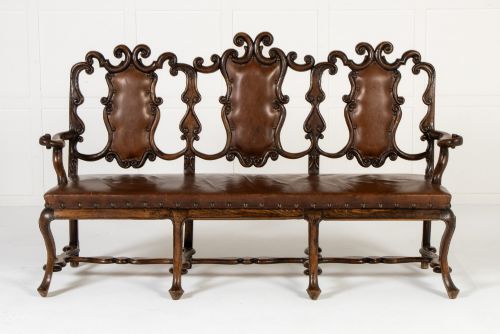
Makers such as Howard and Sons, Hampton and Sons, and William Birch produced these large settees to suit the scale of country houses and libraries. The designs span from robust leather chesterfields to carved mahogany library study sofas and Louis XVI revival styles in walnut.
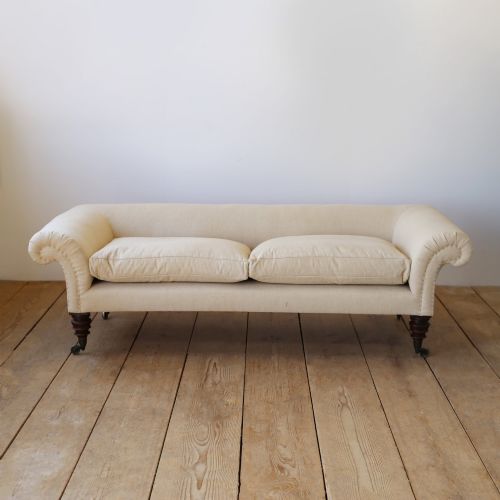
These pieces serve as central seating arrangements in drawing rooms and studies, offering deep seats and scrolled arms designed for comfort. The physical evidence shows versions ranging from fully restored brown leather hides to projects needing complete reupholstering.
How They Were Made
Makers built these frames using dense timber foundations of mahogany, walnut, and general wood or timber to support heavy overstuffed cushioning. Brass hardware and castors often fitted the feet, whilst hand-carved details appeared on higher-end library and study pieces.
Upholstery techniques relied on tight buttoning across full leather hides or layered fabric and damask over deep springing. Frames like those by Howard and Sons employed specific lining methods to maintain structural integrity under heavy daily use.
Bird enthusiasts note that certain library study sofas rest upon fierce hawk claw and ball feet.
What Varies in Quality
The standard of timber framing and the depth of the hand-carving distinguish simpler country house seating from elaborate revival pieces. Solid mahogany with detailed elements like hawk claw and ball feet represents a higher level of cabinet work than plain timber frames.
Leather quality and buttoning execution dictate the finish of a Chesterfield, with full hide and deep button-down work showing superior hand skill. The integrity of the internal lining and spring setup determines how well the upholstery holds its shape over decades of use.
Howard and Sons·Hampton and Sons·William Birch
The Victorian Three Seater Sofa Glossary
- Chesterfield
- A deep buttoned upholstered sofa featuring arms and back of the same height. This form remains closely associated with nineteenth-century brown and tan leather hides.
- Buttoning
- An upholstery method where depressions are formed in the padding by pulling twine through to the frame. Deep buttoning provides both structural support and decorative texture.
- Damask
- A reversible patterned fabric woven on a jacquard loom, frequently utilised for formal nineteenth-century upholstery. It adds a textured sheen to walnut and mahogany frames.
- Overstuffed
- A style of seating where padding completely covers the wooden frame beneath. This construction prioritises upholstered comfort over exposed woodwork.
Victorian Three Seater Sofa: Frequently Asked Questions
How do I clean antique leather?
Wipe surfaces gently with a damp cloth and apply a neutral leather dressing to nourish old hide.
Avoid modern chemical solvents that strip the original patina and dry out nineteenth-century leather.
Where were these sofas placed?
Large country houses, libraries, and formal drawing rooms housed these substantial settees for daily hosting.
Their generous length accommodated multiple guests in sitting rooms and private studies.
Can I replace the upholstery?
Many pieces come ready for reupholstering using traditional fabrics, damask, or new leather hides.
Retaining the original internal webbing and springs preserves the structural integrity during restoration work.
What defines a Chesterfield?
Equal height scrolled arms and back define this classic nineteenth-century seating form.
Full button-down leather hides complete the traditional aesthetic of these heavy frames.