
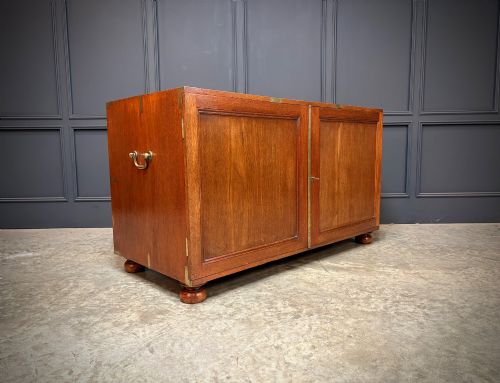

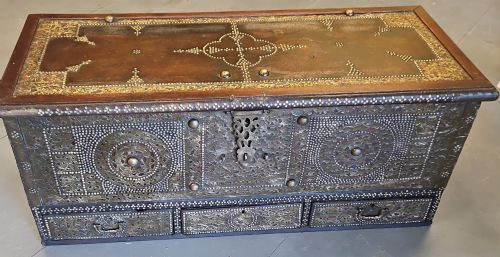


Victorian Teak Trunk
A victorian teak trunk brings solid, travel-seasoned timber into a room, offering sturdy storage with a history of long voyages.
Victorian Teak Trunk
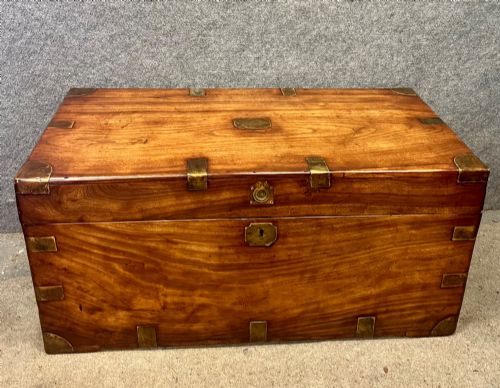
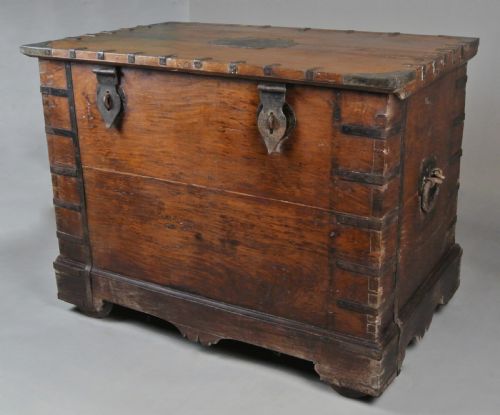
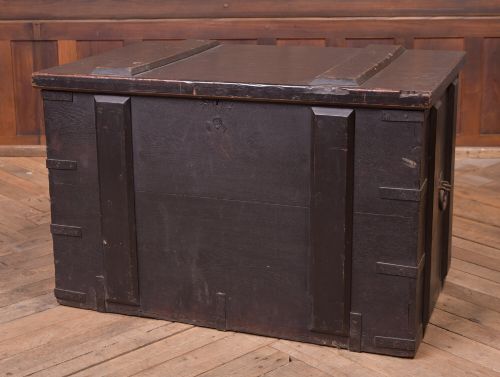
A victorian teak trunk is a robust wooden container built for travel or domestic storage during the nineteenth century. These pieces encompass plain merchant boxes, iron-bound dowry chests, and elaborate brass-bound military campaign chests.
Buyers most frequently encounter the brass-bound military style or the studded Zanzibar chest on this page. These versions reflect colonial trade routes, featuring durable construction designed to withstand maritime and overland transit.
Forms span from simple blanket boxes and tool chests to compartmentalised secretaires and marriage chests on wheels. The underlying utility remains consistent across the varied domestic and military adaptations.
How they were made
Maker's workshops relied on dense, oil-rich teak timber to resist moisture and tropical humidity during transit. This durable hardwood formed the primary carcase for both domestic storage boxes and campaign furniture.
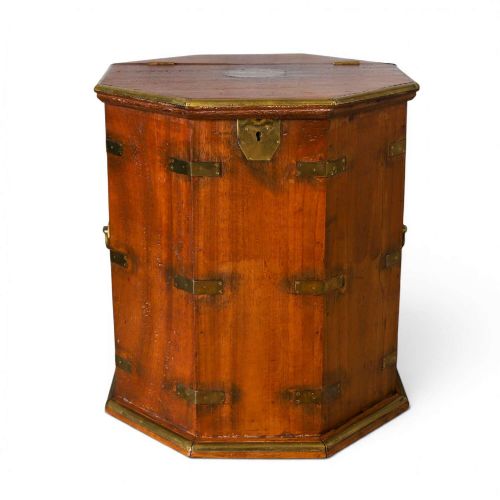
Metal reinforcement was essential for structural integrity, incorporating brass corners, straps, and flush-mounted carrying handles. Iron binding and bone inlay also appear on specific regional variants like dowry and marriage chests.
The inventory records Anglo-Indian, Colonial, and Military Campaign styles alongside traditional Victorian forms.
What varies in quality
Quality rests in the precision of the brass work and the integration of internal compartments. Superior examples maintain crisp joinery and intact metal mounts that sit flush with the timber surface.
The degree of regional carving and the weight of the hardware distinguish standard utility chests from elite campaign pieces. Finer specimens display meticulous hand-cut dovetails and comprehensive original fittings.
The Victorian Teak Trunk Glossary
- Campaign chest
- A modular piece of furniture designed to dismantle or travel easily during military deployment. These trunks typically feature recessed brass handles and corner brackets to prevent snagging.
- Zinibar chest
- A distinct type of heavily studded trunk associated with East African trade and Indian craftsmanship. They often combine dense teak with elaborate brass studwork and strapwork.
- Dowry chest
- A large ceremonial storage piece intended to hold household goods and textiles for marriage. These containers frequently exhibit heavier iron or brass binding.
- Secretaire
- A cabinet or trunk incorporating a writing drawer with a drop-front desk surface. This integrated writing compartment adds specialised functionality to military furniture.
- Gerobog
- A large marriage chest fitted with wheels for domestic movement. These rustic teak pieces provide substantial interior storage.
Victorian Teak Trunk: Frequently Asked Questions
What is a campaign trunk?
A campaign trunk is a portable storage box built for officers or merchants on the move during the nineteenth century. These pieces utilise heavy timber and protective metal fittings to endure frequent transit.
Such trunks often feature inset handles and reinforced corners to maximise durability. Their modular design allowed easy packing on ships and carriages.
How do I identify a Zanzibar chest?
Zanzibar chests are recognizable by dense brass studding and intricate geometric strapwork applied across the teak carcase. These decorative yet robust elements reflect East African trade influences.
Many examples also include internal till boxes and specialised locking mechanisms. The combination of dark hardwood and bright metalwork defines the type.
Were these trunks used for travel?
These trunks served as primary luggage for military personnel, civil servants, and merchants travelling across the British Empire. The durable teak construction protected contents from dampness and rough handling.
Overland journeys and sea voyages demanded sturdy enclosures that could double as makeshift furniture. Consequently, many retain original carrying handles and secure locks.
How do I clean teak furniture?
Teak requires minimal maintenance due to its natural oil content, needing only a soft cloth to remove dust. Avoiding harsh chemical cleaners preserves the historic patina of the wood.
Applying a light coat of specialist wax occasionally helps nourish the dry nineteenth-century timber. Gentle care maintains the original surface without altering the colour.