
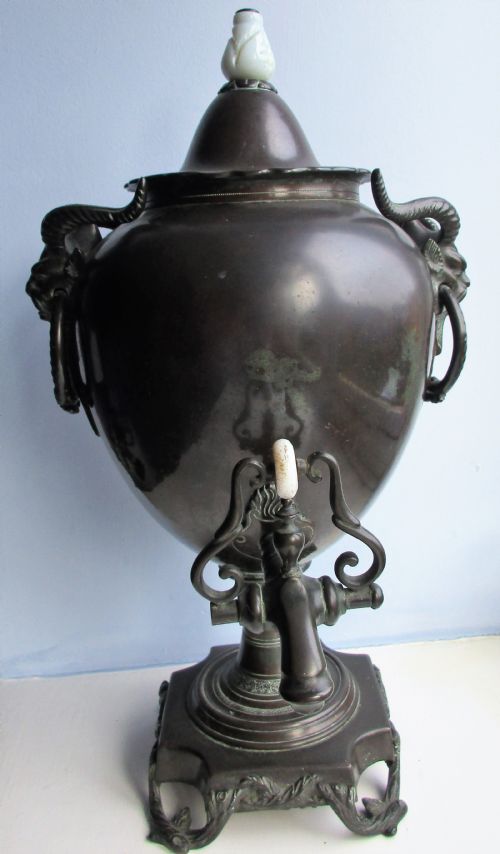
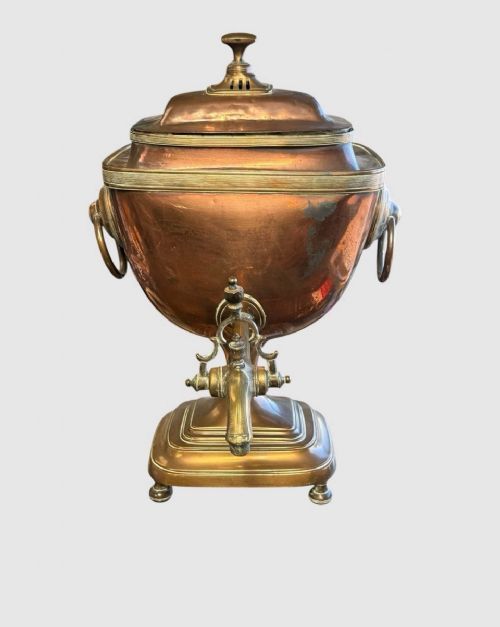


Victorian Tea Dispenser
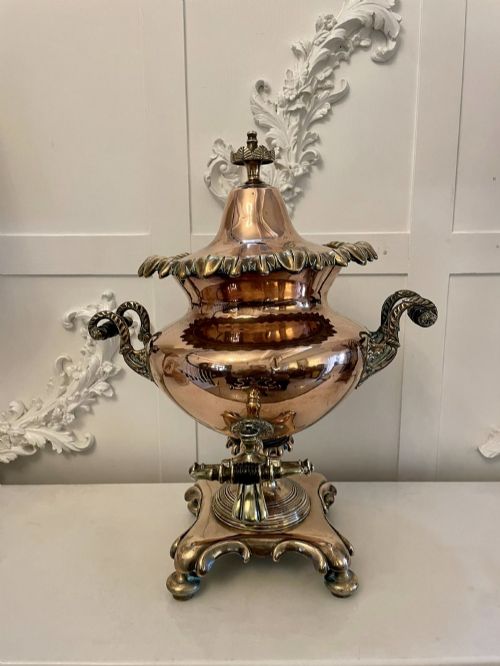
A victorian tea dispenser is a heavy metal vessel built to keep water hot for the table, bringing period presence and function.
Victorian Tea Dispenser
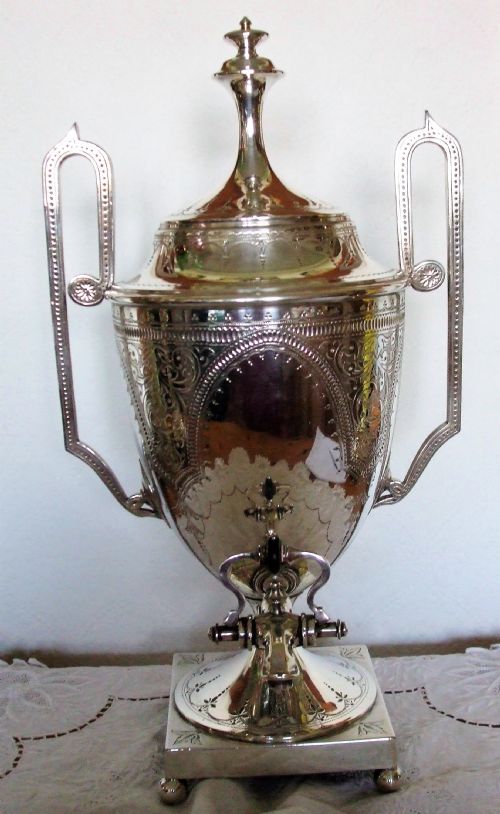
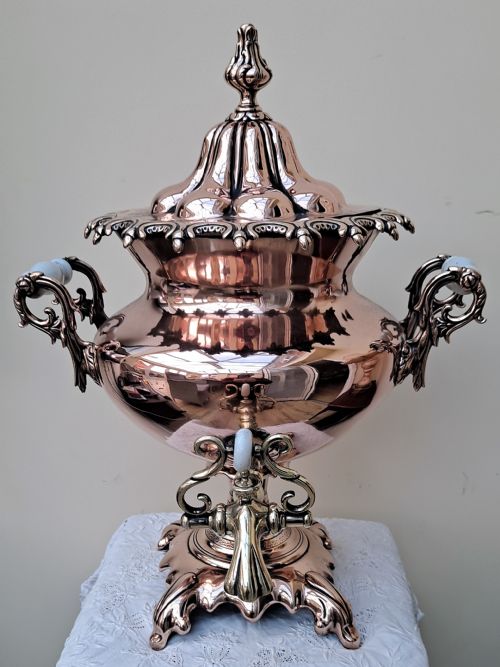
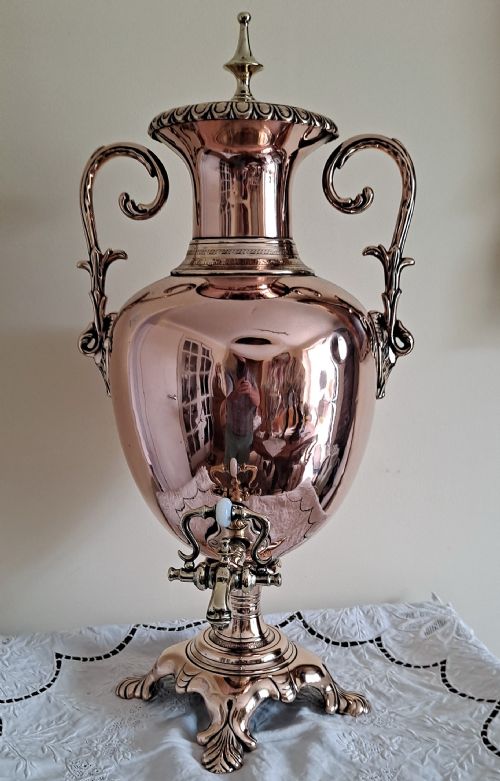
When buyers search for a victorian tea dispenser, they are looking at large vessels designed to heat and serve water for tea, which often appear as copper or silver plated samovars and tea urns.
The most common forms on this page originate in the nineteenth century, spanning periods from eighteen fifty to eighteen eighty, alongside related Edwardian and Georgian pieces.
These items typically combine functional brass taps with metal bodies, serving as grand centrepieces for hospitality in large households.
Materials and construction
Coppersmiths and metalworkers shaped these bodies primarily from copper and brass, often adding patinated surfaces or silver plating over nickel silver and standard metal bases.
Details such as bone handles provided insulation against heat, while ceramic components sometimes lined or accented the interior structure.
Japanned finishes, such as those found on Pontypool Ware, applied durable lacquered coatings to metal surfaces for both protection and decorative effect.
Some nineteenth century urns included internal heating chambers deep enough to keep tea warm using nothing more than a heated iron rod.
Judging quality and proportion
The distinction between standard utility items and the finest examples lies in the weight of the copper and the crispness of the brass casting on handles and spouts.
Maker marks from established firms like Walker & Hall or Benetfink and Company elevate a piece, indicating superior workshop standards and finish.
Walker & Hall·Benetfink & Co
The Victorian Tea Dispenser Glossary
- Samovar
- A heated metal urn traditionally used to boil and heat water for tea. These vessels contain an internal heating tube or hold heat for service.
- Tea Urn
- A large vessel fitted with a tap at the base for dispensing hot water. They mirror the function of samovars with varied handles and pedestals.
- Pontypool Ware
- British metalware finished with a japanned lacquer technique. This process creates a smooth, glossy surface often seen on nineteenth century tea urns.
- Sheffield Silver Plated
- A method of fusing a thin layer of silver to a copper base metal. It offers the appearance of solid silver with durable construction.
Victorian Tea Dispenser: Frequently Asked Questions
How do you use a vintage tea urn?
These vessels were historically filled with water and heated using an internal metal cylinder or hot brick dropped into the core. Today, they serve primarily as decorative display items in dining rooms and kitchens.
Water is dispensed through the small tap at the base, though many historical taps are now kept strictly for display rather than daily service.
How do I date a copper tea urn?
Dating relies on stylistic shifts in the handles, feet, and manufacturing marks. Earlier Georgian examples often feature neoclassical urn shapes, while Victorian and Edwardian pieces show heavier cast brass mounts.
Engraved maker details and retailer stamps provide the most reliable clues for narrowing down the exact decade of manufacture.
Are silver plated samovars solid silver?
Silver plated pieces use a base metal such as copper or nickel silver beneath a thin outer layer of real silver. This technique provided the luxury look of solid silver at a more accessible cost.
Over decades of gentle cleaning, the underlying copper may subtly show through on high points, which collectors view as an indicator of genuine age.